Thank you for visiting SNEWPapers!
Sign up free
Literary
January 1, 1830
Constitutional Whig
Richmond, Virginia
What is this article about?
A satirical prose piece humorously reinterprets quotes from Lord Byron and Socrates to argue that 'knowledge is power' really means money, and equates cash with virtue and philosophical wisdom.
Clipping
OCR Quality
95%
Excellent
Full Text
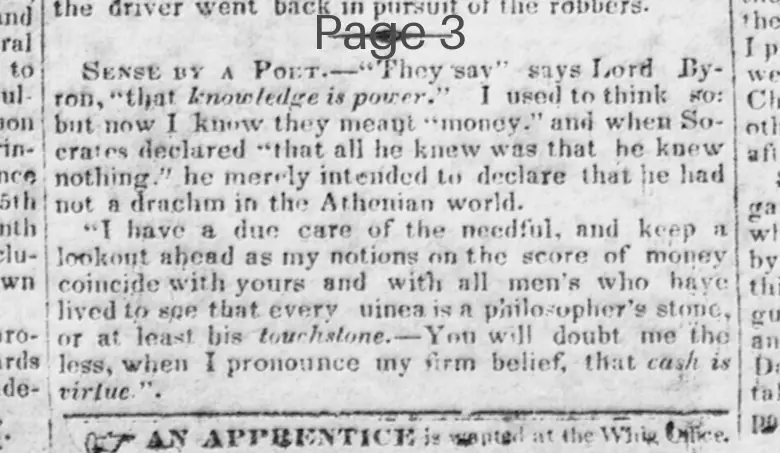
Sense By A Poet.—"They say" says Lord Byron, "that knowledge is power." I used to think so; but now I know they meant "money." and when Socrates declared "that all he knew was that he knew nothing," he merely intended to declare that he had not a drachm in the Athenian world.
"I have a due care of the needful, and keep a lookout ahead as my notions on the score of money coincide with yours and with all men's who have lived to see that every guinea is a philosopher's stone, or at least his touchstone. You will doubt me the less, when I pronounce my firm belief, that cash is virtue."
"I have a due care of the needful, and keep a lookout ahead as my notions on the score of money coincide with yours and with all men's who have lived to see that every guinea is a philosopher's stone, or at least his touchstone. You will doubt me the less, when I pronounce my firm belief, that cash is virtue."
What sub-type of article is it?
Satire
Essay
What themes does it cover?
Commerce Trade
Moral Virtue
What keywords are associated?
Money Power
Knowledge Satire
Socrates Byron
Cash Virtue
Philosopher's Stone
Literary Details
Title
Sense By A Poet.
Subject
On The Power Of Money
Form / Style
Satirical Prose Reflection
Key Lines
"They Say" Says Lord Byron, "That Knowledge Is Power." I Used To Think So; But Now I Know They Meant "Money."
When Socrates Declared "That All He Knew Was That He Knew Nothing," He Merely Intended To Declare That He Had Not A Drachm In The Athenian World.
Every Guinea Is A Philosopher's Stone, Or At Least His Touchstone.
Cash Is Virtue.