Thank you for visiting SNEWPapers!
Sign up free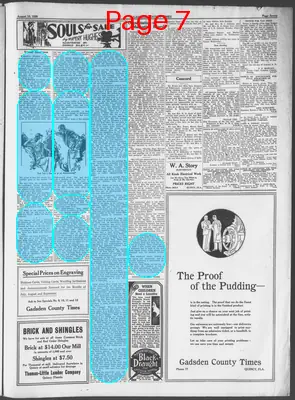
Literary
August 15, 1929
Gadsden County Times
Quincy, Gadsden County, Florida
What is this article about?
In this installment, Remember 'Mem' Steddon, a young woman from a strict religious family, travels west by train to escape the shame of her premarital pregnancy after her lover's death. She fabricates a story of marriage for her parents. On the train, she encounters and is enchanted by movie stars Tom Holby and Robina Teele, buying film magazines and daydreaming.
Clipping
OCR Quality
95%
Excellent
Full Text
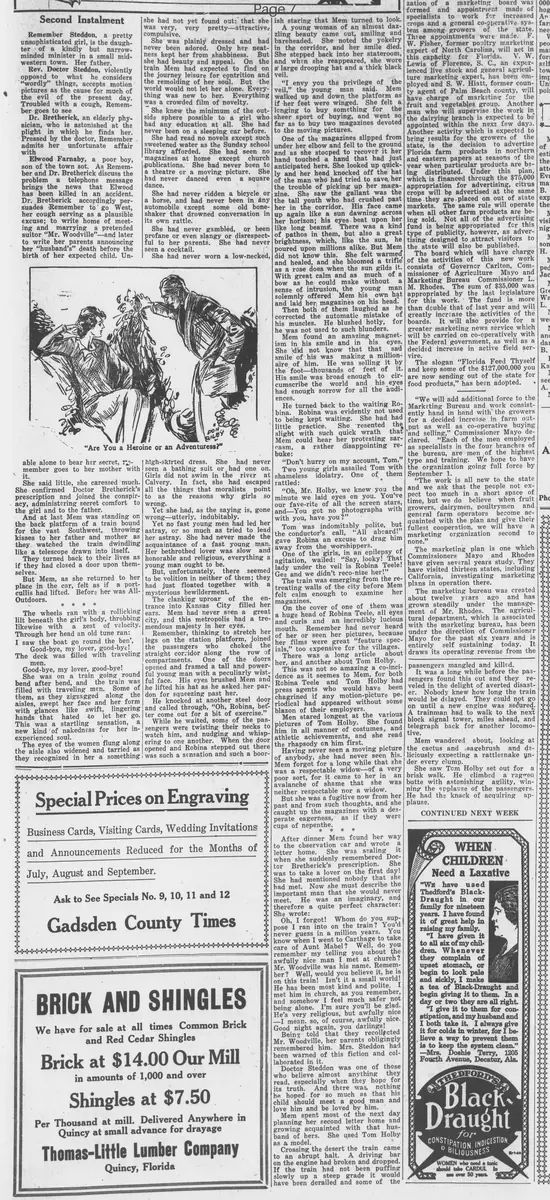
Second Instalment
Remember Steddon, a pretty unsophisticated girl, is the daughter of a kindly but narrow-minded minister in a small mid-western town. Her father, Rev. Doctor Steddon, violently opposed to what he considers "worldly" things, accepts motion pictures as the cause for much of the evil of the present day.
Troubled with a cough, Remember goes to see Dr. Bretherick, an elderly physician, who is astonished at the plight in which he finds her. Pressed by the doctor, Remember admits her unfortunate affair with Elwood Farnaby, a poor boy, son of the town sot. As Remember and Dr. Bretherick discuss the problem a telephone message brings the news that Elwood has been killed in an accident.
Dr. Bretherick accordingly persuades Remember to go West, her cough serving as a plausible excuse; to write home of meeting and marrying a pretended suitor "Mr. Woodville"—and later to write her parents announcing her "husband's" death before the birth of her expected child. Unable alone to bear her secret, Remember goes to her mother with it.
She said little, she caressed much. She confirmed Doctor Bretherick's prescription and joined the conspiracy, administering secret comfort to the girl and to the father. And at last Mem was standing on the back platform of a train bound for the vast Southwest, throwing kisses to her father and mother as they watched the train dwindling like a telescope drawn into itself.
They turned back to their lives as if they had closed a door upon themselves. But Mem, as she returned to her place in the car, felt as if a portcullis had lifted. Before her was All-Outdoors.
The wheels ran with a rollicking lilt beneath the girl's body, throbbing likewise with a zest of velocity. Through her head an old tune ran:
I saw the boat go round the bend,
Good-bye, my lover, good-bye!
The deck was filled with traveling men.
Good-bye, my lover, good-bye!
She was on a train going round bend after bend, and the train was filled with traveling men. Some of them, as they zigzagged along the aisles, swept her face and her form with glances like swift, lingering hands that hated to let her go.
This was a startling sensation, a new kind of nakedness for her inexperienced soul. The eyes of the women flung along the aisle also widened and tarried as they recognized in her a something ...
Yet no fast young men had led her astray, or so much as tried to lead her astray. She had never made the acquaintance of a fast young man. Her betrothed lover was slow and honorable and religious, everything a young man ought to be.
But, unfortunately, there seemed to be volition in neither of them; they had just floated together with a mysterious bewilderment.
The clanking uproar of the entrance into Kansas City filled her ears. Mem had never seen a great city, and this metropolis had a tremendous majesty in her eyes.
Remember, thinking to stretch her legs on the station platform, joined the passengers who choked the straight corridor along the row of compartments. One of the doors opened and framed a tall and powerful young man with a peculiarly wistful face. His eyes brushed Mem and he lifted his hat as he asked her pardon for squeezing past her.
He knocked at another steel door and called through, "Oh, Robina, better come out for a bit of exercise."
While he waited, some of the passengers were twisting their necks to watch him, and nudging and whispering to one another. When the door opened and Robina stepped out there was such a sensation and such a boorish staring that Mem turned to look.
A young woman of an almost dazzling beauty came out, smiling and bareheaded. She noted the yokelry in the corridor, and her smile died. She stepped back into her stateroom, and when she reappeared, she wore a large drooping hat and a thick black veil.
"I envy you the privilege of the veil," the young man said. Mem walked up and down the platform as if her feet were winged. She felt a longing to buy something for the sheer sport of buying, and went so far as to buy two magazines devoted to the moving pictures.
One of the magazines slipped from under her elbow and fell to the ground and as she stooped to recover it her hand touched a hand that had just anticipated hers. She looked up quickly and her head knocked off the hat of the man who had tried to save her the trouble of picking up her magazine. She saw the gallant was the tall youth who had crushed past her in the corridor. His face came up again like a sun dawning across her horizon; his eyes beat upon her like long beams. There was a kind of pathos in them, but also a great brightness, which, like the sun, he poured upon millions alike. But Mem did not know this. She felt warmed and healed, and she bloomed a trifle as a rose does when the sun gilds it.
With great calm and as much of a bow as he could make without a sense of intrusion, the young man solemnly offered Mem his own hat and laid her magazines on his head. Then both of them laughed as he corrected the automatic mistake of his muscles. He blushed hotly, for he was not used to such blunders.
Mem found an amazing magnetism in his smile and in his eyes. She did not know that that sad smile of his was making a millionaire of him. He was selling it by the foot—thousands of feet of it. His smile was broad enough to circumscribe the world and his eyes had enough sorrow for all the audiences.
He turned back to the waiting Robina. Robina was evidently not used to being kept waiting. She had had little practice. She resented the slight with such quick wrath that Mem could hear her protesting sarcasm, a rather disappointing rebuke:
"Don't hurry on my account, Tom."
Two young girls assailed Tom with shameless idolatry. One of them rattled:
"Oh, Mr. Holby, we knew you the minute we laid eyes on you. You've our favorite of all the screen stars, and—You got no photographs with you, have you?"
Tom was indomitably polite, but the conductor's call, "All aboard!" gave Robina an excuse to drag him away from the worshippers.
One of the girls, in an epilepsy of agitation, wailed: "Say, looky! That lady under the veil is Robina Teele! Gee, and we didn't recognize her!"
The train was emerging from the retreating walls of the city before Mem felt calm enough to examine her magazines.
On the cover of one of them was a huge head of Robina Teele, all eyes and curls and an incredibly luscious mouth. Remember had never heard of her or seen her pictures, because her films were great "feature specials," too expensive for the villages.
There was a long article about her, and another about Tom Holby. This was not so amazing a coincidence as it seemed to Mem, for both Robina Teele and Tom Holby had press agents who would have been chagrined if any motion-picture periodical had appeared without some blazon of their employers.
Men stared longest at the various pictures of Tom Holby. She found him in all manner of costumes, and athletic achievements, and she read the rhapsody on him first.
Having never seen a moving picture of anybody, she had never seen his. Mem forgot for a long while that she was a respectable widow—of a very poor sort, for it came to her in an avalanche of shame that she was neither respectable nor a widow.
But she was a fugitive now from her past and from such thoughts, and she caught up the magazines with a desperate eagerness, as if they were cups of nepenthe.
After dinner Mem found her way to the observation car and wrote a letter home. She was sealing it when she suddenly remembered Doctor Bretherick's prescription. She was to take a lover on the first day! She had mentioned nobody that she had met. Now she must describe the important man that she would never meet. He was an imaginary, and therefore a quite perfect character:
She wrote:
Oh, I forgot! Whom do you suppose I ran into on the train? You'd never guess in a million years. You know when I went to Carthage to take care of Aunt Mabel? Well, do you remember my telling you about the awfully nice man I met at church? Mr. Woodville was his name. Remember? Well, would you believe it, he is on this train! Isn't it a small world! He has been most kind and polite. I met him in church, as you remember, and somehow I feel much safer not being alone. I'm sure you'll be glad. He's very religious, but awfully nice—I mean, so, of course, awfully nice. Good night again, you darlings!
Mr. Woodville, her parents obligingly being told that they recollected him. Mrs. Steddon had been warned of this fiction and collaborated in it.
Doctor Steddon was one of those who believe almost anything they read, especially when they hope for its truth. And there was nothing he hoped for so much as that his child should meet a good man and love him and be loved by him.
Mem spent most of the next day planning her second letter home and growing acquainted with that husband of hers. She used Tom Holby as a model.
Crossing the desert the train came to an abrupt halt. A driving bar on the engine had broken and dropped. If the train had not been puffing slowly up a steep grade it would have been derailed and some of the passengers mangled and killed.
It was a long while before the passengers found this out and they reveled in the delight of averted disaster. Nobody knew how long the train would be delayed. They could not go on until a new engine was secured.
A trainman had to walk to the next block signal tower, miles ahead, and telegraph back for another locomotive.
Mem wandered about, looking at the cactus and sagebrush and deliciously expecting a rattlesnake under every clump.
She saw Tom Holby set out for a brisk walk. He climbed a ragged butte with astonishing agility, winning the applause of the passengers. He had the knack of acquiring applause.
CONTINUED NEXT WEEK
Remember Steddon, a pretty unsophisticated girl, is the daughter of a kindly but narrow-minded minister in a small mid-western town. Her father, Rev. Doctor Steddon, violently opposed to what he considers "worldly" things, accepts motion pictures as the cause for much of the evil of the present day.
Troubled with a cough, Remember goes to see Dr. Bretherick, an elderly physician, who is astonished at the plight in which he finds her. Pressed by the doctor, Remember admits her unfortunate affair with Elwood Farnaby, a poor boy, son of the town sot. As Remember and Dr. Bretherick discuss the problem a telephone message brings the news that Elwood has been killed in an accident.
Dr. Bretherick accordingly persuades Remember to go West, her cough serving as a plausible excuse; to write home of meeting and marrying a pretended suitor "Mr. Woodville"—and later to write her parents announcing her "husband's" death before the birth of her expected child. Unable alone to bear her secret, Remember goes to her mother with it.
She said little, she caressed much. She confirmed Doctor Bretherick's prescription and joined the conspiracy, administering secret comfort to the girl and to the father. And at last Mem was standing on the back platform of a train bound for the vast Southwest, throwing kisses to her father and mother as they watched the train dwindling like a telescope drawn into itself.
They turned back to their lives as if they had closed a door upon themselves. But Mem, as she returned to her place in the car, felt as if a portcullis had lifted. Before her was All-Outdoors.
The wheels ran with a rollicking lilt beneath the girl's body, throbbing likewise with a zest of velocity. Through her head an old tune ran:
I saw the boat go round the bend,
Good-bye, my lover, good-bye!
The deck was filled with traveling men.
Good-bye, my lover, good-bye!
She was on a train going round bend after bend, and the train was filled with traveling men. Some of them, as they zigzagged along the aisles, swept her face and her form with glances like swift, lingering hands that hated to let her go.
This was a startling sensation, a new kind of nakedness for her inexperienced soul. The eyes of the women flung along the aisle also widened and tarried as they recognized in her a something ...
Yet no fast young men had led her astray, or so much as tried to lead her astray. She had never made the acquaintance of a fast young man. Her betrothed lover was slow and honorable and religious, everything a young man ought to be.
But, unfortunately, there seemed to be volition in neither of them; they had just floated together with a mysterious bewilderment.
The clanking uproar of the entrance into Kansas City filled her ears. Mem had never seen a great city, and this metropolis had a tremendous majesty in her eyes.
Remember, thinking to stretch her legs on the station platform, joined the passengers who choked the straight corridor along the row of compartments. One of the doors opened and framed a tall and powerful young man with a peculiarly wistful face. His eyes brushed Mem and he lifted his hat as he asked her pardon for squeezing past her.
He knocked at another steel door and called through, "Oh, Robina, better come out for a bit of exercise."
While he waited, some of the passengers were twisting their necks to watch him, and nudging and whispering to one another. When the door opened and Robina stepped out there was such a sensation and such a boorish staring that Mem turned to look.
A young woman of an almost dazzling beauty came out, smiling and bareheaded. She noted the yokelry in the corridor, and her smile died. She stepped back into her stateroom, and when she reappeared, she wore a large drooping hat and a thick black veil.
"I envy you the privilege of the veil," the young man said. Mem walked up and down the platform as if her feet were winged. She felt a longing to buy something for the sheer sport of buying, and went so far as to buy two magazines devoted to the moving pictures.
One of the magazines slipped from under her elbow and fell to the ground and as she stooped to recover it her hand touched a hand that had just anticipated hers. She looked up quickly and her head knocked off the hat of the man who had tried to save her the trouble of picking up her magazine. She saw the gallant was the tall youth who had crushed past her in the corridor. His face came up again like a sun dawning across her horizon; his eyes beat upon her like long beams. There was a kind of pathos in them, but also a great brightness, which, like the sun, he poured upon millions alike. But Mem did not know this. She felt warmed and healed, and she bloomed a trifle as a rose does when the sun gilds it.
With great calm and as much of a bow as he could make without a sense of intrusion, the young man solemnly offered Mem his own hat and laid her magazines on his head. Then both of them laughed as he corrected the automatic mistake of his muscles. He blushed hotly, for he was not used to such blunders.
Mem found an amazing magnetism in his smile and in his eyes. She did not know that that sad smile of his was making a millionaire of him. He was selling it by the foot—thousands of feet of it. His smile was broad enough to circumscribe the world and his eyes had enough sorrow for all the audiences.
He turned back to the waiting Robina. Robina was evidently not used to being kept waiting. She had had little practice. She resented the slight with such quick wrath that Mem could hear her protesting sarcasm, a rather disappointing rebuke:
"Don't hurry on my account, Tom."
Two young girls assailed Tom with shameless idolatry. One of them rattled:
"Oh, Mr. Holby, we knew you the minute we laid eyes on you. You've our favorite of all the screen stars, and—You got no photographs with you, have you?"
Tom was indomitably polite, but the conductor's call, "All aboard!" gave Robina an excuse to drag him away from the worshippers.
One of the girls, in an epilepsy of agitation, wailed: "Say, looky! That lady under the veil is Robina Teele! Gee, and we didn't recognize her!"
The train was emerging from the retreating walls of the city before Mem felt calm enough to examine her magazines.
On the cover of one of them was a huge head of Robina Teele, all eyes and curls and an incredibly luscious mouth. Remember had never heard of her or seen her pictures, because her films were great "feature specials," too expensive for the villages.
There was a long article about her, and another about Tom Holby. This was not so amazing a coincidence as it seemed to Mem, for both Robina Teele and Tom Holby had press agents who would have been chagrined if any motion-picture periodical had appeared without some blazon of their employers.
Men stared longest at the various pictures of Tom Holby. She found him in all manner of costumes, and athletic achievements, and she read the rhapsody on him first.
Having never seen a moving picture of anybody, she had never seen his. Mem forgot for a long while that she was a respectable widow—of a very poor sort, for it came to her in an avalanche of shame that she was neither respectable nor a widow.
But she was a fugitive now from her past and from such thoughts, and she caught up the magazines with a desperate eagerness, as if they were cups of nepenthe.
After dinner Mem found her way to the observation car and wrote a letter home. She was sealing it when she suddenly remembered Doctor Bretherick's prescription. She was to take a lover on the first day! She had mentioned nobody that she had met. Now she must describe the important man that she would never meet. He was an imaginary, and therefore a quite perfect character:
She wrote:
Oh, I forgot! Whom do you suppose I ran into on the train? You'd never guess in a million years. You know when I went to Carthage to take care of Aunt Mabel? Well, do you remember my telling you about the awfully nice man I met at church? Mr. Woodville was his name. Remember? Well, would you believe it, he is on this train! Isn't it a small world! He has been most kind and polite. I met him in church, as you remember, and somehow I feel much safer not being alone. I'm sure you'll be glad. He's very religious, but awfully nice—I mean, so, of course, awfully nice. Good night again, you darlings!
Mr. Woodville, her parents obligingly being told that they recollected him. Mrs. Steddon had been warned of this fiction and collaborated in it.
Doctor Steddon was one of those who believe almost anything they read, especially when they hope for its truth. And there was nothing he hoped for so much as that his child should meet a good man and love him and be loved by him.
Mem spent most of the next day planning her second letter home and growing acquainted with that husband of hers. She used Tom Holby as a model.
Crossing the desert the train came to an abrupt halt. A driving bar on the engine had broken and dropped. If the train had not been puffing slowly up a steep grade it would have been derailed and some of the passengers mangled and killed.
It was a long while before the passengers found this out and they reveled in the delight of averted disaster. Nobody knew how long the train would be delayed. They could not go on until a new engine was secured.
A trainman had to walk to the next block signal tower, miles ahead, and telegraph back for another locomotive.
Mem wandered about, looking at the cactus and sagebrush and deliciously expecting a rattlesnake under every clump.
She saw Tom Holby set out for a brisk walk. He climbed a ragged butte with astonishing agility, winning the applause of the passengers. He had the knack of acquiring applause.
CONTINUED NEXT WEEK
What sub-type of article is it?
Prose Fiction
Journey Narrative
What themes does it cover?
Love Romance
Religious
Social Manners
What keywords are associated?
Remember Steddon
Train Journey
Movie Stars
Scandal Pregnancy
Westward Escape
Fictional Husband
Tom Holby
Robina Teele
Literary Details
Title
Second Instalment
Key Lines
I Saw The Boat Go Round The Bend,
Good Bye, My Lover, Good Bye!
The Deck Was Filled With Traveling Men.
Good Bye, My Lover, Good Bye!
His Face Came Up Again Like A Sun Dawning Across Her Horizon; His Eyes Beat Upon Her Like Long Beams.
She Was To Take A Lover On The First Day! She Had Mentioned Nobody That She Had Met.
Mem Forgot For A Long While That She Was A Respectable Widow—Of A Very Poor Sort, For It Came To Her In An Avalanche Of Shame That She Was Neither Respectable Nor A Widow.
He Had The Knack Of Acquiring Applause.