Thank you for visiting SNEWPapers!
Sign up free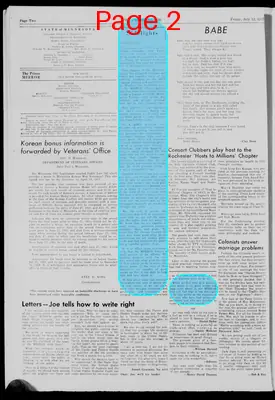
Editorial
July 12, 1957
The Prison Mirror
Stillwater, Washington County, Minnesota
What is this article about?
The Prison Mirror editorial praises publicity from prisoners' Easter Seals envelope-stuffing project, arguing it counters public stereotypes of inmates as irredeemable criminals. It calls for highlighting prisoners' good works to foster sympathy, aid parolees' employment, and support rehabilitation efforts.
Clipping
OCR Quality
98%
Excellent
Full Text
THE PRISON MIRROR
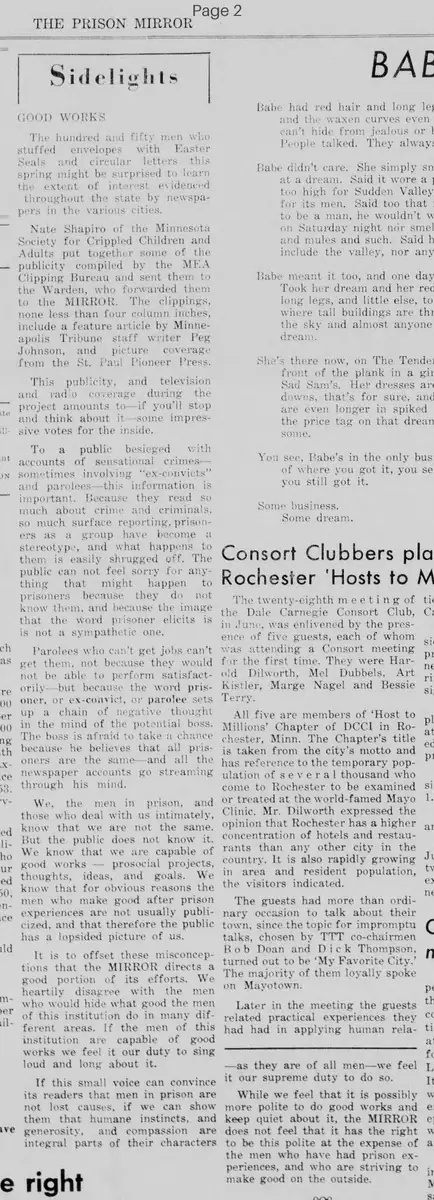
Sidelights
GOOD WORKS
The hundred and fifty men who stuffed envelopes with Easter Seals and circular letters this spring might be surprised to learn the extent of interest evidenced throughout the state by newspapers in the various cities.
Nate Shapiro of the Minnesota Society for Crippled Children and Adults put together some of the publicity compiled by the MEA Clipping Bureau and sent them to the Warden, who forwarded them to the MIRROR. The clippings, none less than four column inches, include a feature article by Minneapolis Tribune staff writer Peg Johnson, and picture coverage from the St. Paul Pioneer Press.
This publicity, and television and radio coverage during the project amounts to-if you'll stop and think about it-some impressive votes for the inside.
To a public besieged with accounts of sensational crimes-sometimes involving "ex-convicts" and parolees-this information is important. Because they read so much about crime and criminals, so much surface reporting, prisoners as a group have become a stereotype, and what happens to them is easily shrugged off. The public can not feel sorry for anything that might happen to prisoners because they do not know them, and because the image that the word prisoner elicits is not a sympathetic one.
Parolees who can't get jobs can't get them, not because they would not be able to perform satisfactorily- but because the word prisoner, or ex-convict, or parolee sets up a chain of negative thought in the mind of the potential boss. The boss is afraid to take a chance because he believes that all prisoners are the same-and all the newspaper accounts go streaming through his mind.
We, the men in prison, and those who deal with us intimately, know that we are not the same. But the public does not know it.
We know that we are capable of good works -- prosocial projects, thoughts, ideas, and goals. We know that for obvious reasons the men who make good after prison experiences are not usually publicized, and that therefore the public has a lopsided picture of us.
It is to offset these misconceptions that the MIRROR directs a good portion of its efforts. We heartily disagree with the men who would hide what good the men of this institution do in many different areas. If the men of this institution are capable of good works we feel it our duty to sing loud and long about it.
If this small voice can convince its readers that men in prison are not lost causes, if we can show them that humane instincts, and generosity, and compassion are integral parts of their characters -as they are of all men-we feel it our supreme duty to do so.
While we feel that it is possibly more polite to do good works and keep quiet about it, the MIRROR does not feel that it has the right to be this polite at the expense of the men who have had prison experiences, and who are striving to make good on the outside.
Sidelights
GOOD WORKS
The hundred and fifty men who stuffed envelopes with Easter Seals and circular letters this spring might be surprised to learn the extent of interest evidenced throughout the state by newspapers in the various cities.
Nate Shapiro of the Minnesota Society for Crippled Children and Adults put together some of the publicity compiled by the MEA Clipping Bureau and sent them to the Warden, who forwarded them to the MIRROR. The clippings, none less than four column inches, include a feature article by Minneapolis Tribune staff writer Peg Johnson, and picture coverage from the St. Paul Pioneer Press.
This publicity, and television and radio coverage during the project amounts to-if you'll stop and think about it-some impressive votes for the inside.
To a public besieged with accounts of sensational crimes-sometimes involving "ex-convicts" and parolees-this information is important. Because they read so much about crime and criminals, so much surface reporting, prisoners as a group have become a stereotype, and what happens to them is easily shrugged off. The public can not feel sorry for anything that might happen to prisoners because they do not know them, and because the image that the word prisoner elicits is not a sympathetic one.
Parolees who can't get jobs can't get them, not because they would not be able to perform satisfactorily- but because the word prisoner, or ex-convict, or parolee sets up a chain of negative thought in the mind of the potential boss. The boss is afraid to take a chance because he believes that all prisoners are the same-and all the newspaper accounts go streaming through his mind.
We, the men in prison, and those who deal with us intimately, know that we are not the same. But the public does not know it.
We know that we are capable of good works -- prosocial projects, thoughts, ideas, and goals. We know that for obvious reasons the men who make good after prison experiences are not usually publicized, and that therefore the public has a lopsided picture of us.
It is to offset these misconceptions that the MIRROR directs a good portion of its efforts. We heartily disagree with the men who would hide what good the men of this institution do in many different areas. If the men of this institution are capable of good works we feel it our duty to sing loud and long about it.
If this small voice can convince its readers that men in prison are not lost causes, if we can show them that humane instincts, and generosity, and compassion are integral parts of their characters -as they are of all men-we feel it our supreme duty to do so.
While we feel that it is possibly more polite to do good works and keep quiet about it, the MIRROR does not feel that it has the right to be this polite at the expense of the men who have had prison experiences, and who are striving to make good on the outside.
What sub-type of article is it?
Crime Or Punishment
Social Reform
Moral Or Religious
What keywords are associated?
Prison Stereotypes
Good Works
Public Perception
Rehabilitation
Parolee Employment
Penal Reform
Prosocial Projects
What entities or persons were involved?
Minnesota Society For Crippled Children And Adults
Nate Shapiro
Mea Clipping Bureau
Warden
Minneapolis Tribune
Peg Johnson
St. Paul Pioneer Press
Prisoners
Parolees
Editorial Details
Primary Topic
Countering Public Stereotypes Of Prisoners Through Publicity Of Good Works
Stance / Tone
Advocacy For Publicizing Prisoners' Positive Contributions To Challenge Negative Perceptions
Key Figures
Minnesota Society For Crippled Children And Adults
Nate Shapiro
Mea Clipping Bureau
Warden
Minneapolis Tribune
Peg Johnson
St. Paul Pioneer Press
Prisoners
Parolees
Key Arguments
Publicity From Easter Seals Project Shows Widespread Interest And Counters Crime Focused Reporting.
Negative Stereotypes Prevent Sympathy For Prisoners And Hinder Parolees' Job Opportunities.
Prisoners Are Capable Of Good Works, But Successes Are Underpublicized, Creating A Lopsided Public Image.
The Prison Mirror Aims To Highlight Positive Aspects To Offset Misconceptions.
Publicizing Good Deeds Is A Duty To Demonstrate Prisoners' Humane Qualities And Aid Rehabilitation.