Thank you for visiting SNEWPapers!
Sign up free
Literary
November 26, 1827
Phenix Gazette
Alexandria, Virginia
What is this article about?
Thomas P——, a young shoemaker, achieves success through industry and temperance, marries, and builds a comfortable life. He succumbs to drinking, loses everything, but reforms by keeping a full decanter visible without touching it, regaining his home and prosperity until old age.
Clipping
OCR Quality
95%
Excellent
Full Text
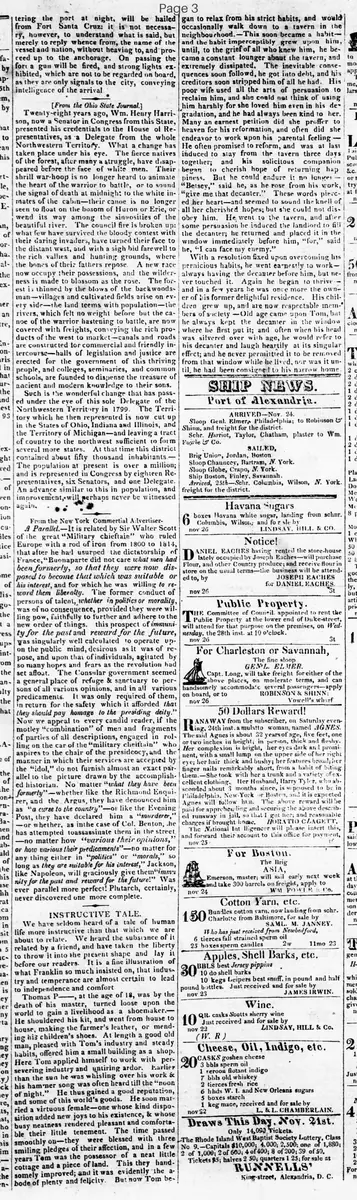
INSTRUCTIVE TALE.
We have seldom heard of a tale of human life more instructive than that which we are about to relate. We heard the substance of it related by a friend, and have taken the liberty to throw it into the present shape and lay it before our readers. It is a fine illustration of what Franklin so much insisted on, that industry and temperance are almost certain to lead to independence and comfort.
Thomas P——, at the age of 18, was by the death of his master, turned loose upon the world to gain a livelihood as a shoemaker.— He shouldered his kit, and went from house to house, making the farmer's leather, or mending his children's shoes. At length a good old man, pleased with Tom's industry and steady habits, offered him a small building as a shop.
Here Tom applied himself to work with persevering industry and untiring ardor. Earlier than the sun he was whistling over his work & his hammer song was often heard till the "noon of night." He thus gained a good reputation, and some of this world's goods. He soon married a virtuous female—one whose kind disposition added new joys to his existence, & whose busy neatness rendered pleasant and comfortable their little tenement. The time passed smoothly on—they were blessed with three smiling pledges of their affection, and in a few years Tom was the possessor of a neat little cottage and a piece of land. This they handsomely improved; and it was evidently the abode of plenty and felicity. But now Tom began to relax from his strict habits, and would occasionally walk down to a tavern in the neighbourhood.—This soon became a habit, and the habit imperceptibly grew upon him, until, to the grief of all who knew him, he became a constant lounger about the tavern, and extremely dissipated. The inevitable consequences soon followed, he got into debt, and his creditors soon stripped him of all he had. His poor wife used all the arts of persuasion to reclaim him, and she could not think of using him harshly for she loved him even in his degradation, and he had always been kind to her. Many an earnest petition did she proffer to heaven for his reformation, and often did she endeavor to work upon his parental feeling—
He often promised to reform, and was at last induced to stay from the tavern three days together; and his solicitous companion began to cherish hope of returning happiness. But he could endure it no longer—
"Betsey," said he, as he rose from his work, "give me that decanter." These words pierced her heart—and seemed to sound the knell of all her cherished hopes; but she could not disobey him. He went to the tavern, and after some persuasion he induced the landlord to fill the decanter; he returned and placed it in the window immediately before him, "for," said he, "I can face my enemy."
With a resolution fixed upon overcoming his pernicious habits, he went earnestly to work— always having the decanter before him, but never touched it. Again he began to thrive— and in a few years he was once more the owner of his former delightful residence. His children grew up, and are now respectable members of society—Old age came upon Tom, but he always kept the decanter in the window where he first put it; and often when his head was silvered over with age, he would refer to his decanter and laugh heartily at its singular effect; and he never permitted it to be removed from that window while he lived. nor was it until he had been consigned to his narrow home.
We have seldom heard of a tale of human life more instructive than that which we are about to relate. We heard the substance of it related by a friend, and have taken the liberty to throw it into the present shape and lay it before our readers. It is a fine illustration of what Franklin so much insisted on, that industry and temperance are almost certain to lead to independence and comfort.
Thomas P——, at the age of 18, was by the death of his master, turned loose upon the world to gain a livelihood as a shoemaker.— He shouldered his kit, and went from house to house, making the farmer's leather, or mending his children's shoes. At length a good old man, pleased with Tom's industry and steady habits, offered him a small building as a shop.
Here Tom applied himself to work with persevering industry and untiring ardor. Earlier than the sun he was whistling over his work & his hammer song was often heard till the "noon of night." He thus gained a good reputation, and some of this world's goods. He soon married a virtuous female—one whose kind disposition added new joys to his existence, & whose busy neatness rendered pleasant and comfortable their little tenement. The time passed smoothly on—they were blessed with three smiling pledges of their affection, and in a few years Tom was the possessor of a neat little cottage and a piece of land. This they handsomely improved; and it was evidently the abode of plenty and felicity. But now Tom began to relax from his strict habits, and would occasionally walk down to a tavern in the neighbourhood.—This soon became a habit, and the habit imperceptibly grew upon him, until, to the grief of all who knew him, he became a constant lounger about the tavern, and extremely dissipated. The inevitable consequences soon followed, he got into debt, and his creditors soon stripped him of all he had. His poor wife used all the arts of persuasion to reclaim him, and she could not think of using him harshly for she loved him even in his degradation, and he had always been kind to her. Many an earnest petition did she proffer to heaven for his reformation, and often did she endeavor to work upon his parental feeling—
He often promised to reform, and was at last induced to stay from the tavern three days together; and his solicitous companion began to cherish hope of returning happiness. But he could endure it no longer—
"Betsey," said he, as he rose from his work, "give me that decanter." These words pierced her heart—and seemed to sound the knell of all her cherished hopes; but she could not disobey him. He went to the tavern, and after some persuasion he induced the landlord to fill the decanter; he returned and placed it in the window immediately before him, "for," said he, "I can face my enemy."
With a resolution fixed upon overcoming his pernicious habits, he went earnestly to work— always having the decanter before him, but never touched it. Again he began to thrive— and in a few years he was once more the owner of his former delightful residence. His children grew up, and are now respectable members of society—Old age came upon Tom, but he always kept the decanter in the window where he first put it; and often when his head was silvered over with age, he would refer to his decanter and laugh heartily at its singular effect; and he never permitted it to be removed from that window while he lived. nor was it until he had been consigned to his narrow home.
What sub-type of article is it?
Prose Fiction
What themes does it cover?
Moral Virtue
Temperance
What keywords are associated?
Instructive Tale
Shoemaker
Industry
Temperance
Reformation
Decanter
Tavern Habit
Literary Details
Title
Instructive Tale.
Subject
Illustration Of Industry And Temperance Leading To Independence And Comfort
Key Lines
"Betsey," Said He, As He Rose From His Work, "Give Me That Decanter."
"For," Said He, "I Can Face My Enemy."
Always Having The Decanter Before Him, But Never Touched It.