Thank you for visiting SNEWPapers!
Sign up free
Literary
December 24, 1882
The Cheyenne Daily Leader
Cheyenne, Laramie County, Wyoming
What is this article about?
On Christmas Eve, poor farmer Zed Derman uses his last dollars to pay a debt, disappointing his children who expect Santa Claus gifts. His wife comforts him with faith in Christ's humble birth and fills stockings with homemade sweet cakes, highlighting harsh realities of poverty.
Clipping
OCR Quality
98%
Excellent
Full Text
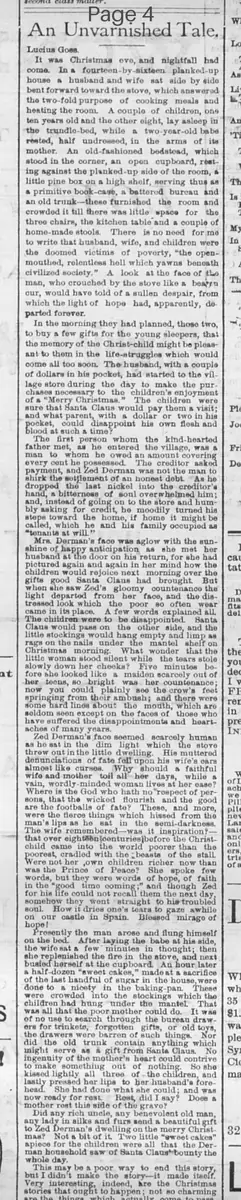
An Unvarnished Tale.
Lucius Goss.
It was Christmas eve, and nightfall had come. In a fourteen-by-sixteen planked-up house a husband and wife sat side by side bent forward toward the stove, which answered the two-fold purpose of cooking meals and heating the room. A couple of children, one ten years old and the other eight, lay asleep in the trundle-bed, while a two-year-old babe roosted, half undressed, in the arms of its mother. An old-fashioned bedstead, which stood in the corner, an open cupboard resting against the planked-up side of the room, little pine box on a high shelf, serving thus as a primitive book-case, a battered bureau and an old trunk--these furnished the room and crowded it till there was little space for the three chairs, the kitchen table and a couple of home-made stools. There is no need for me to write that husband, wife, and children were the doomed victims of poverty, "the open-mouthed, relentless hell which yawns beneath civilized society." A look at the face of the man, who crouched by the stove like a beaten cur, would have told of a sullen despair, from which the light of hope had, apparently, departed forever.
In the morning they had planned, those two, to buy a few gifts for the young sleepers, that the memory of the Christ-child might be pleasant to them in the life-struggles which would come all too soon. The husband, with a couple of dollars in his pocket, had started to the village store during the day to make the purchases necessary to the children's enjoyment of a "Merry Christmas." The children were sure that Santa Claus would pay them a visit; and what parent, with a dollar or two in his pocket, could disappoint his own flesh and blood at such a time?
The first person whom the kind-hearted father met, as he entered the village, was a man to whom he owed an amount covering every cent he possessed. The creditor asked payment, and Zed Derman was not the man to shirk the settlement of an honest debt. As he dropped the last nickel into the creditor's hand, a bitterness of soul overwhelmed him; and, instead of going on to the store and humbly asking for credit, he moodily turned his steps toward the home, if home it might be called, which he and his family occupied as "tenants at will"
Mrs. Derman's face was aglow with the sunshine of happy anticipation as she met her husband at the door on his return, for she had pictured again and again in her mind how the children would rejoice next morning over the gifts good Santa Claus had brought. But when she saw Zed's gloomy countenance the light departed from her face, and the distressed look which the poor so often wear came in its place. A few words explained all. The children were to be disappointed. Santa Claus would pass on the other side, and the little stockings would hang empty and limp as rags on the nails under the mantel shelf on Christmas morning. What wonder that the little woman stood silent while the tears stole slowly down her cheeks? Five minutes before she looked like a maiden scarcely out of her teens, so bright was her countenance; now you could plainly see the crow's feet springing from their ambush; and there were some hard lines about the mouth, which are seldom seen except on the faces of those who have suffered the disappointments and heart-aches of many years.
Zed Derman's face seemed scarcely human as he sat in the dim light which the stove threw out in the little dwelling. His muttered denunciations of fate fell upon his wife's ears almost like curses. Why should a faithful wife and mother toil all her days, while a vain, worldly-minded woman lives at her ease? Where is the God who hath no respect of persons, that the wicked flourish and the good are the footballs of fate? These, and more, were the fierce things which hissed from the man's lips as he sat in the semi-darkness.
The wife remembered--was it inspiration?-- that over eighteen centuries before the Christ-child came into the world poorer than the poorest, cradled with the beasts of the stall. Were not her own children richer now than was the Prince of Peace? She spoke few words, but they were words of hope, of faith in the "good time coming;" and though Zed for his life could not recall them the next day, somehow they went straight to his troubled soul. How it dries one's tears to gaze awhile on our castle in Spain. Blessed mirage of hope!
Presently the man arose and flung himself on the bed. After laying the babe at his side, the wife sat a few minutes in thought; then she replenished the fire in the stove, and next busied herself at the cupboard. An hour later a half-dozen "sweet cakes," made at a sacrifice of the last handful of sugar in the house, were done to a nicety in the baking-pan. These were crowded into the stockings which the children had hung under the mantel. That was all that the poor mother could do. It was of no use to search through the bureau drawers for trinkets, forgotten gifts, or old toys the drawers were barren of such things. Nor did the old trunk contain anything which might serve as a gift from Santa Claus. No ingenuity of the mother's heart could contrive to make something out of nothing. So she kissed lightly all three of the children, and lastly pressed her lips to her husband's forehead. She had done what she could; and was now ready for rest
Rest, did I say? Does a mother rest this side of the grave? Did any rich uncle, any benevolent old man, any lady in silks and furs send a beautiful gift to Zed Derman's dwelling on the merry Christmas? Not a bit of it Two little "sweet cakes" apiece for the children were all that the Derman household saw of Santa Claus' bounty the whole day.
This may be a poor way to end this story but I didn't make the story--it made itself Very interesting, indeed, are the Christmas stories that ought to happen; not so charming are the things which actually come to pass. How good does Santa Claus seem to those who see only his jolly side; but to those whom he passes by without so much as a nod he appears as ugly and selfish an old chap as can be found. Of course, it is very wicked to hate dear old Santa, but this world is boiling over with wickedness, and so long as the parents dine on sour grapes the children's teeth will be set on edge.
Lucius Goss.
It was Christmas eve, and nightfall had come. In a fourteen-by-sixteen planked-up house a husband and wife sat side by side bent forward toward the stove, which answered the two-fold purpose of cooking meals and heating the room. A couple of children, one ten years old and the other eight, lay asleep in the trundle-bed, while a two-year-old babe roosted, half undressed, in the arms of its mother. An old-fashioned bedstead, which stood in the corner, an open cupboard resting against the planked-up side of the room, little pine box on a high shelf, serving thus as a primitive book-case, a battered bureau and an old trunk--these furnished the room and crowded it till there was little space for the three chairs, the kitchen table and a couple of home-made stools. There is no need for me to write that husband, wife, and children were the doomed victims of poverty, "the open-mouthed, relentless hell which yawns beneath civilized society." A look at the face of the man, who crouched by the stove like a beaten cur, would have told of a sullen despair, from which the light of hope had, apparently, departed forever.
In the morning they had planned, those two, to buy a few gifts for the young sleepers, that the memory of the Christ-child might be pleasant to them in the life-struggles which would come all too soon. The husband, with a couple of dollars in his pocket, had started to the village store during the day to make the purchases necessary to the children's enjoyment of a "Merry Christmas." The children were sure that Santa Claus would pay them a visit; and what parent, with a dollar or two in his pocket, could disappoint his own flesh and blood at such a time?
The first person whom the kind-hearted father met, as he entered the village, was a man to whom he owed an amount covering every cent he possessed. The creditor asked payment, and Zed Derman was not the man to shirk the settlement of an honest debt. As he dropped the last nickel into the creditor's hand, a bitterness of soul overwhelmed him; and, instead of going on to the store and humbly asking for credit, he moodily turned his steps toward the home, if home it might be called, which he and his family occupied as "tenants at will"
Mrs. Derman's face was aglow with the sunshine of happy anticipation as she met her husband at the door on his return, for she had pictured again and again in her mind how the children would rejoice next morning over the gifts good Santa Claus had brought. But when she saw Zed's gloomy countenance the light departed from her face, and the distressed look which the poor so often wear came in its place. A few words explained all. The children were to be disappointed. Santa Claus would pass on the other side, and the little stockings would hang empty and limp as rags on the nails under the mantel shelf on Christmas morning. What wonder that the little woman stood silent while the tears stole slowly down her cheeks? Five minutes before she looked like a maiden scarcely out of her teens, so bright was her countenance; now you could plainly see the crow's feet springing from their ambush; and there were some hard lines about the mouth, which are seldom seen except on the faces of those who have suffered the disappointments and heart-aches of many years.
Zed Derman's face seemed scarcely human as he sat in the dim light which the stove threw out in the little dwelling. His muttered denunciations of fate fell upon his wife's ears almost like curses. Why should a faithful wife and mother toil all her days, while a vain, worldly-minded woman lives at her ease? Where is the God who hath no respect of persons, that the wicked flourish and the good are the footballs of fate? These, and more, were the fierce things which hissed from the man's lips as he sat in the semi-darkness.
The wife remembered--was it inspiration?-- that over eighteen centuries before the Christ-child came into the world poorer than the poorest, cradled with the beasts of the stall. Were not her own children richer now than was the Prince of Peace? She spoke few words, but they were words of hope, of faith in the "good time coming;" and though Zed for his life could not recall them the next day, somehow they went straight to his troubled soul. How it dries one's tears to gaze awhile on our castle in Spain. Blessed mirage of hope!
Presently the man arose and flung himself on the bed. After laying the babe at his side, the wife sat a few minutes in thought; then she replenished the fire in the stove, and next busied herself at the cupboard. An hour later a half-dozen "sweet cakes," made at a sacrifice of the last handful of sugar in the house, were done to a nicety in the baking-pan. These were crowded into the stockings which the children had hung under the mantel. That was all that the poor mother could do. It was of no use to search through the bureau drawers for trinkets, forgotten gifts, or old toys the drawers were barren of such things. Nor did the old trunk contain anything which might serve as a gift from Santa Claus. No ingenuity of the mother's heart could contrive to make something out of nothing. So she kissed lightly all three of the children, and lastly pressed her lips to her husband's forehead. She had done what she could; and was now ready for rest
Rest, did I say? Does a mother rest this side of the grave? Did any rich uncle, any benevolent old man, any lady in silks and furs send a beautiful gift to Zed Derman's dwelling on the merry Christmas? Not a bit of it Two little "sweet cakes" apiece for the children were all that the Derman household saw of Santa Claus' bounty the whole day.
This may be a poor way to end this story but I didn't make the story--it made itself Very interesting, indeed, are the Christmas stories that ought to happen; not so charming are the things which actually come to pass. How good does Santa Claus seem to those who see only his jolly side; but to those whom he passes by without so much as a nod he appears as ugly and selfish an old chap as can be found. Of course, it is very wicked to hate dear old Santa, but this world is boiling over with wickedness, and so long as the parents dine on sour grapes the children's teeth will be set on edge.
What sub-type of article is it?
Prose Fiction
What themes does it cover?
Religious
Moral Virtue
Social Manners
What keywords are associated?
Christmas Eve
Poverty
Family Struggles
Santa Claus
Faith Hope
What entities or persons were involved?
Lucius Goss.
Literary Details
Title
An Unvarnished Tale.
Author
Lucius Goss.
Subject
A Christmas Tale Of Poverty And Disappointment
Key Lines
It Was Christmas Eve, And Nightfall Had Come. In A Fourteen By Sixteen Planked Up House A Husband And Wife Sat Side By Side Bent Forward Toward The Stove, Which Answered The Two Fold Purpose Of Cooking Meals And Heating The Room.
The Wife Remembered Was It Inspiration? That Over Eighteen Centuries Before The Christ Child Came Into The World Poorer Than The Poorest, Cradled With The Beasts Of The Stall. Were Not Her Own Children Richer Now Than Was The Prince Of Peace?
This May Be A Poor Way To End This Story But I Didn't Make The Story It Made Itself Very Interesting, Indeed, Are The Christmas Stories That Ought To Happen; Not So Charming Are The Things Which Actually Come To Pass.