Thank you for visiting SNEWPapers!
Sign up free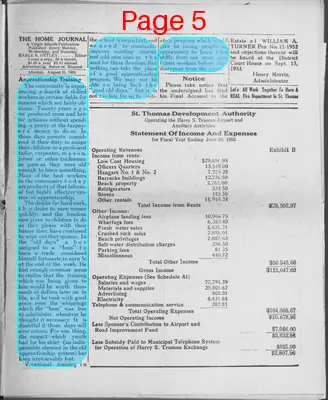
Editorial
August 31, 1953
The Home Journal
Charlotte Amalie, Saint Thomas County, Virgin Islands
What is this article about?
The editorial laments the decline of traditional apprenticeship systems due to modern attitudes toward work and leisure, praises past informal training, and advocates for new programs to teach skills from experienced workers, supplementing school vocational education.
Clipping
OCR Quality
98%
Excellent
Full Text
Apprenticeship Training
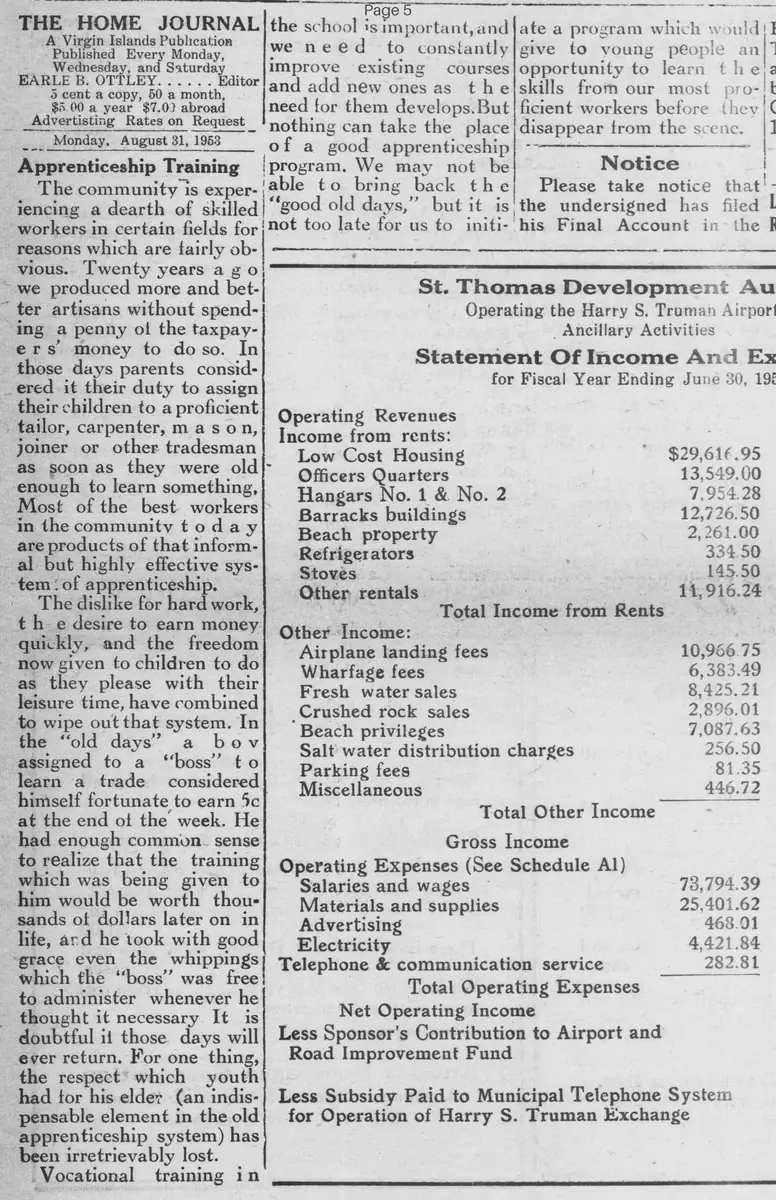
The community is experiencing a dearth of skilled workers in certain fields for reasons which are fairly obvious. Twenty years ago we produced more and better artisans without spending a penny of the taxpayers' money to do so. In those days parents considered it their duty to assign their children to a proficient tailor, carpenter, mason, joiner or other tradesman as soon as they were old enough to learn something. Most of the best workers in the community today are products of that informal but highly effective system of apprenticeship.
The dislike for hard work, the desire to earn money quickly, and the freedom now given to children to do as they please with their leisure time have combined to wipe out that system. In the "old days" a boy assigned to a "boss" to learn a trade considered himself fortunate to earn 5c at the end of the week. He had enough common sense to realize that the training which was being given to him would be worth thousands of dollars later on in life, and he took with good grace even the whippings which the "boss" was free to administer whenever he thought it necessary. It is doubtful if those days will ever return. For one thing, the respect which youth had for his elders (an indispensable element in the old apprenticeship system) has been irretrievably lost.
Vocational training in the school is important, and we need to constantly improve existing courses and add new ones as the need for them develops. But nothing can take the place of a good apprenticeship program. We may not be able to bring back the "good old days," but it is not too late for us to initiate a program which would give to young people an opportunity to learn the skills from our most proficient workers before they disappear from the scene.
The community is experiencing a dearth of skilled workers in certain fields for reasons which are fairly obvious. Twenty years ago we produced more and better artisans without spending a penny of the taxpayers' money to do so. In those days parents considered it their duty to assign their children to a proficient tailor, carpenter, mason, joiner or other tradesman as soon as they were old enough to learn something. Most of the best workers in the community today are products of that informal but highly effective system of apprenticeship.
The dislike for hard work, the desire to earn money quickly, and the freedom now given to children to do as they please with their leisure time have combined to wipe out that system. In the "old days" a boy assigned to a "boss" to learn a trade considered himself fortunate to earn 5c at the end of the week. He had enough common sense to realize that the training which was being given to him would be worth thousands of dollars later on in life, and he took with good grace even the whippings which the "boss" was free to administer whenever he thought it necessary. It is doubtful if those days will ever return. For one thing, the respect which youth had for his elders (an indispensable element in the old apprenticeship system) has been irretrievably lost.
Vocational training in the school is important, and we need to constantly improve existing courses and add new ones as the need for them develops. But nothing can take the place of a good apprenticeship program. We may not be able to bring back the "good old days," but it is not too late for us to initiate a program which would give to young people an opportunity to learn the skills from our most proficient workers before they disappear from the scene.
What sub-type of article is it?
Labor
Education
Social Reform
What keywords are associated?
Apprenticeship Training
Skilled Workers
Vocational Education
Youth Respect
Trade Learning
Editorial Details
Primary Topic
Revival Of Apprenticeship Training
Stance / Tone
Advocacy For Apprenticeship Programs
Key Arguments
Decline Of Skilled Workers Due To Loss Of Traditional Apprenticeship
Past System Produced Better Artisans Without Public Cost
Modern Attitudes Like Aversion To Hard Work And Quick Money Desires Ended The System
School Vocational Training Is Important But Insufficient Without Apprenticeship
Propose New Programs To Learn From Proficient Workers