Thank you for visiting SNEWPapers!
Sign up free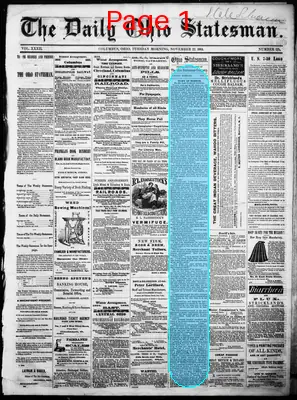
Literary
November 22, 1864
Daily Ohio Statesman
Columbus, Franklin County, Ohio
What is this article about?
A historical narrative depicting the final days of Mary of Medicis in poverty in Cologne, attended by her loyal companion Mascali. She encounters the exiled Duke of Guise, receives aid from him, but ultimately dies of hunger and cold in 1642, contrasting her past glory as Queen Regent of France with her tragic end under Louis XIII and Richelieu.
Clipping

OCR Quality
98%
Excellent
Full Text
PRINTED AND PUBLISHED BY
The Ohio Statesman Company
TUESDAY MORNING, - - - NOV. 22
MARY OF MEDICIS.
Or, the Last Stroke of Fortune.
Twenty years ago an old house was still standing in Cologne, which showed to the street a frontage of five small windows. It was the house in which the first painter of the French school, the immortal Rubens, was born, A.D. 1577. Sixty years later than this date, the ground-floor was occupied by two old people, a shoemaker and his wife. The upper story, which was usually let to lodgers, was empty at the time we write of. Two, however, occupied the garret. The evening was cold and wet, and the shoemaker and his wife were sitting together in the room below.
"You had better go up stairs again," said the man to his wife, "and see how the old lady is. The old gentleman went out early, and has not been in since. Has she not taken anything."
"It is only half an hour since I went up stairs, and he has not come in. I took her some broth up at noon, but she hardly touched it, and I was up again at three; she was asleep then, and at five she said she would not want anything more."
"Poor lady! This time of year, and neither fire nor warm clothes, and even not a decent bed to lie on; and yet I am sure she is somebody or other. Have you noticed the respect with which the old gentleman treats her?"
"If she wants for anything it is her own fault. That ring which she wears on her finger would get her the best of everything."
Then came a knock at the door, and the woman admitted the old man they had just spoken of, whose grizzled beard fell down on his tarnished velvet coat. The hostess gladly wanted to have a little gossip with him, but he passed by, and, bidding them a short "good night," groped his way up the steep and crooked staircase. On entering the chamber above a feeble voice inquired the cause of his long absence.
"I could not help it," he said, "I have been copying manuscript, and, as I was on my way here, a servant met me, who was to fetch me to raise the horoscope of two ladies who were passing through; they were ladies whom I have known before. I thought I could get a little money to pay for some simples which will be of service to you."
"I am cold."
"It is fever cold. I will make you something which you must take directly."
The flame of a small tin lamp sufficed to heat some water, and the patient, having taken what the old man provided, was diligently covered up by him with all the clothes and articles of dress he could find. He stood by her motionless, till he perceived that she was fast asleep, and indeed long after; he then retired into a small closet, and sought repose on the hard floor.
The next morning the lady was so much better that her attendant proposed she should leave the house for a moment or two, and he succeeded in getting her forth as far as the Place St. Cecilia. It was seldom that she left the house, for notwithstanding the meanness of her dress, there was that about her carriage which rendered it difficult to avoid unpleasant observation.
"Do you see that person yonder?" she said suddenly. "If I am not much mistaken, it is certainly the Duke of Guise."
The stranger's attention had also been attracted, and he now approached them.
"Parbleu!" said he, "why, that is Mascali What, are you married?"
"He does not know me," sighed the lady.
"I must indeed be altered."
Mascali had, however, whispered a single word in the Duke's ear, and he started as if struck by a thunderbolt; but instantly recovering himself, he hastily uncovered and bowed nearly to the ground.
"I beg your forgiveness," he said; "but my eyes are growing so weak, and I could so little expect to have the honor of meeting you—"
"For the love of God, name me not here! A title would too strong contrast with my present circumstances. Have you been long in Cologne?"
"Three days. I am on my way from Italy. I took refuge there when our common enemy drove me forth and confiscated all my earthly goods."
"And what are your advices from France? Is the helm still in the hands of that wretched caitiff?"
"He is in the zenith of his power."
"See, my lord duke, your fortunes and my own are much alike. You are the son of a man who, had he not too much despised danger, might well have set the crown upon his own head, and I, once the queen of the mightiest nation of the universe—and now both of us are alike. But adieu," she said, suddenly, and drawing herself up, "the sight of you, my lord duke, has refreshed me much, and I pray that fortune may once more shine upon your steps."
"Permit me to attend your majesty to
A slight color tinged the lady's features as she answered with a gently commanding tone, "Leave us, my lord duke; it is our pleasure."
Guise bowed low, and taking the lady's hand, he pressed it reverently to his lips.— At the corner he met some one, to whom he pointed out the lady and then he hastened away.
The next morning a knock at the door announced a person inquiring for Monsieur Mascali. She had a small packet for him, and also a billet. Inside this was distinctly written:
"Two hundred louis d'ors constitute the whole of my present fortune; one hundred I send for your use.
GUISE."
And the packet contained a hundred louis d'ors. The sum thus obtained sufficed to supply the wants of the pair two long years. But the last louis had been changed, and the lady and her companion were still without friendly succor. The shoemaker and his wife had undertaken a journey to Aix la-Chapelle, to take up some small legacy. It was on the 13th of February, 1642. A low sound of moaning might have been heard issuing from the garret; a withered female form, more like a skeleton than a thing of flesh and blood, was lying on a wretched bed of straw in the agonies of death. The moans grew more indistinct; and a slight rattling in the throat was at length the only audible sound, and this also ceased. An hour later an old man dressed in rags and tatters, entered the chamber. One only word had escaped his lips as he tumbled up the falling staircase: "Nothing! Nothing!" He drew near the bed listlessly, but in a moment he seized an arm of the corpse with an almost convulsive motion, and letting it suddenly fall, he cried: "Dead. dead, of hunger, cold, and starvation!"
And this lady was Mary of Medicis, wife of Henry IV., Queen Regent of France, mother of Louis XIII., of Isabella, Queen of Spain, of Henrietta, Queen of England, of Christiana, Duchess of Savoy, of Gaston, Duke of Orleans—dead of hunger, cold, and misery; and yet Louis XIII., the cowardly tool of Richelieu, his mother's murderer, is still called the "Just."
The Ohio Statesman Company
TUESDAY MORNING, - - - NOV. 22
MARY OF MEDICIS.
Or, the Last Stroke of Fortune.
Twenty years ago an old house was still standing in Cologne, which showed to the street a frontage of five small windows. It was the house in which the first painter of the French school, the immortal Rubens, was born, A.D. 1577. Sixty years later than this date, the ground-floor was occupied by two old people, a shoemaker and his wife. The upper story, which was usually let to lodgers, was empty at the time we write of. Two, however, occupied the garret. The evening was cold and wet, and the shoemaker and his wife were sitting together in the room below.
"You had better go up stairs again," said the man to his wife, "and see how the old lady is. The old gentleman went out early, and has not been in since. Has she not taken anything."
"It is only half an hour since I went up stairs, and he has not come in. I took her some broth up at noon, but she hardly touched it, and I was up again at three; she was asleep then, and at five she said she would not want anything more."
"Poor lady! This time of year, and neither fire nor warm clothes, and even not a decent bed to lie on; and yet I am sure she is somebody or other. Have you noticed the respect with which the old gentleman treats her?"
"If she wants for anything it is her own fault. That ring which she wears on her finger would get her the best of everything."
Then came a knock at the door, and the woman admitted the old man they had just spoken of, whose grizzled beard fell down on his tarnished velvet coat. The hostess gladly wanted to have a little gossip with him, but he passed by, and, bidding them a short "good night," groped his way up the steep and crooked staircase. On entering the chamber above a feeble voice inquired the cause of his long absence.
"I could not help it," he said, "I have been copying manuscript, and, as I was on my way here, a servant met me, who was to fetch me to raise the horoscope of two ladies who were passing through; they were ladies whom I have known before. I thought I could get a little money to pay for some simples which will be of service to you."
"I am cold."
"It is fever cold. I will make you something which you must take directly."
The flame of a small tin lamp sufficed to heat some water, and the patient, having taken what the old man provided, was diligently covered up by him with all the clothes and articles of dress he could find. He stood by her motionless, till he perceived that she was fast asleep, and indeed long after; he then retired into a small closet, and sought repose on the hard floor.
The next morning the lady was so much better that her attendant proposed she should leave the house for a moment or two, and he succeeded in getting her forth as far as the Place St. Cecilia. It was seldom that she left the house, for notwithstanding the meanness of her dress, there was that about her carriage which rendered it difficult to avoid unpleasant observation.
"Do you see that person yonder?" she said suddenly. "If I am not much mistaken, it is certainly the Duke of Guise."
The stranger's attention had also been attracted, and he now approached them.
"Parbleu!" said he, "why, that is Mascali What, are you married?"
"He does not know me," sighed the lady.
"I must indeed be altered."
Mascali had, however, whispered a single word in the Duke's ear, and he started as if struck by a thunderbolt; but instantly recovering himself, he hastily uncovered and bowed nearly to the ground.
"I beg your forgiveness," he said; "but my eyes are growing so weak, and I could so little expect to have the honor of meeting you—"
"For the love of God, name me not here! A title would too strong contrast with my present circumstances. Have you been long in Cologne?"
"Three days. I am on my way from Italy. I took refuge there when our common enemy drove me forth and confiscated all my earthly goods."
"And what are your advices from France? Is the helm still in the hands of that wretched caitiff?"
"He is in the zenith of his power."
"See, my lord duke, your fortunes and my own are much alike. You are the son of a man who, had he not too much despised danger, might well have set the crown upon his own head, and I, once the queen of the mightiest nation of the universe—and now both of us are alike. But adieu," she said, suddenly, and drawing herself up, "the sight of you, my lord duke, has refreshed me much, and I pray that fortune may once more shine upon your steps."
"Permit me to attend your majesty to
A slight color tinged the lady's features as she answered with a gently commanding tone, "Leave us, my lord duke; it is our pleasure."
Guise bowed low, and taking the lady's hand, he pressed it reverently to his lips.— At the corner he met some one, to whom he pointed out the lady and then he hastened away.
The next morning a knock at the door announced a person inquiring for Monsieur Mascali. She had a small packet for him, and also a billet. Inside this was distinctly written:
"Two hundred louis d'ors constitute the whole of my present fortune; one hundred I send for your use.
GUISE."
And the packet contained a hundred louis d'ors. The sum thus obtained sufficed to supply the wants of the pair two long years. But the last louis had been changed, and the lady and her companion were still without friendly succor. The shoemaker and his wife had undertaken a journey to Aix la-Chapelle, to take up some small legacy. It was on the 13th of February, 1642. A low sound of moaning might have been heard issuing from the garret; a withered female form, more like a skeleton than a thing of flesh and blood, was lying on a wretched bed of straw in the agonies of death. The moans grew more indistinct; and a slight rattling in the throat was at length the only audible sound, and this also ceased. An hour later an old man dressed in rags and tatters, entered the chamber. One only word had escaped his lips as he tumbled up the falling staircase: "Nothing! Nothing!" He drew near the bed listlessly, but in a moment he seized an arm of the corpse with an almost convulsive motion, and letting it suddenly fall, he cried: "Dead. dead, of hunger, cold, and starvation!"
And this lady was Mary of Medicis, wife of Henry IV., Queen Regent of France, mother of Louis XIII., of Isabella, Queen of Spain, of Henrietta, Queen of England, of Christiana, Duchess of Savoy, of Gaston, Duke of Orleans—dead of hunger, cold, and misery; and yet Louis XIII., the cowardly tool of Richelieu, his mother's murderer, is still called the "Just."
What sub-type of article is it?
Prose Fiction
What themes does it cover?
Political
Death Mortality
Taxation Oppression
What keywords are associated?
Mary Of Medicis
Exile
Poverty
Duke Of Guise
Historical Narrative
Royal Tragedy
Richelieu
Louis Xiii
Literary Details
Title
Mary Of Medicis. Or, The Last Stroke Of Fortune.
Subject
The Tragic Death Of Mary Of Medicis In Exile
Key Lines
"See, My Lord Duke, Your Fortunes And My Own Are Much Alike. You Are The Son Of A Man Who, Had He Not Too Much Despised Danger, Might Well Have Set The Crown Upon His Own Head, And I, Once The Queen Of The Mightiest Nation Of The Universe—And Now Both Of Us Are Alike."
"Two Hundred Louis D'ors Constitute The Whole Of My Present Fortune; One Hundred I Send For Your Use. Guise."
He Drew Near The Bed Listlessly, But In A Moment He Seized An Arm Of The Corpse With An Almost Convulsive Motion, And Letting It Suddenly Fall, He Cried: "Dead. Dead, Of Hunger, Cold, And Starvation!"
And This Lady Was Mary Of Medicis, Wife Of Henry Iv., Queen Regent Of France, Mother Of Louis Xiii., Of Isabella, Queen Of Spain, Of Henrietta, Queen Of England, Of Christiana, Duchess Of Savoy, Of Gaston, Duke Of Orleans—Dead Of Hunger, Cold, And Misery; And Yet Louis Xiii., The Cowardly Tool Of Richelieu, His Mother's Murderer, Is Still Called The "Just."