Thank you for visiting SNEWPapers!
Sign up free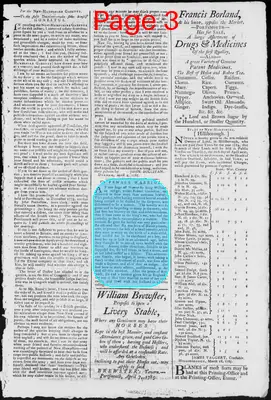
Literary
April 8, 1785
Fowle's New Hampshire Gazette And General Advertiser
Portsmouth, Rockingham County, New Hampshire
What is this article about?
During the siege of Namur by King William, ensign Robert Cornelius, wounded and treated, was revealed to be a woman who had been raised as a boy to secure a family annuity. She served undiscovered in many battles, rising to ensign, and later received a pension in England after marrying a comrade.
Clipping
OCR Quality
98%
Excellent
Full Text
The FEMALE WARRIOR.
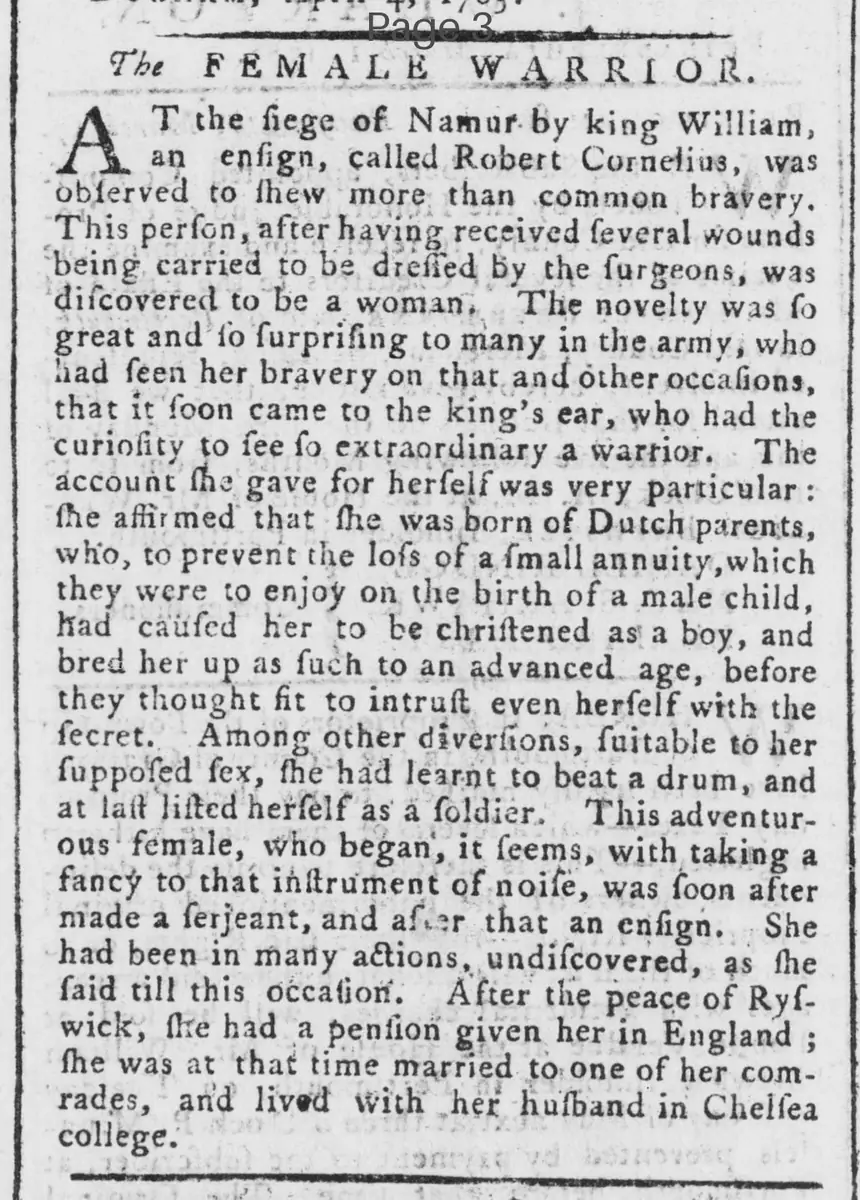
At the siege of Namur by king William, an ensign, called Robert Cornelius, was observed to show more than common bravery. This person, after having received several wounds being carried to be dressed by the surgeons, was discovered to be a woman. The novelty was so great and so surprising to many in the army, who had seen her bravery on that and other occasions, that it soon came to the king's ear, who had the curiosity to see so extraordinary a warrior. The account she gave for herself was very particular: she affirmed that she was born of Dutch parents, who, to prevent the loss of a small annuity, which they were to enjoy on the birth of a male child, had caused her to be christened as a boy, and bred her up as such to an advanced age, before they thought fit to intrust even herself with the secret. Among other diversions, suitable to her supposed sex, she had learnt to beat a drum, and at last listed herself as a soldier. This adventurous female, who began, it seems, with taking a fancy to that instrument of noise, was soon after made a sergeant, and after that an ensign. She had been in many actions, undiscovered, as she said till this occasion. After the peace of Ryswick, she had a pension given her in England; she was at that time married to one of her comrades, and lived with her husband in Chelsea college.
At the siege of Namur by king William, an ensign, called Robert Cornelius, was observed to show more than common bravery. This person, after having received several wounds being carried to be dressed by the surgeons, was discovered to be a woman. The novelty was so great and so surprising to many in the army, who had seen her bravery on that and other occasions, that it soon came to the king's ear, who had the curiosity to see so extraordinary a warrior. The account she gave for herself was very particular: she affirmed that she was born of Dutch parents, who, to prevent the loss of a small annuity, which they were to enjoy on the birth of a male child, had caused her to be christened as a boy, and bred her up as such to an advanced age, before they thought fit to intrust even herself with the secret. Among other diversions, suitable to her supposed sex, she had learnt to beat a drum, and at last listed herself as a soldier. This adventurous female, who began, it seems, with taking a fancy to that instrument of noise, was soon after made a sergeant, and after that an ensign. She had been in many actions, undiscovered, as she said till this occasion. After the peace of Ryswick, she had a pension given her in England; she was at that time married to one of her comrades, and lived with her husband in Chelsea college.
What sub-type of article is it?
Prose Fiction
What themes does it cover?
War Peace
Moral Virtue
What keywords are associated?
Female Warrior
Siege Of Namur
King William
Disguise As Man
Military Bravery
Dutch Parents
Peace Of Ryswick
Chelsea College
Literary Details
Title
The Female Warrior.
Subject
At The Siege Of Namur By King William
Form / Style
Narrative Anecdote In Prose
Key Lines
This Person, After Having Received Several Wounds Being Carried To Be Dressed By The Surgeons, Was Discovered To Be A Woman.
She Affirmed That She Was Born Of Dutch Parents, Who, To Prevent The Loss Of A Small Annuity, Which They Were To Enjoy On The Birth Of A Male Child, Had Caused Her To Be Christened As A Boy, And Bred Her Up As Such To An Advanced Age
This Adventurous Female, Who Began, It Seems, With Taking A Fancy To That Instrument Of Noise, Was Soon After Made A Sergeant, And After That An Ensign.
After The Peace Of Ryswick, She Had A Pension Given Her In England; She Was At That Time Married To One Of Her Comrades, And Lived With Her Husband In Chelsea College.