Thank you for visiting SNEWPapers!
Sign up free
Literary
October 28, 1926
Peapack Gladstone Exponent
Peapack And Gladstone, Peapack, Gladstone, Far Hills, Bedminster, Somerset County, New Jersey
What is this article about?
Jean Newton explains the agricultural origin of the phrase 'separate the chaff from the wheat,' describing how chaff is removed from grain through threshing and winnowing to produce bread, and its metaphorical use in speech to distinguish the true from the false.
Clipping
OCR Quality
95%
Excellent
Full Text
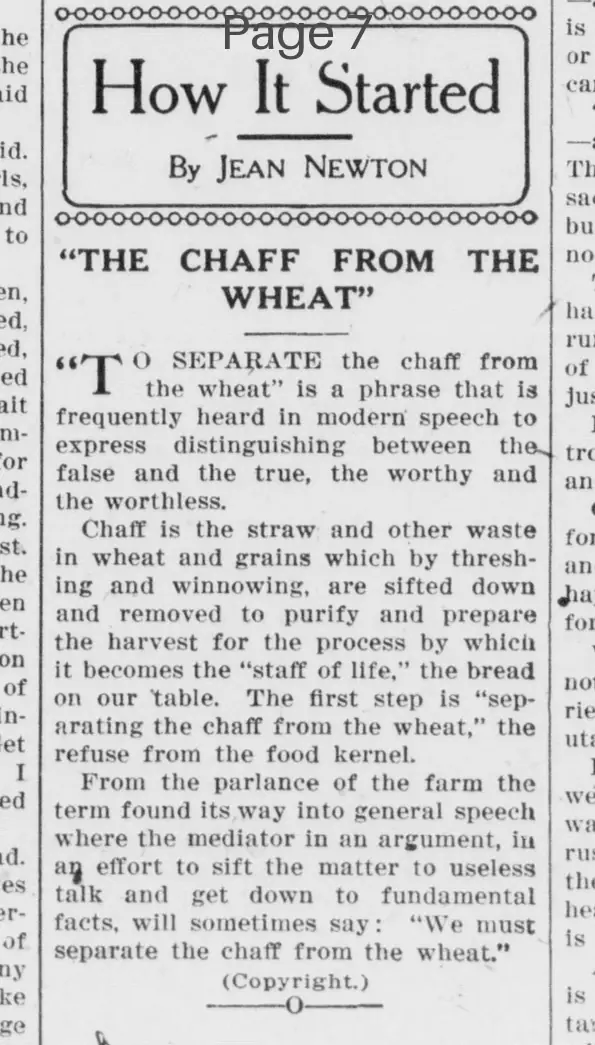
How It Started
By Jean Newton
THE CHAFF FROM THE WHEAT
To separate the chaff from the wheat is a phrase that is frequently heard in modern speech to express distinguishing between the false and the true, the worthy and the worthless.
Chaff is the straw and other waste in wheat and grains which by threshing and winnowing are sifted down and removed to purify and prepare the harvest for the process by which it becomes the "staff of life," the bread on our table.
The first step is "separating the chaff from the wheat," the refuse from the food kernel.
From the parlance of the farm the term found its way into general speech where the mediator in an argument, in an effort to sift the matter to useless talk and get down to fundamental facts, will sometimes say: "We must separate the chaff from the wheat."
(Copyright.)
By Jean Newton
THE CHAFF FROM THE WHEAT
To separate the chaff from the wheat is a phrase that is frequently heard in modern speech to express distinguishing between the false and the true, the worthy and the worthless.
Chaff is the straw and other waste in wheat and grains which by threshing and winnowing are sifted down and removed to purify and prepare the harvest for the process by which it becomes the "staff of life," the bread on our table.
The first step is "separating the chaff from the wheat," the refuse from the food kernel.
From the parlance of the farm the term found its way into general speech where the mediator in an argument, in an effort to sift the matter to useless talk and get down to fundamental facts, will sometimes say: "We must separate the chaff from the wheat."
(Copyright.)
What sub-type of article is it?
Essay
What themes does it cover?
Agriculture Rural
Moral Virtue
What keywords are associated?
Phrase Origin
Chaff Wheat
Threshing Winnowing
Farming Metaphor
Distinguishing Truth
What entities or persons were involved?
By Jean Newton
Literary Details
Title
The Chaff From The Wheat
Author
By Jean Newton
Subject
Origin Of The Phrase 'Separate The Chaff From The Wheat'
Key Lines
To Separate The Chaff From The Wheat Is A Phrase That Is Frequently Heard In Modern Speech To Express Distinguishing Between The False And The True, The Worthy And The Worthless.
Chaff Is The Straw And Other Waste In Wheat And Grains Which By Threshing And Winnowing Are Sifted Down And Removed To Purify And Prepare The Harvest For The Process By Which It Becomes The "Staff Of Life," The Bread On Our Table.