Thank you for visiting SNEWPapers!
Sign up free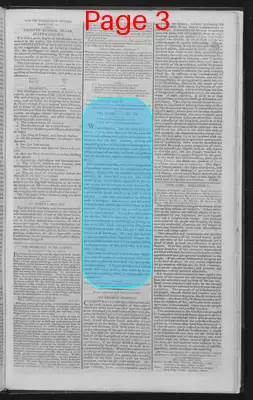
Literary
December 23, 1789
Gazette Of The United States
New York, New York County, New York
What is this article about?
Periodical essay 'The Guest, No. VII' explores the dominance of laziness over human passions and virtues, quoting La Rochefoucauld. It argues that idleness causes unhappiness, with people devising ways to waste time, and stresses the need for useful employment for contentment. Includes erratum for prior issue.
Clipping
OCR Quality
95%
Excellent
Full Text
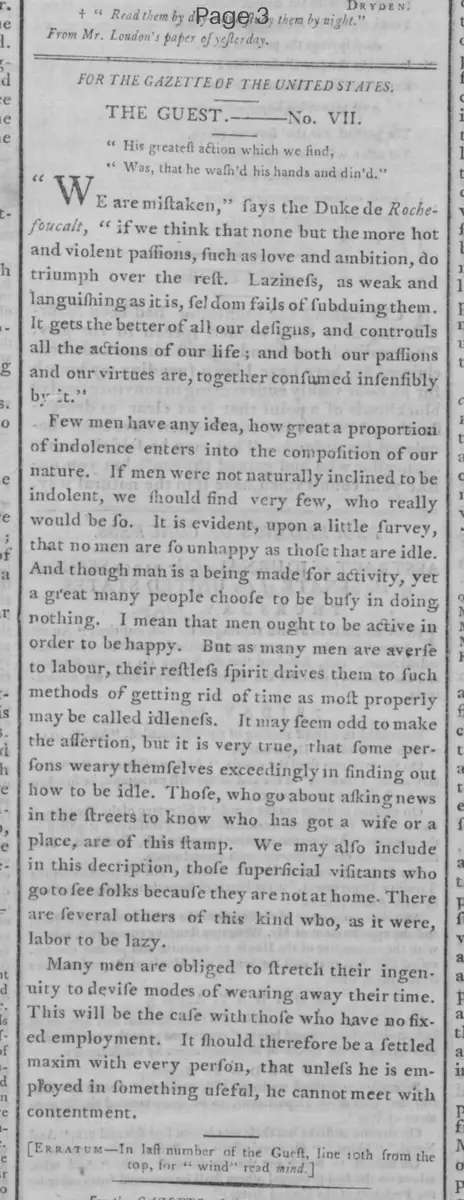
FOR THE GAZETTE OF THE UNITED STATES
THE GUEST.
-No. VII.
"His greatest action which we find,
"Was, that he wash'd his hands and din'd."
WE are mistaken, says the Duke de Rochefoucault, "if we think that none but the more hot and violent passions, such as love and ambition, do triumph over the rest. Laziness, as weak and languishing as it is, seldom fails of subduing them. It gets the better of all our designs, and controuls all the actions of our life; and both our passions and our virtues are, together consumed insensibly by it."
Few men have any idea, how great a proportion of indolence enters into the composition of our nature. If men were not naturally inclined to be indolent, we should find very few, who really would be so. It is evident, upon a little survey, that no men are so unhappy as those that are idle. And though man is a being made for activity, yet a great many people choose to be busy in doing nothing. I mean that men ought to be active in order to be happy. But as many men are averse to labour, their restless spirit drives them to such methods of getting rid of time as most properly may be called idleness. It may seem odd to make the assertion, but it is very true, that some persons weary themselves exceedingly in finding out how to be idle. Those, who go about asking news in the streets to know who has got a wife or a place, are of this stamp. We may also include in this description, those superficial visitants who go to see folks because they are not at home. There are several others of this kind who, as it were, labor to be lazy. Many men are obliged to stretch their ingenuity to devise modes of wearing away their time. This will be the case with those who have no fixed employment. It should therefore be a settled maxim with every person, that unless he is employed in something useful, he cannot meet with contentment.
[Erratum—In last number of the Guest, line 10th from the top, for "wind" read mind.]
THE GUEST.
-No. VII.
"His greatest action which we find,
"Was, that he wash'd his hands and din'd."
WE are mistaken, says the Duke de Rochefoucault, "if we think that none but the more hot and violent passions, such as love and ambition, do triumph over the rest. Laziness, as weak and languishing as it is, seldom fails of subduing them. It gets the better of all our designs, and controuls all the actions of our life; and both our passions and our virtues are, together consumed insensibly by it."
Few men have any idea, how great a proportion of indolence enters into the composition of our nature. If men were not naturally inclined to be indolent, we should find very few, who really would be so. It is evident, upon a little survey, that no men are so unhappy as those that are idle. And though man is a being made for activity, yet a great many people choose to be busy in doing nothing. I mean that men ought to be active in order to be happy. But as many men are averse to labour, their restless spirit drives them to such methods of getting rid of time as most properly may be called idleness. It may seem odd to make the assertion, but it is very true, that some persons weary themselves exceedingly in finding out how to be idle. Those, who go about asking news in the streets to know who has got a wife or a place, are of this stamp. We may also include in this description, those superficial visitants who go to see folks because they are not at home. There are several others of this kind who, as it were, labor to be lazy. Many men are obliged to stretch their ingenuity to devise modes of wearing away their time. This will be the case with those who have no fixed employment. It should therefore be a settled maxim with every person, that unless he is employed in something useful, he cannot meet with contentment.
[Erratum—In last number of the Guest, line 10th from the top, for "wind" read mind.]
What sub-type of article is it?
Essay
What themes does it cover?
Moral Virtue
Temperance
What keywords are associated?
Indolence
Laziness
Idleness
Human Nature
Activity
Contentment
Employment
Literary Details
Title
The Guest. No. Vii.
Form / Style
Prose Essay On Indolence
Key Lines
"His Greatest Action Which We Find, Was, That He Wash'd His Hands And Din'd."
We Are Mistaken, Says The Duke De Rochefoucault, "If We Think That None But The More Hot And Violent Passions, Such As Love And Ambition, Do Triumph Over The Rest. Laziness, As Weak And Languishing As It Is, Seldom Fails Of Subduing Them."
It Is Evident, Upon A Little Survey, That No Men Are So Unhappy As Those That Are Idle.
It Should Therefore Be A Settled Maxim With Every Person, That Unless He Is Employed In Something Useful, He Cannot Meet With Contentment.