Thank you for visiting SNEWPapers!
Sign up free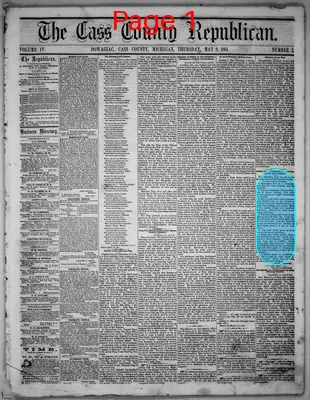
Domestic News
May 9, 1861
The Cass County Republican
Dowagiac, Cass County, Michigan
What is this article about?
Practical advice to young volunteer soldiers on preparing for a military campaign, emphasizing health, clothing, and hygiene to prevent sickness, signed by an 'Old Soldier' with reference to General Scott's Mexican War experiences.
Clipping
OCR Quality
95%
Excellent
Full Text
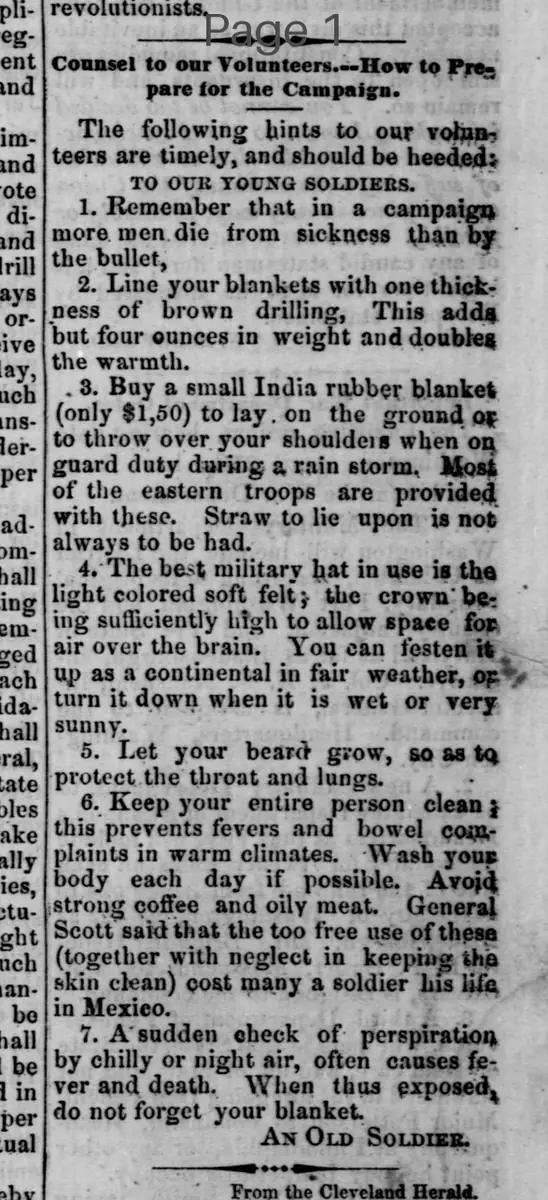
Counsel to our Volunteers.—How to Prepare for the Campaign.
The following hints to our volunteers are timely, and should be heeded:
TO OUR YOUNG SOLDIERS.
1. Remember that in a campaign more men die from sickness than by the bullet.
2. Line your blankets with one thickness of brown drilling. This adds but four ounces in weight and doubles the warmth.
3. Buy a small India rubber blanket (only $1.50) to lay on the ground or to throw over your shoulders when on guard duty during a rain storm. Most of the eastern troops are provided with these. Straw to lie upon is not always to be had.
4. The best military hat in use is the light colored soft felt; the crown being sufficiently high to allow space for air over the brain. You can fasten it up as a continental in fair weather, or turn it down when it is wet or very sunny.
5. Let your beard grow, so as to protect the throat and lungs.
6. Keep your entire person clean this prevents fevers and bowel complaints in warm climates. Wash your body each day if possible. Avoid strong coffee and oily meat. General Scott said that the too free use of these (together with neglect in keeping the skin clean) cost many a soldier his life in Mexico.
7. A sudden check of perspiration by chilly or night air, often causes fever and death. When thus exposed, do not forget your blanket.
An OLD SOLDIER.
The following hints to our volunteers are timely, and should be heeded:
TO OUR YOUNG SOLDIERS.
1. Remember that in a campaign more men die from sickness than by the bullet.
2. Line your blankets with one thickness of brown drilling. This adds but four ounces in weight and doubles the warmth.
3. Buy a small India rubber blanket (only $1.50) to lay on the ground or to throw over your shoulders when on guard duty during a rain storm. Most of the eastern troops are provided with these. Straw to lie upon is not always to be had.
4. The best military hat in use is the light colored soft felt; the crown being sufficiently high to allow space for air over the brain. You can fasten it up as a continental in fair weather, or turn it down when it is wet or very sunny.
5. Let your beard grow, so as to protect the throat and lungs.
6. Keep your entire person clean this prevents fevers and bowel complaints in warm climates. Wash your body each day if possible. Avoid strong coffee and oily meat. General Scott said that the too free use of these (together with neglect in keeping the skin clean) cost many a soldier his life in Mexico.
7. A sudden check of perspiration by chilly or night air, often causes fever and death. When thus exposed, do not forget your blanket.
An OLD SOLDIER.
What sub-type of article is it?
Military
What keywords are associated?
Volunteer Soldiers
Campaign Preparation
Military Health Tips
Soldier Advice
What entities or persons were involved?
General Scott
An Old Soldier
Domestic News Details
Key Persons
General Scott
An Old Soldier
Event Details
Hints for young soldiers preparing for a campaign, including lining blankets for warmth, using rubber blankets, choosing appropriate hats, growing beards for protection, maintaining cleanliness, avoiding certain foods, and protecting against sudden chills to prevent sickness and death.