Thank you for visiting SNEWPapers!
Sign up free
Literary
December 2, 1947
The Key West Citizen
Key West, Monroe County, Florida
What is this article about?
Jean Saunders joins the graveyard shift at a newspaper, initially welcomed by veteran Charles Dawson. They work harmoniously until a busy night when Dawson hides a major Times Square murder story in her basket, tricking her and drawing her boss's ire. (To be continued.)
Clipping
OCR Quality
98%
Excellent
Full Text
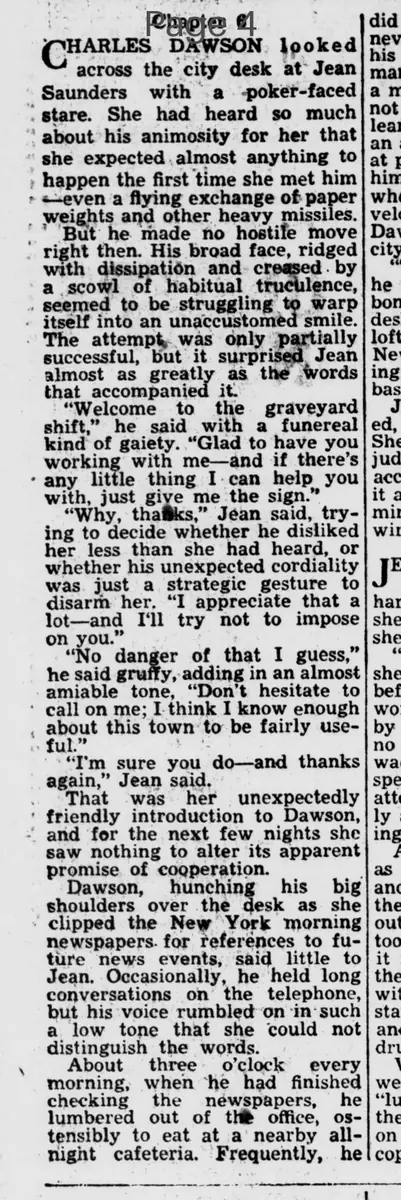
Charles Dawson looked across the city desk at Jean Saunders with a poker-faced stare. She had heard so much about his animosity for her that she expected almost anything to happen the first time she met him, even a flying exchange of paper weights and other heavy missiles. But he made no hostile move right then. His broad face, ridged with dissipation and creased by a scowl of habitual truculence, seemed to be struggling to warp itself into an unaccustomed smile. The attempt was only partially successful, but it surprised Jean almost as greatly as the words that accompanied it.
"Welcome to the graveyard shift," he said with a funereal kind of gaiety. "Glad to have you working with me—and if there's any little thing I can help you with, just give me the sign."
"Why, thanks," Jean said, trying to decide whether he disliked her less than she had heard, or whether his unexpected cordiality was just a strategic gesture to disarm her. "I appreciate that a lot—and I'll try not to impose on you."
"No danger of that I guess," he said gruffly, adding in an almost amiable tone, "Don't hesitate to call on me: I think I know enough about this town to be fairly useful."
"I'm sure you do—and thanks again," Jean said.
That was her unexpectedly friendly introduction to Dawson, and for the next few nights she saw nothing to alter its apparent promise of cooperation. Dawson, hunching his big shoulders over the desk as she clipped the New York morning newspapers for references to future news events, said little to Jean. Occasionally, he held long conversations on the telephone, but his voice rumbled on in such a low tone that she could not distinguish the words.
About three o'clock every morning, when he had finished checking the newspapers, he lumbered out of the office, ostensibly to eat at a nearby all-night cafeteria. Frequently, he did not return until 5 a.m., and never offered any explanation for his long absence. Yet he always managed to be in the office when a major local story broke. It was not until weeks later that Jean learned that Dawson had made an arrangement with the reporter at police headquarters who called him at some outside number whenever an important story developed. Within a few minutes, Dawson would be back at the city desk, turning out the story.
"This is just a cheap stabbing," he would say, as he tossed a carbon copy into the basket on her desk. Or: "Here's a two-alarm loft fire: nothing much outside New York." Often he said nothing; just threw the copy into the basket.
Jean, taking nothing for granted, examined all of the stories. She discovered that Dawson's judgment of their news value was accurate. If he cried down a story, it almost always proved to be too minor for use on the national wire.
JEAN had been working alongside Dawson in comparative harmony for several weeks when she encountered the busiest night she had ever worked.
"Good grief!" she exclaimed as she looked at the stack of stories before her. "I've got a week's work here—and it has to go out by 8 this morning." She wasted no further time on worry, but waded into the stories at top speed, concentrating her entire attention on them. She was hardly aware that Dawson was working at the next desk.
As for Dawson, he said nothing as he turned out several stories and tossed copies of them into the basket at Jean's side. Jean, out of sight of the radio wire and too completely engaged to check it if she had cared to, inspected the carbon copies in her basket without finding anything more startling than a cheap burglary and a two-paragraph brief on a drunken street brawl.
Within a half-hour, Dawson went out on his customary long "lunch hour" and Jean noted that the same burglary story was still on top of the pile of carbon copies.
Twenty minutes after Dawson had left, Jean looked up from her typewriter to see the night supervisor of news, Ross Mercer, standing in front of her. He was visibly agitated.
"Are you working on that Times Square murder?" he asked her, peering at the copy in the machine. His face fell. "Ye Gods. Jean! We should have had that story a half hour ago! I've already had two messages from Chicago and St. Louis asking about it."
Jean was too startled to think. "What Times Square murder?" she asked, bewildered.
"Mother of Heaven!" shouted Ross, grabbing his head in dismay. "Haven't you even heard about it? Two bandits killed a cop right after robbing the Ritz Hotel of ten thousand bucks!" He made motions of grabbing at his sparse sideburns. "And you haven't heard a word of it!"
"Dawson covers that, but I don't see anything in the basket about it," Jean said lamely, reaching for the carbons in the wire container to verify her statement.
She was surprised to find the stack of copy heavier than she had anticipated. The two stories on top were the same ones she had seen previously. But a new one, led off with a bulletin, had been slipped in underneath them. It was the Times Square murder.
The news supervisor, seeing the copy, became coldly furious.
"What in the devil are you thinking about, anyhow—leaving that story in the basket?" he upbraided her. "Don't you think spot news is important? Or would you rather pick it up from the opposition syndicates to be sure it's correct?"
"Drop everything else you're doing and get that story out immediately," Ross ordered. "We're already a half hour behind the competition!"
Jean knew, as she fought tears of disappointment and rage, that Dawson had tricked her as cleverly as a card sharp—slipping in an extra ace when the least expected it. But she could see no way to make that explanation seem impressive to her boss.
(To be continued)
"Welcome to the graveyard shift," he said with a funereal kind of gaiety. "Glad to have you working with me—and if there's any little thing I can help you with, just give me the sign."
"Why, thanks," Jean said, trying to decide whether he disliked her less than she had heard, or whether his unexpected cordiality was just a strategic gesture to disarm her. "I appreciate that a lot—and I'll try not to impose on you."
"No danger of that I guess," he said gruffly, adding in an almost amiable tone, "Don't hesitate to call on me: I think I know enough about this town to be fairly useful."
"I'm sure you do—and thanks again," Jean said.
That was her unexpectedly friendly introduction to Dawson, and for the next few nights she saw nothing to alter its apparent promise of cooperation. Dawson, hunching his big shoulders over the desk as she clipped the New York morning newspapers for references to future news events, said little to Jean. Occasionally, he held long conversations on the telephone, but his voice rumbled on in such a low tone that she could not distinguish the words.
About three o'clock every morning, when he had finished checking the newspapers, he lumbered out of the office, ostensibly to eat at a nearby all-night cafeteria. Frequently, he did not return until 5 a.m., and never offered any explanation for his long absence. Yet he always managed to be in the office when a major local story broke. It was not until weeks later that Jean learned that Dawson had made an arrangement with the reporter at police headquarters who called him at some outside number whenever an important story developed. Within a few minutes, Dawson would be back at the city desk, turning out the story.
"This is just a cheap stabbing," he would say, as he tossed a carbon copy into the basket on her desk. Or: "Here's a two-alarm loft fire: nothing much outside New York." Often he said nothing; just threw the copy into the basket.
Jean, taking nothing for granted, examined all of the stories. She discovered that Dawson's judgment of their news value was accurate. If he cried down a story, it almost always proved to be too minor for use on the national wire.
JEAN had been working alongside Dawson in comparative harmony for several weeks when she encountered the busiest night she had ever worked.
"Good grief!" she exclaimed as she looked at the stack of stories before her. "I've got a week's work here—and it has to go out by 8 this morning." She wasted no further time on worry, but waded into the stories at top speed, concentrating her entire attention on them. She was hardly aware that Dawson was working at the next desk.
As for Dawson, he said nothing as he turned out several stories and tossed copies of them into the basket at Jean's side. Jean, out of sight of the radio wire and too completely engaged to check it if she had cared to, inspected the carbon copies in her basket without finding anything more startling than a cheap burglary and a two-paragraph brief on a drunken street brawl.
Within a half-hour, Dawson went out on his customary long "lunch hour" and Jean noted that the same burglary story was still on top of the pile of carbon copies.
Twenty minutes after Dawson had left, Jean looked up from her typewriter to see the night supervisor of news, Ross Mercer, standing in front of her. He was visibly agitated.
"Are you working on that Times Square murder?" he asked her, peering at the copy in the machine. His face fell. "Ye Gods. Jean! We should have had that story a half hour ago! I've already had two messages from Chicago and St. Louis asking about it."
Jean was too startled to think. "What Times Square murder?" she asked, bewildered.
"Mother of Heaven!" shouted Ross, grabbing his head in dismay. "Haven't you even heard about it? Two bandits killed a cop right after robbing the Ritz Hotel of ten thousand bucks!" He made motions of grabbing at his sparse sideburns. "And you haven't heard a word of it!"
"Dawson covers that, but I don't see anything in the basket about it," Jean said lamely, reaching for the carbons in the wire container to verify her statement.
She was surprised to find the stack of copy heavier than she had anticipated. The two stories on top were the same ones she had seen previously. But a new one, led off with a bulletin, had been slipped in underneath them. It was the Times Square murder.
The news supervisor, seeing the copy, became coldly furious.
"What in the devil are you thinking about, anyhow—leaving that story in the basket?" he upbraided her. "Don't you think spot news is important? Or would you rather pick it up from the opposition syndicates to be sure it's correct?"
"Drop everything else you're doing and get that story out immediately," Ross ordered. "We're already a half hour behind the competition!"
Jean knew, as she fought tears of disappointment and rage, that Dawson had tricked her as cleverly as a card sharp—slipping in an extra ace when the least expected it. But she could see no way to make that explanation seem impressive to her boss.
(To be continued)
What sub-type of article is it?
Prose Fiction
What themes does it cover?
Social Manners
Moral Virtue
What keywords are associated?
Newspaper Office
Graveyard Shift
Workplace Rivalry
Journalism Trickery
Times Square Murder
Literary Details
Key Lines
"Welcome To The Graveyard Shift," He Said With A Funereal Kind Of Gaiety. "Glad To Have You Working With Me—And If There's Any Little Thing I Can Help You With, Just Give Me The Sign."
"This Is Just A Cheap Stabbing," He Would Say, As He Tossed A Carbon Copy Into The Basket On Her Desk. Or: "Here's A Two Alarm Loft Fire: Nothing Much Outside New York."
"What Times Square Murder?" She Asked, Bewildered.
"Mother Of Heaven!" Shouted Ross, Grabbing His Head In Dismay. "Haven't You Even Heard About It? Two Bandits Killed A Cop Right After Robbing The Ritz Hotel Of Ten Thousand Bucks!"
Jean Knew, As She Fought Tears Of Disappointment And Rage, That Dawson Had Tricked Her As Cleverly As A Card Sharp—Slipping In An Extra Ace When The Least Expected It.