Thank you for visiting SNEWPapers!
Sign up free
Literary
July 24, 1906
Waterbury Evening Democrat
Waterbury, New Haven County, Connecticut
What is this article about?
Major Maxwell flees to Paris to contemplate his love for the beautiful Lady Ravensrode but unexpectedly meets her. After confiding his insecurities about age and status, he proposes, and she joyfully accepts.
Clipping
OCR Quality
95%
Excellent
Full Text
The Hero Who Ran Away
By J. S. FLETCHER
(Copyright, 1906, by Joseph B. Bowles.)
When the afternoon express finally rolled into the Gare du Nord at seven o'clock of an April evening, Maxwell left the train with a sigh of immense relief. He was in Paris, and in Paris he could breathe and think, and perhaps make up his mind as to what was to be done at the present crisis of his life.
"Anyway, I am freed from the great, the overwhelming temptation of her presence," he thought, as he walked moodily about the flower-scented streets. "A man gets so little chance of thinking clearly in a woman's presence, or if she is within easy distance of him. If I'm going to fight this thing out it must be away from her. She—"
Maxwell stopped suddenly—thought and step alike came to a summary conclusion. He was dimly conscious that he stood at the corner of the Rue Royale, and that he was shaking hands with his friend Lady Ravensrode, from whom in some vague fashion the spring morning had suddenly borrowed new charm of light, shade, color and scent.
"Major Maxwell!" she exclaimed. "But why should one be surprised? Paris is so very much next-door nowadays. Let me see—it was night before last that we met, wasn't it?"
"I think so," said Maxwell. "I—I came over yesterday—Dover and Calais, you know—on business."
"I came over yesterday, too," said Lady Ravensrode. "Folkstone and Boulogne, you know—also on business. My business is—frocks."
Maxwell stroked his mustache. He became conscious of the presence of Lady Ravensrode's maid, hovering at a discreet distance; also of the interest which was being created in the minds and eyes of the passers-by, who glanced at the English woman's gracious figure, copper-gold hair, and vivacious beauty with unmistakable admiration. He looked at Lady Ravensrode, first furtively, then with a curious determination in his bronzed face.
"Send your maid away," he said. "The frocks, I am sure, can wait a little. I—I want to talk to you. The fact is, I'm in a bit—no, I mean a good deal—of a hole, and I want your advice."
Lady Ravensrode obeyed this peremptory order without a murmur. They sat down on a rustic seat under the refreshing shade trees of the Champs Elysees.
Maxwell began tracing strange shapes in the gravel at his feet; he knitted his brow and pursed up his lips, and Lady Ravensrode watched him with a tiny smile at the corners of her mouth. Presently he looked up, regarded her with a stony stare, and said:
"The fact is that I've run away."
"Run away? With whom?"
"That," said Maxwell, "is feminine, but silly. I ran away to think."
"Oh," she said, blankly.
"Well, I'll tell you the truth," he said. "I'm running away from a woman."
"That," she replied, "is exactly what I should expect of you."
He looked quickly and suspiciously at her.
"Ah!" he exclaimed. "Then you do think me a coward?"
"I didn't say so," she said. "Is she pretty?"
Maxwell raised his eyes and stared at her.
"Pretty?" he said. "She—why, she is the most beautiful woman in the world!"
The honesty and simplicity of his tone were so evident that her inquiring eyes dropped before his.
"She is to be congratulated that you are so fond of her," she said, softly.
"Ah, but then, she doesn't know," he answered. "The thing is—ought I to tell her? That's what I want to know. That's the question I want to decide. Oh, I'm a horrible coward about it."
"If you love her," said Lady Ravensrode, "you certainly ought to tell her of your love for her. It's wrong not to; it's wicked."
"Wrong? Wicked? Why?" he demanded, with signs of great surprise.
Lady Ravensrode turned her face toward him and studied him with dancing eyes and a tightly-closed mouth. Maxwell frowned still more gloomily.
"Why do you look at me like that?" he asked. "I know you're laughing at me, right away down in your heart, and I want to know why. You see, sometimes I think 'John Maxwell, you'll be the luckiest man on earth if you can win her—try your luck!' But again I think: Nonsense, don't make a fool of yourself, and—'"
Lady Ravensrode interrupted him quickly.
"What, by marrying her?" she said.
"Good heavens, no!" answered Maxwell. "No, but by thinking that she would consent to marry me. You see, it's here. She's young, and beautiful, and rich, and she is so much admired that she might choose a husband amongst the greatest—she might marry a really great man."
"Every man is really great in the eyes of some woman," said Lady Ravensrode.
"But consider—I am 43 years of age!" said Maxwell.
"And the lady?—what is her age?" asked Lady Ravensrode.
"I believe she is 25—perhaps a little more," he answered.
Lady Ravensrode laughed.
"You are certainly innocent," she said. "I am 25, and I think that if I ever marry again I should certainly have a strong partiality for a husband at least 15 years older than myself."
Maxwell threw up his hands with gesture of something like despair.
continually brought face to face with the fact that I do not understand women. I should have thought that a young and brilliant woman of 25 would have preferred to unite with a man of about her own age—"
"And I suppose you think that a woman of 25 likes to marry a raw child of 21?" she said, smiling. "Certainly you men are not distinguished for your intuition. But let us make progress. I think we have satisfactorily accounted for this disparity in age objection. I may tell you, as a woman, that your lady of 25 will not object to you because of your 43 summers."
"But even then," he said, "I've nothing to offer her. She's a brilliant woman—she knows everybody—she's a big social reputation—I—well, I'm not exactly a society man—I'm afraid my tastes are old-fashioned. In fact, I've a sneaking suspicion that I like a quiet, stay-at-home family circle sort of life—you know the sort of life that sort of man likes."
"Yes," she answered. "I think I do. How do you know that—that she wouldn't like that sort of life, too?"
Maxwell continued to trace patterns in the gravel.
"Well," said Maxwell. "I don't know. There's an awful lot to be said on both sides of the question. I admire her talents and her cleverness, you know, just as I love her good qualities—and herself. She has always been very good to me. We are—friends."
"That may mean so much, or so little. Precisely how much does it mean?"
"Well," he said, "we are friends enough to quarrel and to call each other names—I can't think of a better proof of our friendship."
"It is proof positive," she answered.
"I—I think you—that is, if you really wish my advice, and we are friends aren't we, of almost the same caliber?—I think that you might—no, should speak to her. Besides—"
"Yes?" he said. "Besides—what?"
"How do you know that she may not be—well, anxious that you should speak to her?" she said.
Maxwell gazed at her scrutinizingly.
"You mean that—that perhaps she cares for me?" he said.
"It may be so."
He screwed up his lips as if to whistle.
"Upon my honor!" he said. "I never thought of such a thing—it seemed too absurd. To think of me—eh? So—you really think I ought to speak?"
"Yes," she answered.
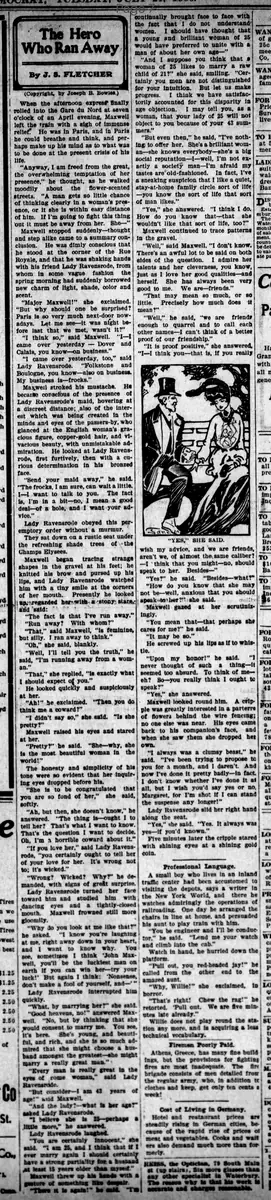
Maxwell looked round him. A cripple was greatly interested in a parterre of flowers behind the wire fencing; no one else was near. His eyes came back to his companion's face, and when she saw them she dropped her own.
"I always was a clumsy beast," he said. "I've been trying to propose to you for a month, and I daren't. And now I've done it pretty badly—in fact, I don't know whether I've done it at all, but I wish you'd say yes or no, Margaret, for I'm sure I can't stand the suspense any longer!"
Lady Ravensrode slid her right hand along the seat.
"Yes," she said. "Yes. It always was yes—if you'd known."
Five minutes later the cripple stared with shining eyes at a shining gold coin.
By J. S. FLETCHER
(Copyright, 1906, by Joseph B. Bowles.)
When the afternoon express finally rolled into the Gare du Nord at seven o'clock of an April evening, Maxwell left the train with a sigh of immense relief. He was in Paris, and in Paris he could breathe and think, and perhaps make up his mind as to what was to be done at the present crisis of his life.
"Anyway, I am freed from the great, the overwhelming temptation of her presence," he thought, as he walked moodily about the flower-scented streets. "A man gets so little chance of thinking clearly in a woman's presence, or if she is within easy distance of him. If I'm going to fight this thing out it must be away from her. She—"
Maxwell stopped suddenly—thought and step alike came to a summary conclusion. He was dimly conscious that he stood at the corner of the Rue Royale, and that he was shaking hands with his friend Lady Ravensrode, from whom in some vague fashion the spring morning had suddenly borrowed new charm of light, shade, color and scent.
"Major Maxwell!" she exclaimed. "But why should one be surprised? Paris is so very much next-door nowadays. Let me see—it was night before last that we met, wasn't it?"
"I think so," said Maxwell. "I—I came over yesterday—Dover and Calais, you know—on business."
"I came over yesterday, too," said Lady Ravensrode. "Folkstone and Boulogne, you know—also on business. My business is—frocks."
Maxwell stroked his mustache. He became conscious of the presence of Lady Ravensrode's maid, hovering at a discreet distance; also of the interest which was being created in the minds and eyes of the passers-by, who glanced at the English woman's gracious figure, copper-gold hair, and vivacious beauty with unmistakable admiration. He looked at Lady Ravensrode, first furtively, then with a curious determination in his bronzed face.
"Send your maid away," he said. "The frocks, I am sure, can wait a little. I—I want to talk to you. The fact is, I'm in a bit—no, I mean a good deal—of a hole, and I want your advice."
Lady Ravensrode obeyed this peremptory order without a murmur. They sat down on a rustic seat under the refreshing shade trees of the Champs Elysees.
Maxwell began tracing strange shapes in the gravel at his feet; he knitted his brow and pursed up his lips, and Lady Ravensrode watched him with a tiny smile at the corners of her mouth. Presently he looked up, regarded her with a stony stare, and said:
"The fact is that I've run away."
"Run away? With whom?"
"That," said Maxwell, "is feminine, but silly. I ran away to think."
"Oh," she said, blankly.
"Well, I'll tell you the truth," he said. "I'm running away from a woman."
"That," she replied, "is exactly what I should expect of you."
He looked quickly and suspiciously at her.
"Ah!" he exclaimed. "Then you do think me a coward?"
"I didn't say so," she said. "Is she pretty?"
Maxwell raised his eyes and stared at her.
"Pretty?" he said. "She—why, she is the most beautiful woman in the world!"
The honesty and simplicity of his tone were so evident that her inquiring eyes dropped before his.
"She is to be congratulated that you are so fond of her," she said, softly.
"Ah, but then, she doesn't know," he answered. "The thing is—ought I to tell her? That's what I want to know. That's the question I want to decide. Oh, I'm a horrible coward about it."
"If you love her," said Lady Ravensrode, "you certainly ought to tell her of your love for her. It's wrong not to; it's wicked."
"Wrong? Wicked? Why?" he demanded, with signs of great surprise.
Lady Ravensrode turned her face toward him and studied him with dancing eyes and a tightly-closed mouth. Maxwell frowned still more gloomily.
"Why do you look at me like that?" he asked. "I know you're laughing at me, right away down in your heart, and I want to know why. You see, sometimes I think 'John Maxwell, you'll be the luckiest man on earth if you can win her—try your luck!' But again I think: Nonsense, don't make a fool of yourself, and—'"
Lady Ravensrode interrupted him quickly.
"What, by marrying her?" she said.
"Good heavens, no!" answered Maxwell. "No, but by thinking that she would consent to marry me. You see, it's here. She's young, and beautiful, and rich, and she is so much admired that she might choose a husband amongst the greatest—she might marry a really great man."
"Every man is really great in the eyes of some woman," said Lady Ravensrode.
"But consider—I am 43 years of age!" said Maxwell.
"And the lady?—what is her age?" asked Lady Ravensrode.
"I believe she is 25—perhaps a little more," he answered.
Lady Ravensrode laughed.
"You are certainly innocent," she said. "I am 25, and I think that if I ever marry again I should certainly have a strong partiality for a husband at least 15 years older than myself."
Maxwell threw up his hands with gesture of something like despair.
continually brought face to face with the fact that I do not understand women. I should have thought that a young and brilliant woman of 25 would have preferred to unite with a man of about her own age—"
"And I suppose you think that a woman of 25 likes to marry a raw child of 21?" she said, smiling. "Certainly you men are not distinguished for your intuition. But let us make progress. I think we have satisfactorily accounted for this disparity in age objection. I may tell you, as a woman, that your lady of 25 will not object to you because of your 43 summers."
"But even then," he said, "I've nothing to offer her. She's a brilliant woman—she knows everybody—she's a big social reputation—I—well, I'm not exactly a society man—I'm afraid my tastes are old-fashioned. In fact, I've a sneaking suspicion that I like a quiet, stay-at-home family circle sort of life—you know the sort of life that sort of man likes."
"Yes," she answered. "I think I do. How do you know that—that she wouldn't like that sort of life, too?"
Maxwell continued to trace patterns in the gravel.
"Well," said Maxwell. "I don't know. There's an awful lot to be said on both sides of the question. I admire her talents and her cleverness, you know, just as I love her good qualities—and herself. She has always been very good to me. We are—friends."
"That may mean so much, or so little. Precisely how much does it mean?"
"Well," he said, "we are friends enough to quarrel and to call each other names—I can't think of a better proof of our friendship."
"It is proof positive," she answered.
"I—I think you—that is, if you really wish my advice, and we are friends aren't we, of almost the same caliber?—I think that you might—no, should speak to her. Besides—"
"Yes?" he said. "Besides—what?"
"How do you know that she may not be—well, anxious that you should speak to her?" she said.
Maxwell gazed at her scrutinizingly.
"You mean that—that perhaps she cares for me?" he said.
"It may be so."
He screwed up his lips as if to whistle.
"Upon my honor!" he said. "I never thought of such a thing—it seemed too absurd. To think of me—eh? So—you really think I ought to speak?"
"Yes," she answered.
Maxwell looked round him. A cripple was greatly interested in a parterre of flowers behind the wire fencing; no one else was near. His eyes came back to his companion's face, and when she saw them she dropped her own.
"I always was a clumsy beast," he said. "I've been trying to propose to you for a month, and I daren't. And now I've done it pretty badly—in fact, I don't know whether I've done it at all, but I wish you'd say yes or no, Margaret, for I'm sure I can't stand the suspense any longer!"
Lady Ravensrode slid her right hand along the seat.
"Yes," she said. "Yes. It always was yes—if you'd known."
Five minutes later the cripple stared with shining eyes at a shining gold coin.
What sub-type of article is it?
Prose Fiction
What themes does it cover?
Love Romance
Social Manners
What keywords are associated?
Short Story
Romance
Proposal
Paris
Age Difference
Social Status
What entities or persons were involved?
By J. S. Fletcher
Literary Details
Title
The Hero Who Ran Away
Author
By J. S. Fletcher
Key Lines
"The Fact Is That I've Run Away."
"Pretty?" He Said. "She—Why, She Is The Most Beautiful Woman In The World!"
"Every Man Is Really Great In The Eyes Of Some Woman," Said Lady Ravensrode.
"I Always Was A Clumsy Beast," He Said. "I've Been Trying To Propose To You For A Month, And I Daren't. And Now I've Done It Pretty Badly—In Fact, I Don't Know Whether I've Done It At All, But I Wish You'd Say Yes Or No, Margaret, For I'm Sure I Can't Stand The Suspense Any Longer!"
"Yes," She Said. "Yes. It Always Was Yes—If You'd Known."