Thank you for visiting SNEWPapers!
Sign up free
The Ronan Pioneer
Ronan, Lake County, Montana
What is this article about?
Benefits of fall-planted winter hay crops, including legumes and small grains, in preventing soil leaching and erosion, providing fresh feed, reducing fertilizer costs, and building soil with humus in North Carolina.
Clipping
OCR Quality
Full Text
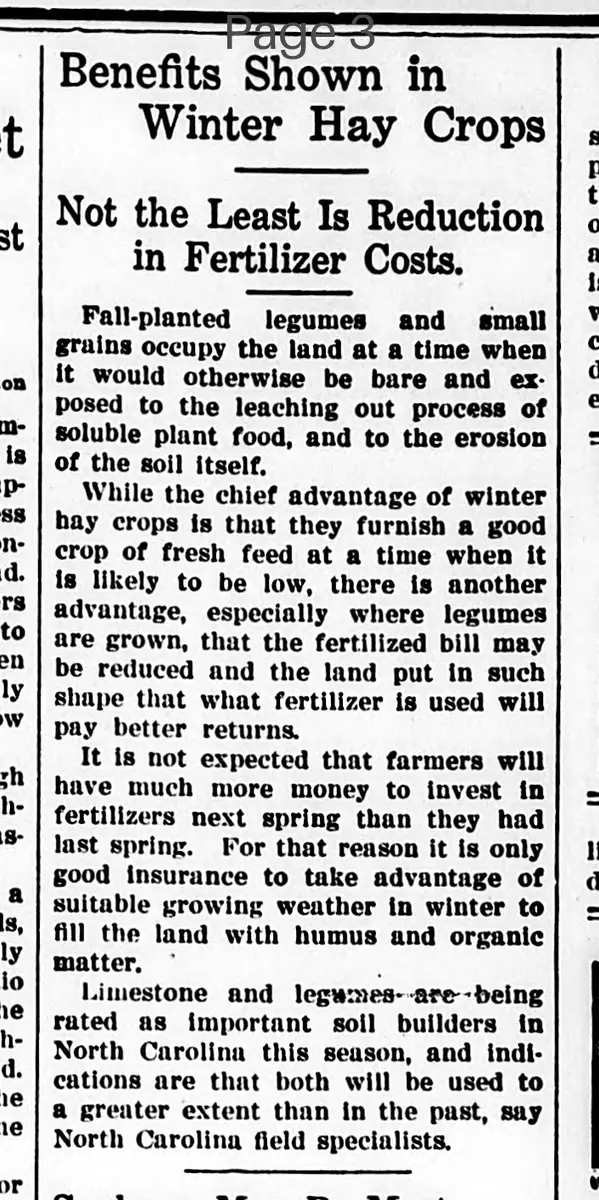
Not the Least Is Reduction in Fertilizer Costs.
Fall-planted legumes and small grains occupy the land at a time when it would otherwise be bare and exposed to the leaching out process of soluble plant food, and to the erosion of the soil itself.
While the chief advantage of winter hay crops is that they furnish a good crop of fresh feed at a time when it is likely to be low, there is another advantage, especially where legumes are grown, that the fertilizer bill may be reduced and the land put in such shape that what fertilizer is used will pay better returns.
It is not expected that farmers will have much more money to invest in fertilizers next spring than they had last spring. For that reason it is only good insurance to take advantage of suitable growing weather in winter to fill the land with humus and organic matter.
Limestone and legumes are being rated as important soil builders in North Carolina this season, and indications are that both will be used to a greater extent than in the past, say North Carolina field specialists.
What sub-type of article is it?
What keywords are associated?
Where did it happen?
Domestic News Details
Primary Location
North Carolina
Outcome
reduction in fertilizer costs; improved soil condition with humus and organic matter; increased use of limestone and legumes as soil builders.
Event Details
Fall-planted legumes and small grains prevent leaching and erosion on bare land; provide fresh feed when low; reduce fertilizer bills especially with legumes; prepare land for better fertilizer returns; farmers advised to use winter weather for soil improvement; limestone and legumes important in North Carolina this season.