Thank you for visiting SNEWPapers!
Sign up free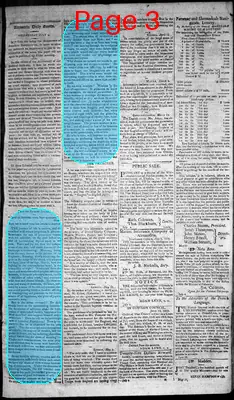
Literary
July 4, 1810
Alexandria Daily Gazette, Commercial & Political
Alexandria, Virginia
What is this article about?
An essay reflecting on life's journey, contrasting prosperity and adversity, advocating reliance on Providence, avoiding anticipation of troubles, and embracing wisdom and contentment in the present moment.
Clipping
OCR Quality
98%
Excellent
Full Text
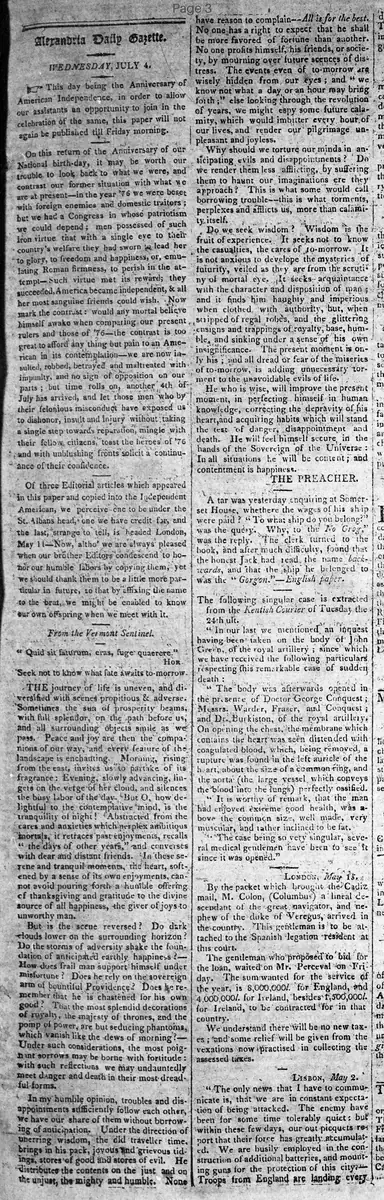
From the Vermont Sentinel.
Quid sit futurum, cras, fuge quaerere.
Hor.
Seek not to know what the morrow awaits.
THE journey of life is uneven, and diversified with scenes propitious & adverse: Sometimes the sun of prosperity beams with full splendor, on the path before us, and all surrounding objects smile as we pass. Peace and joy are then the companions of our way, and every feature of the landscape is enchanting. Morning, rising from the east, invites us to partake of its fragrance: Evening, slowly advancing, lingers on the verge of her cloud, and silences the busy labor of the day. But O. how delightful to the contemplative mind, is the tranquility of night! Abstracted from the cares and anxieties which perplex ambitious mortals, it retraces past enjoyments, recalls "the days of other years." and converses with dear and distant friends. In these serene and tranquil moments, the heart, softened by a sense of its own enjoyments, cannot avoid pouring forth a humble offering of thanksgiving and gratitude to the divine source of all happiness, the giver of joys to unworthy man.
But, is the scene reversed? Do dark clouds lower on the surrounding horizon? Do the storms of adversity shake the foundation of anticipated earthly happiness? How does frail man support himself under misfortune? Does he rely on the sovereign arm of bountiful Providence? Does he remember that he is chastened for his own good? That the most splendid decorations of royalty, the majesty of thrones, and the pomp of power, are but seducing phantoms, which vanish like the dews of morning? Under such considerations, the most poignant sorrows may be borne with fortitude: with such reflections we may undauntedly meet danger and death in their most dreadful forms.
In my humble opinion, troubles and disappointments sufficiently follow each other, we have our share of them without borrowing of anticipation. Under the direction of unerring wisdom, the old traveller time, brings in his pack, joyous and grievous tidings, stores of good and stores of evil. He distributes the contents on the just and on the unjust, the mighty and humble. None have reason to complain--All is for the best.
No one has a right to expect that he shall be more favored of fortune than another. No one profits himself, his friends, or society, by mourning over future scenes of distress. The events even of to-morrow are wisely hidden from our eyes; and "we know not what a day or an hour may bring forth;" else looking through the revolution of years, we might espy some future calamity, which would imbitter every hour of our lives, and render our pilgrimage, unpleasant and joyless.
Why should we torture our minds in anticipating evils and disappointments? Do we render them less afflicting by suffering them to haunt our imaginations ere they approach? This is what some would call borrowing trouble--this is what torments, perplexes and afflicts us, more than calamity itself.
Do we seek wisdom? Wisdom is the fruit of experience. It seeks not to know the casualties, the cares of to-morrow. It is not anxious to develope the mysteries of futurity, veiled as they are from the scrutiny of mortal eye. It seeks acquaintance with the character and disposition of man; and it finds him, haughty and imperious when clothed with authority, but, when stripped of regal robes, and the glittering ensigns and trappings of royalty, base, humble and sinking under a sense of his own insignificance. The present moment is only his; and all dread or fear of the miseries of to-morrow, is adding, unnecessary torment to the unavoidable evils of life.
He who is wise, will improve the present moment, in perfecting himself in human knowledge, correcting the depravity of his heart, and acquiring habits which will stand the test of danger, disappointment and death. He will feel himself secure in the hands of the Sovereign of the Universe: In all situations he will be content; and contentment is happiness.
Quid sit futurum, cras, fuge quaerere.
Hor.
Seek not to know what the morrow awaits.
THE journey of life is uneven, and diversified with scenes propitious & adverse: Sometimes the sun of prosperity beams with full splendor, on the path before us, and all surrounding objects smile as we pass. Peace and joy are then the companions of our way, and every feature of the landscape is enchanting. Morning, rising from the east, invites us to partake of its fragrance: Evening, slowly advancing, lingers on the verge of her cloud, and silences the busy labor of the day. But O. how delightful to the contemplative mind, is the tranquility of night! Abstracted from the cares and anxieties which perplex ambitious mortals, it retraces past enjoyments, recalls "the days of other years." and converses with dear and distant friends. In these serene and tranquil moments, the heart, softened by a sense of its own enjoyments, cannot avoid pouring forth a humble offering of thanksgiving and gratitude to the divine source of all happiness, the giver of joys to unworthy man.
But, is the scene reversed? Do dark clouds lower on the surrounding horizon? Do the storms of adversity shake the foundation of anticipated earthly happiness? How does frail man support himself under misfortune? Does he rely on the sovereign arm of bountiful Providence? Does he remember that he is chastened for his own good? That the most splendid decorations of royalty, the majesty of thrones, and the pomp of power, are but seducing phantoms, which vanish like the dews of morning? Under such considerations, the most poignant sorrows may be borne with fortitude: with such reflections we may undauntedly meet danger and death in their most dreadful forms.
In my humble opinion, troubles and disappointments sufficiently follow each other, we have our share of them without borrowing of anticipation. Under the direction of unerring wisdom, the old traveller time, brings in his pack, joyous and grievous tidings, stores of good and stores of evil. He distributes the contents on the just and on the unjust, the mighty and humble. None have reason to complain--All is for the best.
No one has a right to expect that he shall be more favored of fortune than another. No one profits himself, his friends, or society, by mourning over future scenes of distress. The events even of to-morrow are wisely hidden from our eyes; and "we know not what a day or an hour may bring forth;" else looking through the revolution of years, we might espy some future calamity, which would imbitter every hour of our lives, and render our pilgrimage, unpleasant and joyless.
Why should we torture our minds in anticipating evils and disappointments? Do we render them less afflicting by suffering them to haunt our imaginations ere they approach? This is what some would call borrowing trouble--this is what torments, perplexes and afflicts us, more than calamity itself.
Do we seek wisdom? Wisdom is the fruit of experience. It seeks not to know the casualties, the cares of to-morrow. It is not anxious to develope the mysteries of futurity, veiled as they are from the scrutiny of mortal eye. It seeks acquaintance with the character and disposition of man; and it finds him, haughty and imperious when clothed with authority, but, when stripped of regal robes, and the glittering ensigns and trappings of royalty, base, humble and sinking under a sense of his own insignificance. The present moment is only his; and all dread or fear of the miseries of to-morrow, is adding, unnecessary torment to the unavoidable evils of life.
He who is wise, will improve the present moment, in perfecting himself in human knowledge, correcting the depravity of his heart, and acquiring habits which will stand the test of danger, disappointment and death. He will feel himself secure in the hands of the Sovereign of the Universe: In all situations he will be content; and contentment is happiness.
What sub-type of article is it?
Essay
What themes does it cover?
Moral Virtue
Religious
What keywords are associated?
Life Journey
Adversity
Providence
Wisdom
Contentment
Anticipation
Moral Reflection
Literary Details
Key Lines
Seek Not To Know What The Morrow Awaits.
Under The Direction Of Unerring Wisdom, The Old Traveller Time, Brings In His Pack, Joyous And Grievous Tidings, Stores Of Good And Stores Of Evil.
Why Should We Torture Our Minds In Anticipating Evils And Disappointments?
Wisdom Is The Fruit Of Experience.
Contentment Is Happiness.