Thank you for visiting SNEWPapers!
Sign up free
Literary
July 31, 1832
Rhode Island American And Gazette
Providence, Providence County, Rhode Island
What is this article about?
Hazlitt's essay reflects on the enduring pain of disappointment in love, comparing passion to poison that lingers in the mind despite knowledge of its worthlessness. It argues that emotional ties, like those to a spouse or child, cannot be severed instantly, emphasizing the lifelong nature of true affection.
Clipping
OCR Quality
95%
Excellent
Full Text
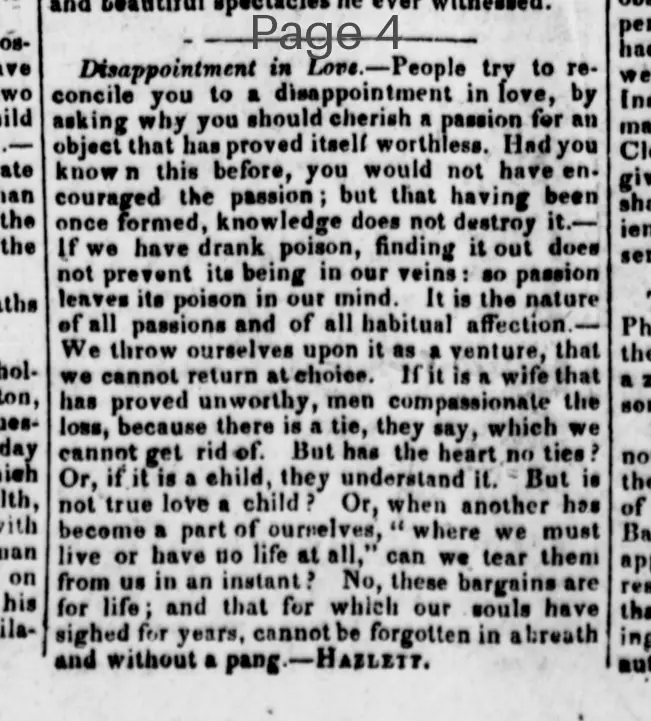
Disappointment in Love.—People try to reconcile you to a disappointment in love, by asking why you should cherish a passion for an object that has proved itself worthless. Had you known this before, you would not have encouraged the passion; but that having been once formed, knowledge does not destroy it.— If we have drank poison, finding it out does not prevent its being in our veins: so passion leaves its poison in our mind. It is the nature of all passions and of all habitual affection.— We throw ourselves upon it as a venture, that we cannot return at choice. If it is a wife that has proved unworthy, men compassionate the loss, because there is a tie, they say, which we cannot get rid of. But has the heart no ties? Or, if it is a child, they understand it.— But is not true love a child? Or, when another has become a part of ourselves, "where we must live or have no life at all," can we tear them from us in an instant? No, these bargains are for life; and that for which our souls have sighed for years, cannot be forgotten in a breath and without a pang.—Hazlitt.
What sub-type of article is it?
Essay
What themes does it cover?
Love Romance
Moral Virtue
What keywords are associated?
Disappointment In Love
Passion
Emotional Ties
Heart
Hazlitt Essay
What entities or persons were involved?
Hazlitt
Literary Details
Title
Disappointment In Love.
Author
Hazlitt
Subject
Disappointment In Love
Key Lines
If We Have Drank Poison, Finding It Out Does Not Prevent Its Being In Our Veins: So Passion Leaves Its Poison In Our Mind.
But Has The Heart No Ties? Or, If It Is A Child, They Understand It.— But Is Not True Love A Child?
No, These Bargains Are For Life; And That For Which Our Souls Have Sighed For Years, Cannot Be Forgotten In A Breath And Without A Pang.