Thank you for visiting SNEWPapers!
Sign up free
Poem
December 12, 1838
Morning Star
Limerick, York County, Maine
What is this article about?
An elegy by Charles Sprague mourning his sister Mary's death from consumption, vividly depicting her illness, serene passing, brother's grief, and anticipation of family reunion in the afterlife.
Clipping
OCR Quality
100%
Excellent
Full Text
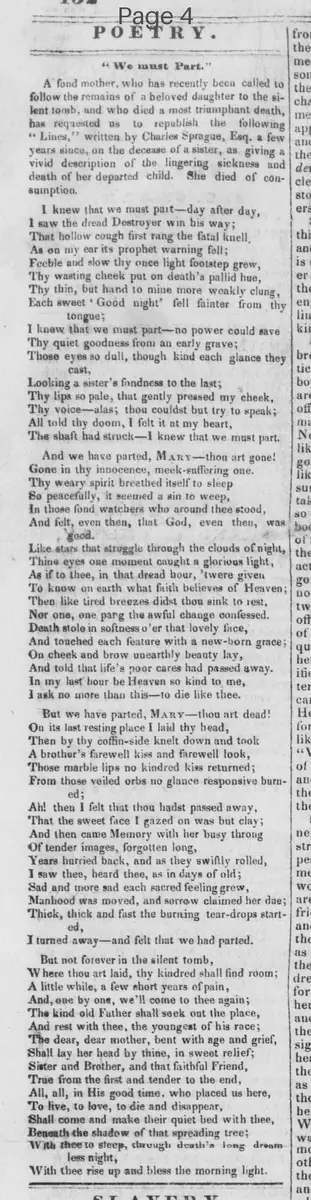
POETRY.
"We must part,"
A fond mother, who has recently been called to follow the remains of a beloved daughter to the silent tomb, and who died a most triumphant death, has requested us to republish the following "Lines," written by Charles Sprague, Esq. a few years since, on the decease of a sister, as giving a vivid description of the lingering sickness and death of her departed child. She died of consumption.
I knew that we must part—day after day,
I saw the dread Destroyer win his way;
That hollow cough first rang the fatal knell.
As on my ear its prophet warning fell;
Feeble and slow thy once light footstep grew,
Thy wasting cheek put on death's pallid hue,
Thy thin, but hand to mine more weakly clung,
Each sweet 'Good night' fell fainter from thy tongue;
I knew that we must part—no power could save
'Thy quiet goodness from an early grave;
Those eyes so dull, though kind each glance they cast,
Looking a sister's fondness to the last;
Thy lips so pale, that gently pressed my cheek.
Thy voice—alas; thou couldst but try to speak;
All told thy doom, I felt it at my heart,
The shaft had struck—I knew that we must part.
And we have parted, Mary—thou art gone!
Gone in thy innocence, meek-suffering one.
Thy weary spirit breathed itself to sleep
So peacefully, it seemed a sin to weep,
In those fond watchers who around thee stood,
And felt, even then, that God, even then, was good.
Like stars that struggle through the clouds of night.
Thine eyes one moment caught a glorious light.
As if to thee, in that dread hour, 'twere given
To know on earth what faith believes of Heaven;
Then like tired breezes didst thou sink to rest,
Nor one, one pang the awful change confessed.
Death stole in softness o'er that lovely face,
And touched each feature with a new-born grace;
On cheek and brow unearthly beauty lay,
And told that life's poor cares had passed away.
In my last hour be Heaven so kind to me,
I ask no more than this—to die like thee.
But we have parted, Mary—thou art dead!
On its last resting place I laid thy head,
Then by thy coffin-side knelt down and took
A brother's farewell kiss and farewell look,
Those marble lips no kindred kiss returned;
From those veiled orbs no glance responsive burned;
Ah! then I felt that thou hadst passed away,
That the sweet face I gazed on was but clay;
And then came Memory with her busy throng
Of tender images, forgotten long,
Years hurried back, and as they swiftly rolled,
I saw thee, heard thee, as in days of old:
Sad and more sad each sacred feeling grew,
Manhood was moved, and sorrow claimed her due:
Thick, thick and fast the burning tear-drops started,
I turned away—and felt that we had parted.
But not forever in the silent tomb,
Where thou art laid, thy kindred shall find room;
A little while, a few short years of pain,
And, one by one, we'll come to thee again;
The kind old Father shall seek out the place,
And rest with thee, the youngest of his race;
The dear, dear mother, bent with age and grief,
Shall lay her head by thine, in sweet relief:
Sister and Brother, and that faithful Friend,
True from the first and tender to the end,
All, all, in His good time, who placed us here,
To live, to love, to die and disappear.
Shall come and make their quiet bed with thee.
Beneath the shadow of that spreading tree;
With thee to sleep, through death's long dreamless night,
With thee rise up and bless the morning light.
"We must part,"
A fond mother, who has recently been called to follow the remains of a beloved daughter to the silent tomb, and who died a most triumphant death, has requested us to republish the following "Lines," written by Charles Sprague, Esq. a few years since, on the decease of a sister, as giving a vivid description of the lingering sickness and death of her departed child. She died of consumption.
I knew that we must part—day after day,
I saw the dread Destroyer win his way;
That hollow cough first rang the fatal knell.
As on my ear its prophet warning fell;
Feeble and slow thy once light footstep grew,
Thy wasting cheek put on death's pallid hue,
Thy thin, but hand to mine more weakly clung,
Each sweet 'Good night' fell fainter from thy tongue;
I knew that we must part—no power could save
'Thy quiet goodness from an early grave;
Those eyes so dull, though kind each glance they cast,
Looking a sister's fondness to the last;
Thy lips so pale, that gently pressed my cheek.
Thy voice—alas; thou couldst but try to speak;
All told thy doom, I felt it at my heart,
The shaft had struck—I knew that we must part.
And we have parted, Mary—thou art gone!
Gone in thy innocence, meek-suffering one.
Thy weary spirit breathed itself to sleep
So peacefully, it seemed a sin to weep,
In those fond watchers who around thee stood,
And felt, even then, that God, even then, was good.
Like stars that struggle through the clouds of night.
Thine eyes one moment caught a glorious light.
As if to thee, in that dread hour, 'twere given
To know on earth what faith believes of Heaven;
Then like tired breezes didst thou sink to rest,
Nor one, one pang the awful change confessed.
Death stole in softness o'er that lovely face,
And touched each feature with a new-born grace;
On cheek and brow unearthly beauty lay,
And told that life's poor cares had passed away.
In my last hour be Heaven so kind to me,
I ask no more than this—to die like thee.
But we have parted, Mary—thou art dead!
On its last resting place I laid thy head,
Then by thy coffin-side knelt down and took
A brother's farewell kiss and farewell look,
Those marble lips no kindred kiss returned;
From those veiled orbs no glance responsive burned;
Ah! then I felt that thou hadst passed away,
That the sweet face I gazed on was but clay;
And then came Memory with her busy throng
Of tender images, forgotten long,
Years hurried back, and as they swiftly rolled,
I saw thee, heard thee, as in days of old:
Sad and more sad each sacred feeling grew,
Manhood was moved, and sorrow claimed her due:
Thick, thick and fast the burning tear-drops started,
I turned away—and felt that we had parted.
But not forever in the silent tomb,
Where thou art laid, thy kindred shall find room;
A little while, a few short years of pain,
And, one by one, we'll come to thee again;
The kind old Father shall seek out the place,
And rest with thee, the youngest of his race;
The dear, dear mother, bent with age and grief,
Shall lay her head by thine, in sweet relief:
Sister and Brother, and that faithful Friend,
True from the first and tender to the end,
All, all, in His good time, who placed us here,
To live, to love, to die and disappear.
Shall come and make their quiet bed with thee.
Beneath the shadow of that spreading tree;
With thee to sleep, through death's long dreamless night,
With thee rise up and bless the morning light.
What sub-type of article is it?
Elegy
What themes does it cover?
Death Mourning
Religious Faith
Friendship
What keywords are associated?
Sister Death
Consumption
Peaceful Passing
Family Reunion
Heavenly Hope
What entities or persons were involved?
Charles Sprague, Esq.
Poem Details
Title
We Must Part,
Author
Charles Sprague, Esq.
Subject
On The Decease Of A Sister
Key Lines
I Knew That We Must Part—Day After Day,
I Saw The Dread Destroyer Win His Way;
And We Have Parted, Mary—Thou Art Gone!
Gone In Thy Innocence, Meek Suffering One.
But Not Forever In The Silent Tomb,