Thank you for visiting SNEWPapers!
Sign up free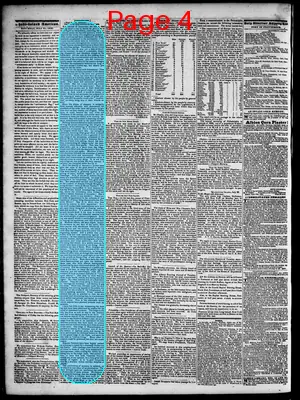
Editorial
July 24, 1832
Rhode Island American And Gazette
Providence, Providence County, Rhode Island
What is this article about?
An anti-Masonic editorial signed 'CAROLUS' uses the Tamerlane analogy to expose Freemasons' hypocritical claims of charity, religion, and peace, citing persecution of critics like Morgan, Adams, and others, minimal alms-giving, and calls for its destruction. (248 characters)
Clipping

OCR Quality
98%
Excellent
Full Text
—Mark you this, Bassanio,—
The devil can cite Scripture
It is related of Tamerlane the Great, that having taken a city by storm, he gave it up to be pillaged by his soldiery, reserving the government palace for his own quarters, where he received the envoy of a neighboring potentate. After business had been transacted, the Mogul monarch complained to the ambassador, of the unjust reports which were in circulation concerning himself, throughout the western world. These reports represented him as a blood-thirsty, merciless savage. Tamerlane declared they were false; that he was not a man of blood; on the contrary, he was of a peaceable, forgiving disposition; and bloodless except on the battle-field. All the time he was making these statements, the city resounded with the shrieks and cries of the citizens, who fell indiscriminately under the sabres of the eastern savages. Whether the ambassador believed the king or his own senses I cannot say, but should presume he did the latter.
Now is not the same with freemasons? Time after time have we been reminded of the claims of this class of men to the favor and gratitude of mankind. Never has there been an oration pronounced, or a defence made, but the merits of the society have been blazoned to the very skies. The "same dull monotony" pervades the whole. But can a man retain his senses and believe them at the same time? Must he not drop those senses, and in their stead take the assertions of some grand orator or masonic editor, as facts which it would be heresy to doubt? Must he not surrender his judgment to the keeping of some sir knight or grand prelate, who will be careful to put a fair "construction" on every thing they or their friends assert?
Since the claims of masonry to antiquity have become tolerably well understood, the members of the order have laid greater weight than ever on their charity and religion. These have, in truth, become the very Urim and Thummim of the society, and unless their pretensions to them are shown to be entirely unfounded, they will succeed in retaining, through them, considerable hold on the public mind.
Nothing has contributed so much towards deceiving the people concerning the religion of masonry, as the admitting of ministers of the gospel free of expense. Yet it was not a regard for religion which led to this. An intriguing politician, knowing what great effect it would have upon the minds of men in general, if the expositors of the scriptures, preachers of the Divine Word, were to lend to masonry the influence of their holy calling, issued his mandate, commanding all lodges under his jurisdiction to admit them gratis. This was complied with; and in a short time, the lodge-rooms were filled with the disciples of Him who spake as never man spake. Members of christian churches followed the examples of pastors whom they loved and reverenced. Thus did pious men countenance an institution which is anti-christian in every thing. It is not only anti-religious, but morals, the very essence of religion, are trampled under foot by it.
As to the charity of masonry a person must give the reins to his good nature to believe there is anything, except the mere words in it. The word charity is generally applied to the giving of alms, without regard to its other meanings. Now, if we are to believe freemasonry is a charitable institution, we must have examples of its "tenderness, love, good will," &c. But where shall we find such examples? In the conduct of masons towards Morgan, an erring brother? towards Moses Thacher? Was their charity exemplified in their answers before the Rhode Island Investigating Committee, where the antimasons were reviled and called a faction destitute of character? Has it ever been shown to any seceder? Has it ever made its appearance in the columns of that repository of every thing disreputable, the Masonic Mirror? Has it, in short, ever been shewn by masons to their opponents? No—the most uncharitable constructions have been put upon every thing said or done by antimasons and seceders. If a member without reproach, should think it his duty to withdraw from the lodge, he was instantly assailed with the whole weight of masonic vengeance. Nothing was spared which it was thought would aid in ruining his reputation, and that of his family. Masonic editors, the most abject, miserable wretches on the face of the earth, filled their papers with slanderous falsehoods concerning him and his motives, and rested not until they had heaped upon him every vile and degrading epithet. Did a public man come boldly forth and bear testimony against freemasonry; he was instantly assailed in the most abusive manner, styled a demagogue, a factious scoundrel, and crazy politician. And why? For doing that which, as a public servant, he would have been criminal in not doing. Such has been the fate of Rush, Wirt, Granger and Adams. They have been accused of not caring anything about antimasonry, as being desirous of office only, as though that was criminal, and they had not as good right to the favor of the people as Henry Clay or any other masonic tool or slave. Such have been the charitable constructions put upon the motives of these men, who have always distinguished themselves by their disinterestedness and love of country. Did the conductor of a public press think it his duty to warn the people against masonry, and act accordingly, what was the conduct of these professed disciples of "meek-eyed charity"? "Did they by their bearing, show to the world, that he was wrong and they right? No—they assailed him in a most bitter manner. They did every thing in their power to "derange his business," and destroy or gag his press. Their own Journals made the most whining and canting appeals to the public, and pointed out the crimes of the independent editor in opposing masonry. Every underhand method was put in practice to ruin his subscription and advertising lists, he was denounced in public and private, and styled an outcast from society. This is the charitable course which masons have pursued towards their opponents.
I have but little to say concerning the monies that have been disbursed by masons for the relief of distressed brethren. The lodge in this city has done as well as any in the country, and that is not saying much in its favor. I do not believe that all it has distributed would amount to one hundred dollars a year, on an average from the time of its institution till now, whereas societies that have made no pretensions and are without funds, have done as much if not more. One lodge in Massachusetts expended in charity the immense sum of thirty-five dollars in eighteen years, and during the same period paid one thousand dollars in tribute to the grand lodge of the State, and spent the like sum in "riotous living." Many other instances could be produced, but they are unnecessary.
Masonic funerals have been highly praised, as evincing a regard for a deceased brother and his family. After leading a man from the paths of virtue to those of vice, from temperance to intemperance; after ruining his family by enticing him to the lodge room, that second Lot's; to bury him with "masonic honors," would not, in my opinion, be a very great testimonial of regard. It is "a poor compensation for a desolate widow and her helpless orphans."
The pretensions of masonry to science, are as absurd as any other of its pretensions. They have brought upon the institution the ridicule and contempt of many writers. We frequently hear masons boasting, that the Jewish Temple, and St. Paul's in London were built by masons; when many of them cannot tell whether the rites of the Magi, or the Episcopalian worship are celebrated in St. Paul's, or whether the Jewish edifice was situated in Arabia or Palestine, Spain or the Indies.
The time was when freemasons could impose upon the public with impunity; but, thank Heaven, that time has passed away. In former days the Lodge was believed to be "none other than the House of God, and the gate of Heaven"; a mason was thought to be above the ordinary race of mortals; he was thought to belong to a society which, like the "Promised Land," "flowed with milk and honey." A candidate for initiation, listening to the praises of some artful member, might have imagined he was hearing a description of the Elysian Fields, which Plutarch has described in all the beauties of prose, and Homer "in all the charms of verse."
Notwithstanding the charms of masonry are nearly destroyed, there are many persons who entertain towards it the same feelings which the Egyptians did towards the god Serapis.—This god was sent to Ptolemy Soter from Sinope, a city of Pontus, to Alexandria, where it was worshiped upwards of seven centuries—During the reign of Theodosius the Younger, the people of Alexandria, who had been converted to Christianity, rose with the intention of destroying the idol, and ran to its temple in crowds for that purpose. When they arrived there the priests told them, that at the first blow struck at the god the world would go back into its original chaotic state; be "without form and void," which so frightened the multitude, that they stood still, looking upon the image with the utmost silence, for several minutes. At last a veteran soldier started from the crowd and struck the god on the face. The people waited in silence a moment longer, but observing the world remained in its usual form, they rushed upon the idol and demolished it.—So it is with many philo masons; they have so great a regard for freemasonry, that they cannot prevail upon themselves to turn against it: But it is time they awoke from their dreams; the first blow has been struck; let us unite and give this Ancient, Charitable, Religious, and Scientific institution, "a last and fatal blow."
CAROLUS.
The devil can cite Scripture
It is related of Tamerlane the Great, that having taken a city by storm, he gave it up to be pillaged by his soldiery, reserving the government palace for his own quarters, where he received the envoy of a neighboring potentate. After business had been transacted, the Mogul monarch complained to the ambassador, of the unjust reports which were in circulation concerning himself, throughout the western world. These reports represented him as a blood-thirsty, merciless savage. Tamerlane declared they were false; that he was not a man of blood; on the contrary, he was of a peaceable, forgiving disposition; and bloodless except on the battle-field. All the time he was making these statements, the city resounded with the shrieks and cries of the citizens, who fell indiscriminately under the sabres of the eastern savages. Whether the ambassador believed the king or his own senses I cannot say, but should presume he did the latter.
Now is not the same with freemasons? Time after time have we been reminded of the claims of this class of men to the favor and gratitude of mankind. Never has there been an oration pronounced, or a defence made, but the merits of the society have been blazoned to the very skies. The "same dull monotony" pervades the whole. But can a man retain his senses and believe them at the same time? Must he not drop those senses, and in their stead take the assertions of some grand orator or masonic editor, as facts which it would be heresy to doubt? Must he not surrender his judgment to the keeping of some sir knight or grand prelate, who will be careful to put a fair "construction" on every thing they or their friends assert?
Since the claims of masonry to antiquity have become tolerably well understood, the members of the order have laid greater weight than ever on their charity and religion. These have, in truth, become the very Urim and Thummim of the society, and unless their pretensions to them are shown to be entirely unfounded, they will succeed in retaining, through them, considerable hold on the public mind.
Nothing has contributed so much towards deceiving the people concerning the religion of masonry, as the admitting of ministers of the gospel free of expense. Yet it was not a regard for religion which led to this. An intriguing politician, knowing what great effect it would have upon the minds of men in general, if the expositors of the scriptures, preachers of the Divine Word, were to lend to masonry the influence of their holy calling, issued his mandate, commanding all lodges under his jurisdiction to admit them gratis. This was complied with; and in a short time, the lodge-rooms were filled with the disciples of Him who spake as never man spake. Members of christian churches followed the examples of pastors whom they loved and reverenced. Thus did pious men countenance an institution which is anti-christian in every thing. It is not only anti-religious, but morals, the very essence of religion, are trampled under foot by it.
As to the charity of masonry a person must give the reins to his good nature to believe there is anything, except the mere words in it. The word charity is generally applied to the giving of alms, without regard to its other meanings. Now, if we are to believe freemasonry is a charitable institution, we must have examples of its "tenderness, love, good will," &c. But where shall we find such examples? In the conduct of masons towards Morgan, an erring brother? towards Moses Thacher? Was their charity exemplified in their answers before the Rhode Island Investigating Committee, where the antimasons were reviled and called a faction destitute of character? Has it ever been shown to any seceder? Has it ever made its appearance in the columns of that repository of every thing disreputable, the Masonic Mirror? Has it, in short, ever been shewn by masons to their opponents? No—the most uncharitable constructions have been put upon every thing said or done by antimasons and seceders. If a member without reproach, should think it his duty to withdraw from the lodge, he was instantly assailed with the whole weight of masonic vengeance. Nothing was spared which it was thought would aid in ruining his reputation, and that of his family. Masonic editors, the most abject, miserable wretches on the face of the earth, filled their papers with slanderous falsehoods concerning him and his motives, and rested not until they had heaped upon him every vile and degrading epithet. Did a public man come boldly forth and bear testimony against freemasonry; he was instantly assailed in the most abusive manner, styled a demagogue, a factious scoundrel, and crazy politician. And why? For doing that which, as a public servant, he would have been criminal in not doing. Such has been the fate of Rush, Wirt, Granger and Adams. They have been accused of not caring anything about antimasonry, as being desirous of office only, as though that was criminal, and they had not as good right to the favor of the people as Henry Clay or any other masonic tool or slave. Such have been the charitable constructions put upon the motives of these men, who have always distinguished themselves by their disinterestedness and love of country. Did the conductor of a public press think it his duty to warn the people against masonry, and act accordingly, what was the conduct of these professed disciples of "meek-eyed charity"? "Did they by their bearing, show to the world, that he was wrong and they right? No—they assailed him in a most bitter manner. They did every thing in their power to "derange his business," and destroy or gag his press. Their own Journals made the most whining and canting appeals to the public, and pointed out the crimes of the independent editor in opposing masonry. Every underhand method was put in practice to ruin his subscription and advertising lists, he was denounced in public and private, and styled an outcast from society. This is the charitable course which masons have pursued towards their opponents.
I have but little to say concerning the monies that have been disbursed by masons for the relief of distressed brethren. The lodge in this city has done as well as any in the country, and that is not saying much in its favor. I do not believe that all it has distributed would amount to one hundred dollars a year, on an average from the time of its institution till now, whereas societies that have made no pretensions and are without funds, have done as much if not more. One lodge in Massachusetts expended in charity the immense sum of thirty-five dollars in eighteen years, and during the same period paid one thousand dollars in tribute to the grand lodge of the State, and spent the like sum in "riotous living." Many other instances could be produced, but they are unnecessary.
Masonic funerals have been highly praised, as evincing a regard for a deceased brother and his family. After leading a man from the paths of virtue to those of vice, from temperance to intemperance; after ruining his family by enticing him to the lodge room, that second Lot's; to bury him with "masonic honors," would not, in my opinion, be a very great testimonial of regard. It is "a poor compensation for a desolate widow and her helpless orphans."
The pretensions of masonry to science, are as absurd as any other of its pretensions. They have brought upon the institution the ridicule and contempt of many writers. We frequently hear masons boasting, that the Jewish Temple, and St. Paul's in London were built by masons; when many of them cannot tell whether the rites of the Magi, or the Episcopalian worship are celebrated in St. Paul's, or whether the Jewish edifice was situated in Arabia or Palestine, Spain or the Indies.
The time was when freemasons could impose upon the public with impunity; but, thank Heaven, that time has passed away. In former days the Lodge was believed to be "none other than the House of God, and the gate of Heaven"; a mason was thought to be above the ordinary race of mortals; he was thought to belong to a society which, like the "Promised Land," "flowed with milk and honey." A candidate for initiation, listening to the praises of some artful member, might have imagined he was hearing a description of the Elysian Fields, which Plutarch has described in all the beauties of prose, and Homer "in all the charms of verse."
Notwithstanding the charms of masonry are nearly destroyed, there are many persons who entertain towards it the same feelings which the Egyptians did towards the god Serapis.—This god was sent to Ptolemy Soter from Sinope, a city of Pontus, to Alexandria, where it was worshiped upwards of seven centuries—During the reign of Theodosius the Younger, the people of Alexandria, who had been converted to Christianity, rose with the intention of destroying the idol, and ran to its temple in crowds for that purpose. When they arrived there the priests told them, that at the first blow struck at the god the world would go back into its original chaotic state; be "without form and void," which so frightened the multitude, that they stood still, looking upon the image with the utmost silence, for several minutes. At last a veteran soldier started from the crowd and struck the god on the face. The people waited in silence a moment longer, but observing the world remained in its usual form, they rushed upon the idol and demolished it.—So it is with many philo masons; they have so great a regard for freemasonry, that they cannot prevail upon themselves to turn against it: But it is time they awoke from their dreams; the first blow has been struck; let us unite and give this Ancient, Charitable, Religious, and Scientific institution, "a last and fatal blow."
CAROLUS.
What sub-type of article is it?
Moral Or Religious
Social Reform
What keywords are associated?
Freemasonry Critique
Masonic Deception
Anti Masonic
Charity Hypocrisy
Religious Pretense
Morgan Affair
Masonic Vengeance
What entities or persons were involved?
Tamerlane
Freemasons
Morgan
Moses Thacher
Rhode Island Investigating Committee
Rush
Wirt
Granger
Adams
Henry Clay
Carolus
Editorial Details
Primary Topic
Critique Of Freemasonry's Religious And Charitable Pretensions
Stance / Tone
Strongly Anti Masonic
Key Figures
Tamerlane
Freemasons
Morgan
Moses Thacher
Rhode Island Investigating Committee
Rush
Wirt
Granger
Adams
Henry Clay
Carolus
Key Arguments
Masons Deceive Like Tamerlane By Claiming Peace While Causing Destruction
Admitting Ministers Gratis To Lend Religious Credibility Is A Political Ploy
Masonry Is Anti Christian And Tramples Morals
No Real Charity Shown; Instead, Vengeance Against Opponents Like Morgan And Seceders
Masonic Editors Slander Critics
Minimal Actual Charitable Disbursements Compared To Tributes And Riotous Living
Masonic Funerals Mock Regard After Leading Men To Vice
Pretensions To Science Are Absurd
Time To Destroy Freemasonry Like The Idol Serapis