Thank you for visiting SNEWPapers!
Sign up free
Poem
February 21, 1829
The Delaware Register, Or, Farmers', Manufacturers' & Mechanics' Advocate
Wilmington, New Castle County, Delaware
What is this article about?
A poem decrying a man's deception of a woman, leading to her madness and heartbreak, with the speaker expressing disbelief and moral outrage at his cruelty.
Clipping
OCR Quality
95%
Excellent
Full Text
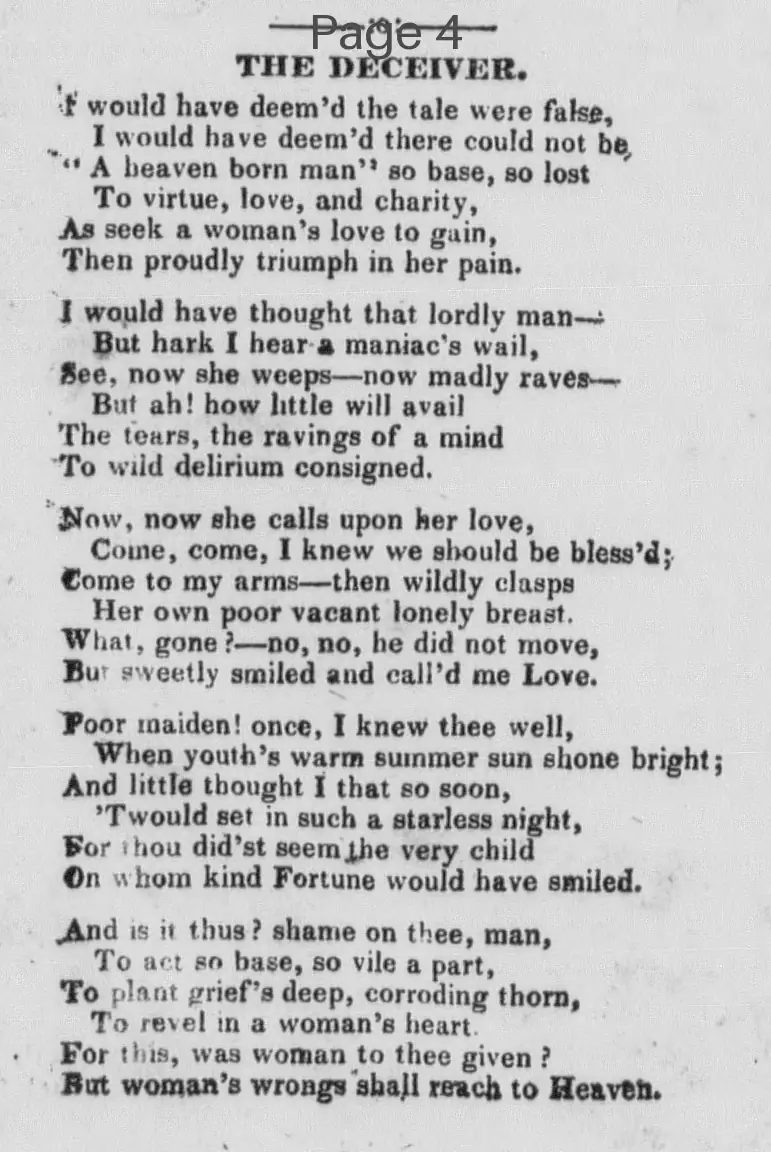
THE DECEIVER.
I would have deem'd the tale were false.
I would have deem'd there could not be
A heaven born man's so base, so lost
To virtue, love, and charity,
As seek a woman's love to gain,
Then proudly triumph in her pain.
I would have thought that lordly man-
But hark I hear-a maniac's wail,
See, now she weeps—now madly raves-
But ah! how little will avail
The tears, the ravings of a mind
To wild delirium consigned.
Now, now she calls upon her love,
Come, come, I knew we should be bless'd;
Come to my arms-then wildly clasps
Her own poor vacant lonely breast.
What, gone? no, no, he did not move,
But sweetly smiled and call'd me Love.
Poor maiden! once, I knew thee well,
When youth's warm summer sun shone bright;
And little thought I that so soon,
'Twould set in such a starless night,
For thou did'st seem the very child
On whom kind Fortune would have smiled.
And is it thus? shame on thee, man,
To act so base, so vile a part,
To plant grief's deep, corroding thorn,
To revel in a woman's heart
For this, was woman to thee given ?
But woman's wrongs shall reach to Heaven.
I would have deem'd the tale were false.
I would have deem'd there could not be
A heaven born man's so base, so lost
To virtue, love, and charity,
As seek a woman's love to gain,
Then proudly triumph in her pain.
I would have thought that lordly man-
But hark I hear-a maniac's wail,
See, now she weeps—now madly raves-
But ah! how little will avail
The tears, the ravings of a mind
To wild delirium consigned.
Now, now she calls upon her love,
Come, come, I knew we should be bless'd;
Come to my arms-then wildly clasps
Her own poor vacant lonely breast.
What, gone? no, no, he did not move,
But sweetly smiled and call'd me Love.
Poor maiden! once, I knew thee well,
When youth's warm summer sun shone bright;
And little thought I that so soon,
'Twould set in such a starless night,
For thou did'st seem the very child
On whom kind Fortune would have smiled.
And is it thus? shame on thee, man,
To act so base, so vile a part,
To plant grief's deep, corroding thorn,
To revel in a woman's heart
For this, was woman to thee given ?
But woman's wrongs shall reach to Heaven.
What sub-type of article is it?
Ballad
Satire
What themes does it cover?
Love Courtship
Moral Virtue
What keywords are associated?
Deceiver
Betrayed Woman
Love Madness
Moral Shame
Heartbreak
Poem Details
Title
The Deceiver.
Subject
Deception And Madness Of A Betrayed Woman
Form / Style
Rhymed Stanzas
Key Lines
I Would Have Deem'd The Tale Were False.
I Would Have Deem'd There Could Not Be
A Heaven Born Man's So Base, So Lost
To Virtue, Love, And Charity,
As Seek A Woman's Love To Gain,
Then Proudly Triumph In Her Pain.
Now, Now She Calls Upon Her Love,
Come, Come, I Knew We Should Be Bless'd;
Come To My Arms Then Wildly Clasps
Her Own Poor Vacant Lonely Breast.
What, Gone? No, No, He Did Not Move,
But Sweetly Smiled And Call'd Me Love.
And Is It Thus? Shame On Thee, Man,
To Act So Base, So Vile A Part,
To Plant Grief's Deep, Corroding Thorn,
To Revel In A Woman's Heart
For This, Was Woman To Thee Given ?
But Woman's Wrongs Shall Reach To Heaven.