Thank you for visiting SNEWPapers!
Sign up free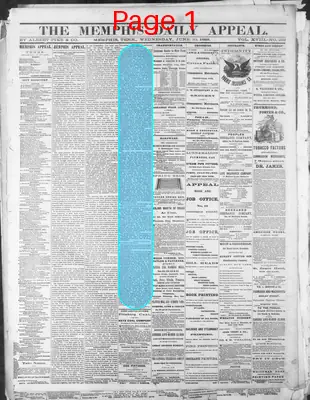
Story
June 10, 1868
Memphis Daily Appeal
Memphis, Shelby County, Tennessee
What is this article about?
Employees of the Nashville and Northwestern Railroad struck on June 5, 1868, due to months of unpaid wages, stopping trains and turning a switch to return one, amid sympathy from crowds and criticism of receiver Innes for favoring others.
Clipping

OCR Quality
95%
Excellent
Full Text
The Strike on the Nashville and Northwestern Railroad.
From the Nashville Banner of the 6th.
The decided action of the employees of the Nashville and Northwestern Railroad yesterday, while it was unexpected, anticipated the time set for the stoppage of trains unless their demands were acceded to on the part of the administration of the road. It is hardly to be wondered at when we take into consideration the fact that these men have so long been deprived of wages honestly and industriously earned. They have indeed been placed in a desperate strait, their families have cried for bread and they have had none to give. It is true that a few barrels of flour have been doled out to the most needy, but every one knows that it is impossible for a working man to "live by bread alone" and perform the arduous labors required of him. They claim, too, that while this state of affairs has existed for months, Innes has never failed to pay favorite employees in his office and directly under his supervision at Nashville.
The freight train due here at 2 o'clock yesterday morning ran off an open switch, west of the Northwestern sheds, running into and smashing four box cars which were on the side track, knocking off the smoke stack of the locomotive, damaging the cowcatcher, bursting the steam pipes and otherwise wrecking the engine. Fortunately no one was hurt. There is a report to the effect that to render the trap more effective the switch bar had been "piked down." This, however, is contradicted. The damage to the engine is estimated at $2000. The employees deny emphatically that they had anything to do with the accident and claim that it was caused by the carelessness of the switch tender. The men in the shops and upon the trains, about half past ten o'clock in the morning, had refused to work any longer unless paid for labor already done. They also resolved that all trains might come in but none should go out, unless it was a car and engine to carry the mails up until their demands were satisfied.
Sometime before the regular time for the departure of the train, fifteen minutes after five, the men gathered upon the platform with the intention of stopping the train. Innes sent for a force of police, and the project was not carried into effect at the depot. The employees finding that if any hindrance was offered to the departure of the train they would be arrested by the police who stood ready to obey at Innes' bidding, made for the switch at the Northwestern sheds, which was outside the corporation. The police, after following the employees as far as Cedar street, returned to the depot. When the train moved out, the scene around the depot was rather exciting. Morris Clark got on the engine, it is said, with a revolver. Rea, the only engineer who was not with the strikers, Richards, the Superintendent, Grant, the Freight Agent, Welsh, the Assistant Superintendent, Claiborne, the Secretary and Treasurer, and Maj. Gray, of the United States Quartermaster Department, rode across well armed. They had no occasion for this precaution, however, for the employees had no intention of raising a riot if it could be possibly avoided, though many of them were prepared. All they wished was their just dues. To prevent the train from proceeding further the employees, from seventy-five to one hundred in number, turned the switch at the Northwestern sheds, and quietly but determinedly compelled the train to return. The stoppage of the train drew a large crowd together, by whom, when the train had backed to the depot, there was considerable sympathy for the employees displayed. The wreck of the morning had not, by this time, been cleared away, for the strikers would not let an engine go out for the purpose.
Here follows a few details which our space will not permit us to publish. As the strike extends from here to Hickman, its formidable proportions will be readily comprehended.
By the way, recurring to the real cause of the complication, we would like to ask how it is that Receiver Innes can manage to pay such large salaries to his two little sons, whom he keeps in the employ of the road, while the families of these employees are suffering for the necessaries of life? The elder of the two fortunate youths is not over fourteen years of age, yet we hear it stated by parties who know the secrets of the ring that he actually draws a salary of two hundred dollars per month.
We present below the justification offered by the strikers. It was adopted at a meeting last night, at which J. T. Leak acted as Chairman, and M. Glenn as Secretary:
NASHVILLE, June 5, 1868.
To the Editor of the Banner:
We suppose that everybody has heard of the strike on the Nashville and Northwestern Railroad, after the perusal of yesterday's Banner. The stopping of the trains to-day was not for the purpose of detaining the mails or interfering with the passenger traffic, and the stopping of the mails can only be attributed to the officers of the road. The old employees of the road were perfectly willing to continue the running of the mail trains until Monday, June 8, but were detained from so doing by Wm. P. Innes, Receiver of the Nashville and Northwestern Railroad, he refusing the so proffered services of C. H. Lytle (an old and tried engineer, who has been in the employ of the company ever since its transfer by the Government to that corporate body), who voluntarily proffered them, although unknown to Mr. Pat. Kelly, Master Mechanic. Receiver Innes would not accept Mr. Lytle's offer, but must obtain the services of a sneak and thief by the name of John Rea, a man who has not the friendship or esteem of even the lowest loafer in Nashville, and who, some six weeks since, was the loudest clamorer of all who wished to start the strike. This man Rea was not taken off the engine or ever ordered off until the train had departed on its regular schedule, but was compelled to return by the strikers. The road has been conducted under its present regime as long as we can stand it, as we have honestly and candidly lied ourselves out of our boarding houses and clothes.
JAMES McGREGOR.
ED. MCGRAW.
From the Nashville Banner of the 6th.
The decided action of the employees of the Nashville and Northwestern Railroad yesterday, while it was unexpected, anticipated the time set for the stoppage of trains unless their demands were acceded to on the part of the administration of the road. It is hardly to be wondered at when we take into consideration the fact that these men have so long been deprived of wages honestly and industriously earned. They have indeed been placed in a desperate strait, their families have cried for bread and they have had none to give. It is true that a few barrels of flour have been doled out to the most needy, but every one knows that it is impossible for a working man to "live by bread alone" and perform the arduous labors required of him. They claim, too, that while this state of affairs has existed for months, Innes has never failed to pay favorite employees in his office and directly under his supervision at Nashville.
The freight train due here at 2 o'clock yesterday morning ran off an open switch, west of the Northwestern sheds, running into and smashing four box cars which were on the side track, knocking off the smoke stack of the locomotive, damaging the cowcatcher, bursting the steam pipes and otherwise wrecking the engine. Fortunately no one was hurt. There is a report to the effect that to render the trap more effective the switch bar had been "piked down." This, however, is contradicted. The damage to the engine is estimated at $2000. The employees deny emphatically that they had anything to do with the accident and claim that it was caused by the carelessness of the switch tender. The men in the shops and upon the trains, about half past ten o'clock in the morning, had refused to work any longer unless paid for labor already done. They also resolved that all trains might come in but none should go out, unless it was a car and engine to carry the mails up until their demands were satisfied.
Sometime before the regular time for the departure of the train, fifteen minutes after five, the men gathered upon the platform with the intention of stopping the train. Innes sent for a force of police, and the project was not carried into effect at the depot. The employees finding that if any hindrance was offered to the departure of the train they would be arrested by the police who stood ready to obey at Innes' bidding, made for the switch at the Northwestern sheds, which was outside the corporation. The police, after following the employees as far as Cedar street, returned to the depot. When the train moved out, the scene around the depot was rather exciting. Morris Clark got on the engine, it is said, with a revolver. Rea, the only engineer who was not with the strikers, Richards, the Superintendent, Grant, the Freight Agent, Welsh, the Assistant Superintendent, Claiborne, the Secretary and Treasurer, and Maj. Gray, of the United States Quartermaster Department, rode across well armed. They had no occasion for this precaution, however, for the employees had no intention of raising a riot if it could be possibly avoided, though many of them were prepared. All they wished was their just dues. To prevent the train from proceeding further the employees, from seventy-five to one hundred in number, turned the switch at the Northwestern sheds, and quietly but determinedly compelled the train to return. The stoppage of the train drew a large crowd together, by whom, when the train had backed to the depot, there was considerable sympathy for the employees displayed. The wreck of the morning had not, by this time, been cleared away, for the strikers would not let an engine go out for the purpose.
Here follows a few details which our space will not permit us to publish. As the strike extends from here to Hickman, its formidable proportions will be readily comprehended.
By the way, recurring to the real cause of the complication, we would like to ask how it is that Receiver Innes can manage to pay such large salaries to his two little sons, whom he keeps in the employ of the road, while the families of these employees are suffering for the necessaries of life? The elder of the two fortunate youths is not over fourteen years of age, yet we hear it stated by parties who know the secrets of the ring that he actually draws a salary of two hundred dollars per month.
We present below the justification offered by the strikers. It was adopted at a meeting last night, at which J. T. Leak acted as Chairman, and M. Glenn as Secretary:
NASHVILLE, June 5, 1868.
To the Editor of the Banner:
We suppose that everybody has heard of the strike on the Nashville and Northwestern Railroad, after the perusal of yesterday's Banner. The stopping of the trains to-day was not for the purpose of detaining the mails or interfering with the passenger traffic, and the stopping of the mails can only be attributed to the officers of the road. The old employees of the road were perfectly willing to continue the running of the mail trains until Monday, June 8, but were detained from so doing by Wm. P. Innes, Receiver of the Nashville and Northwestern Railroad, he refusing the so proffered services of C. H. Lytle (an old and tried engineer, who has been in the employ of the company ever since its transfer by the Government to that corporate body), who voluntarily proffered them, although unknown to Mr. Pat. Kelly, Master Mechanic. Receiver Innes would not accept Mr. Lytle's offer, but must obtain the services of a sneak and thief by the name of John Rea, a man who has not the friendship or esteem of even the lowest loafer in Nashville, and who, some six weeks since, was the loudest clamorer of all who wished to start the strike. This man Rea was not taken off the engine or ever ordered off until the train had departed on its regular schedule, but was compelled to return by the strikers. The road has been conducted under its present regime as long as we can stand it, as we have honestly and candidly lied ourselves out of our boarding houses and clothes.
JAMES McGREGOR.
ED. MCGRAW.
What sub-type of article is it?
Historical Event
What themes does it cover?
Misfortune
Justice
What keywords are associated?
Railroad Strike
Unpaid Wages
Train Stoppage
Derailment
Labor Dispute
Nashville Northwestern
What entities or persons were involved?
Wm. P. Innes
John Rea
James Mcgregor
Ed. Mcgraw
C. H. Lytle
Morris Clark
Richards
Grant
Welsh
Claiborne
Maj. Gray
J. T. Leak
M. Glenn
Where did it happen?
Nashville, Northwestern Railroad Sheds And Depot
Story Details
Key Persons
Wm. P. Innes
John Rea
James Mcgregor
Ed. Mcgraw
C. H. Lytle
Morris Clark
Richards
Grant
Welsh
Claiborne
Maj. Gray
J. T. Leak
M. Glenn
Location
Nashville, Northwestern Railroad Sheds And Depot
Event Date
June 5, 1868
Story Details
Railroad employees struck over unpaid wages, refused to work, stopped a train by turning a switch after an earlier freight train derailment, expressed grievances against receiver Innes in a public letter.