Thank you for visiting SNEWPapers!
Sign up free
The Virginia Gazette
Richmond, Williamsburg, Richmond County, Virginia
What is this article about?
General Amherst demands from Duke of Grafton: British peerage with brother's reversion, first American peerage if created, Cape Breton coal mines, and American land grant as rewards for American conquest. Historical context notes 1745 Cape Breton reduction and loyal New England militia exceeding 200,000 men.
Clipping
OCR Quality
Full Text
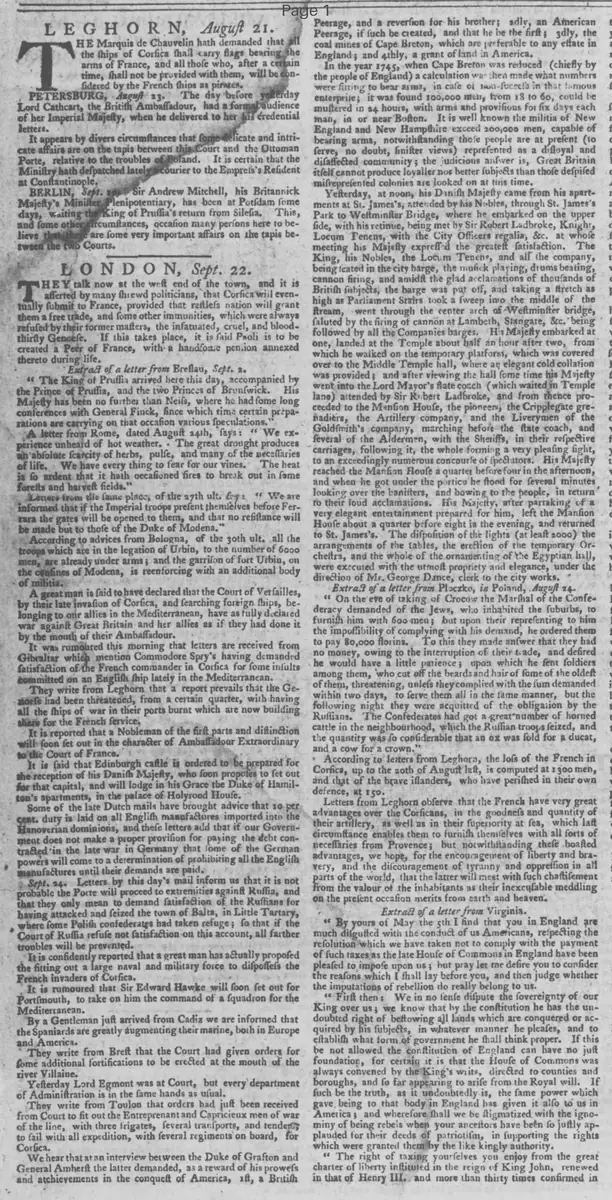
In the year 1745, when Cape Breton was reduced (chiefly by the people of England) a calculation was then made what numbers were fitting to bear arms, in case of actual service in that famous enterprise; it was found 100,000 men, from 18 to 60, could be mustered in 24 hours, with arms and provisions for six days each man, in or near Boston. It is well known the militia of New England and New Hampshire exceed 200,000 men, capable of bearing arms, notwithstanding those people are at present (to serve, no doubt, sinister views) represented as a disloyal and disaffected community; the judicious answer is, Great Britain itself cannot produce loyaller nor better subjects than those despised misrepresented colonies are looked on at this time.
What sub-type of article is it?
What keywords are associated?
What entities or persons were involved?
Domestic News Details
Key Persons
Event Details
At an interview, General Amherst demanded from the Duke of Grafton as rewards for his achievements in the conquest of America: a British Peerage and reversion for his brother; an American Peerage if created, to be the first; the coal mines of Cape Breton; and a grant of land in America. Historical reference to 1745 Cape Breton reduction, where 100,000 men could be mustered near Boston, and current New England and New Hampshire militia exceeding 200,000 loyal men despite misrepresentations.