Thank you for visiting SNEWPapers!
Sign up free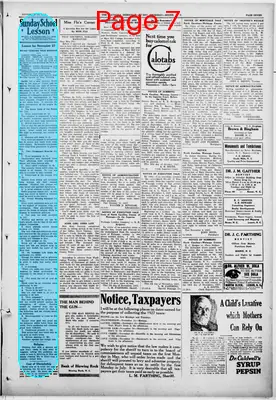
Literary
November 24, 1927
Watauga Democrat
Boone, Watauga County, North Carolina
What is this article about?
Sunday School lesson by Rev. P. B. Fitzwater on Isaiah 1:1-20, titled 'Isaiah Teaches True Worship.' It critiques Israel's ingratitude, sins, and formal worship, urging moral cleansing, justice, and obedience to God for true redemption. Includes topics for different age groups and closing quotes on religion and discipleship.
Clipping

OCR Quality
95%
Excellent
Full Text
NOVEMBER 24, 1927
Sunday School Lesson
(By REV. P. B. FITZWATER, D.D., Dean Moody Bible Institute of Chicago.)
(©, 1927, by Western Newspaper Union.)
Lesson for November 27
ISAIAH TEACHES TRUE WORSHIP
LESSON TEXT—Isa. 1:1-20
GOLDEN TEXT—O magnify the Lord with me and let us exalt his name together. I sought the Lord and he heard me and delivered me from all my fears. (Ps. 34:3, 4.)
PRIMARY TOPIC—Worshiping God.
JUNIOR TOPIC—Worship That Pleases God.
INTERMEDIATE AND SENIOR TOPIC—Worship That Pleases God.
YOUNG PEOPLE AND ADULT TOPIC—The Nature of True Worship.
Isaiah had a long ministry, beginning in the days of Uzziah and extending through the reign of Jotham, Ahaz and Hezekiah. For a history of the nation in this time see II Kings, chapters 15 to 20. Isaiah's visions present the redemptive purpose of God through the consummation of Messiah's kingdom. Chapter 1 is the title to the whole book. It contains the great arraignment of the people for their sins.
I. The Moral State of the People (vv. 2-4).
1. Filial ingratitude (v. 2).
The universe is summoned to hear the Lord's complaint against Judah and Israel for their base ingratitude.
2. Brutal stupidity (v. 3).
The ox and the ass are proverbially stupid, but Israel's stupidity exceeded theirs. Israel would not recognize His right as sovereign, nor author of mercies.
3. Habitual evil doers (v. 4).
They were not sinners in act merely, but in nature and heart were laden with iniquity. By heredity they passed their vices from generation to generation.
II. Their Consequent Miseries (vv. 5-9).
1. Their perplexity (v. 5).
Chastisement only hardened them. Their afflictions were followed by deeper and more heinous sins.
2. Their awful confusion (v. 6).
The calamity which befell them extended to all classes. No one was able to minister to their comfort.
3. Desolations in the country (vv. 7, 8).
Revolts from within and invasions from without left their country desolate. Physical ruin always follows moral and spiritual decadence.
4. A saved remnant assured (v. 9).
God's purposes cannot fail. A remnant was saved in Israel—a remnant shall be saved in the church.
III. Formal Worship Rebuked (vv. 10-15).
Their awful calamities were not due to the neglect of religious rites and ceremonies. They punctiliously observed the forms of religion while indulging in iniquitous practices.
1. God does not need sacrifices (v. 11).
Worship and service are not for God's benefit, but for that of the worshipers themselves.
2. God's attitude toward formal worship (vv. 12-14).
The very rites and ceremonies which God ordained for the purpose of helping men to approach Him become disgusting and irksome to Him.
3. God's refusal (v. 15).
Every act of worship while the heart and life are steeped with iniquity only incites the anger of the Holy One.
IV. An Amended Life God's Requirement (vv. 16-20).
Though the nation had so grievously sinned, their case was not hopeless. In order to enjoy that mercy there must be:
1. A cleansing.
'Wash you, make you clean.' The washing by water symbolized the cleansing by the blood of the Son of God.
2. 'Put away the evil of your doings.'
There could be no cleansing while continuing in sin.
3. 'Cease to do evil.'
4. 'Learn to do well' (v. 17).
One can only cease to do evil by learning to do well.
5. 'Seek judgment.'
One must not only be upright himself but should protest against the wrongdoing of others. Burdens should be removed from the oppressed. Justice should be done to the fatherless and the widows should be befriended.
6. Encouragement to come to God (v. 18).
Though their guilt was great and the judgment which befell them was awful, God's pardoning and cleansing grace were sufficient.
7. Conditional promise (v. 19).
This means that they could only enjoy good on God's terms.
8. Solemn warning (v. 20).
Rebellion against God brings ruin.
Religion
Trusting God with a sincere and open heart, ready to obey what He suggests, asking His guidance, and ready to take it, believing in Him and simply trusting life to Him—that is religion.—James Reid.
Cost of Discipleship
Christ tells us to count the cost of discipleship, but He never asks us to count the gain. He knew we could not; there is no arithmetic to compute that.—W. L. Watkinson.
Sunday School Lesson
(By REV. P. B. FITZWATER, D.D., Dean Moody Bible Institute of Chicago.)
(©, 1927, by Western Newspaper Union.)
Lesson for November 27
ISAIAH TEACHES TRUE WORSHIP
LESSON TEXT—Isa. 1:1-20
GOLDEN TEXT—O magnify the Lord with me and let us exalt his name together. I sought the Lord and he heard me and delivered me from all my fears. (Ps. 34:3, 4.)
PRIMARY TOPIC—Worshiping God.
JUNIOR TOPIC—Worship That Pleases God.
INTERMEDIATE AND SENIOR TOPIC—Worship That Pleases God.
YOUNG PEOPLE AND ADULT TOPIC—The Nature of True Worship.
Isaiah had a long ministry, beginning in the days of Uzziah and extending through the reign of Jotham, Ahaz and Hezekiah. For a history of the nation in this time see II Kings, chapters 15 to 20. Isaiah's visions present the redemptive purpose of God through the consummation of Messiah's kingdom. Chapter 1 is the title to the whole book. It contains the great arraignment of the people for their sins.
I. The Moral State of the People (vv. 2-4).
1. Filial ingratitude (v. 2).
The universe is summoned to hear the Lord's complaint against Judah and Israel for their base ingratitude.
2. Brutal stupidity (v. 3).
The ox and the ass are proverbially stupid, but Israel's stupidity exceeded theirs. Israel would not recognize His right as sovereign, nor author of mercies.
3. Habitual evil doers (v. 4).
They were not sinners in act merely, but in nature and heart were laden with iniquity. By heredity they passed their vices from generation to generation.
II. Their Consequent Miseries (vv. 5-9).
1. Their perplexity (v. 5).
Chastisement only hardened them. Their afflictions were followed by deeper and more heinous sins.
2. Their awful confusion (v. 6).
The calamity which befell them extended to all classes. No one was able to minister to their comfort.
3. Desolations in the country (vv. 7, 8).
Revolts from within and invasions from without left their country desolate. Physical ruin always follows moral and spiritual decadence.
4. A saved remnant assured (v. 9).
God's purposes cannot fail. A remnant was saved in Israel—a remnant shall be saved in the church.
III. Formal Worship Rebuked (vv. 10-15).
Their awful calamities were not due to the neglect of religious rites and ceremonies. They punctiliously observed the forms of religion while indulging in iniquitous practices.
1. God does not need sacrifices (v. 11).
Worship and service are not for God's benefit, but for that of the worshipers themselves.
2. God's attitude toward formal worship (vv. 12-14).
The very rites and ceremonies which God ordained for the purpose of helping men to approach Him become disgusting and irksome to Him.
3. God's refusal (v. 15).
Every act of worship while the heart and life are steeped with iniquity only incites the anger of the Holy One.
IV. An Amended Life God's Requirement (vv. 16-20).
Though the nation had so grievously sinned, their case was not hopeless. In order to enjoy that mercy there must be:
1. A cleansing.
'Wash you, make you clean.' The washing by water symbolized the cleansing by the blood of the Son of God.
2. 'Put away the evil of your doings.'
There could be no cleansing while continuing in sin.
3. 'Cease to do evil.'
4. 'Learn to do well' (v. 17).
One can only cease to do evil by learning to do well.
5. 'Seek judgment.'
One must not only be upright himself but should protest against the wrongdoing of others. Burdens should be removed from the oppressed. Justice should be done to the fatherless and the widows should be befriended.
6. Encouragement to come to God (v. 18).
Though their guilt was great and the judgment which befell them was awful, God's pardoning and cleansing grace were sufficient.
7. Conditional promise (v. 19).
This means that they could only enjoy good on God's terms.
8. Solemn warning (v. 20).
Rebellion against God brings ruin.
Religion
Trusting God with a sincere and open heart, ready to obey what He suggests, asking His guidance, and ready to take it, believing in Him and simply trusting life to Him—that is religion.—James Reid.
Cost of Discipleship
Christ tells us to count the cost of discipleship, but He never asks us to count the gain. He knew we could not; there is no arithmetic to compute that.—W. L. Watkinson.
What sub-type of article is it?
Essay
What themes does it cover?
Religious
Moral Virtue
What keywords are associated?
Sunday School Lesson
Isaiah Commentary
True Worship
Moral Cleansing
Biblical Exposition
Gods Mercy
Formal Religion Rebuke
What entities or persons were involved?
By Rev. P. B. Fitzwater, D.D., Dean Moody Bible Institute Of Chicago.
Literary Details
Title
Isaiah Teaches True Worship
Author
By Rev. P. B. Fitzwater, D.D., Dean Moody Bible Institute Of Chicago.
Subject
Lesson For November 27
Key Lines
O Magnify The Lord With Me And Let Us Exalt His Name Together. I Sought The Lord And He Heard Me And Delivered Me From All My Fears. (Ps. 34:3, 4.)
'Wash You, Make You Clean.' The Washing By Water Symbolized The Cleansing By The Blood Of The Son Of God.
Though Their Guilt Was Great And The Judgment Which Befell Them Was Awful, God's Pardoning And Cleansing Grace Were Sufficient.