Thank you for visiting SNEWPapers!
Sign up free
Poem
October 12, 1904
The Weekly Register
Point Pleasant, Mason County, West Virginia
What is this article about?
A traditional soldier's love song, popular among Civil War troops especially from South Carolina, sung by men pining for their sweethearts on moonlight nights in camp. The lyrics express a soldier's tender reluctance to involve his pure-hearted beloved in his harsh fate before departing.
Clipping
OCR Quality
97%
Excellent
Full Text
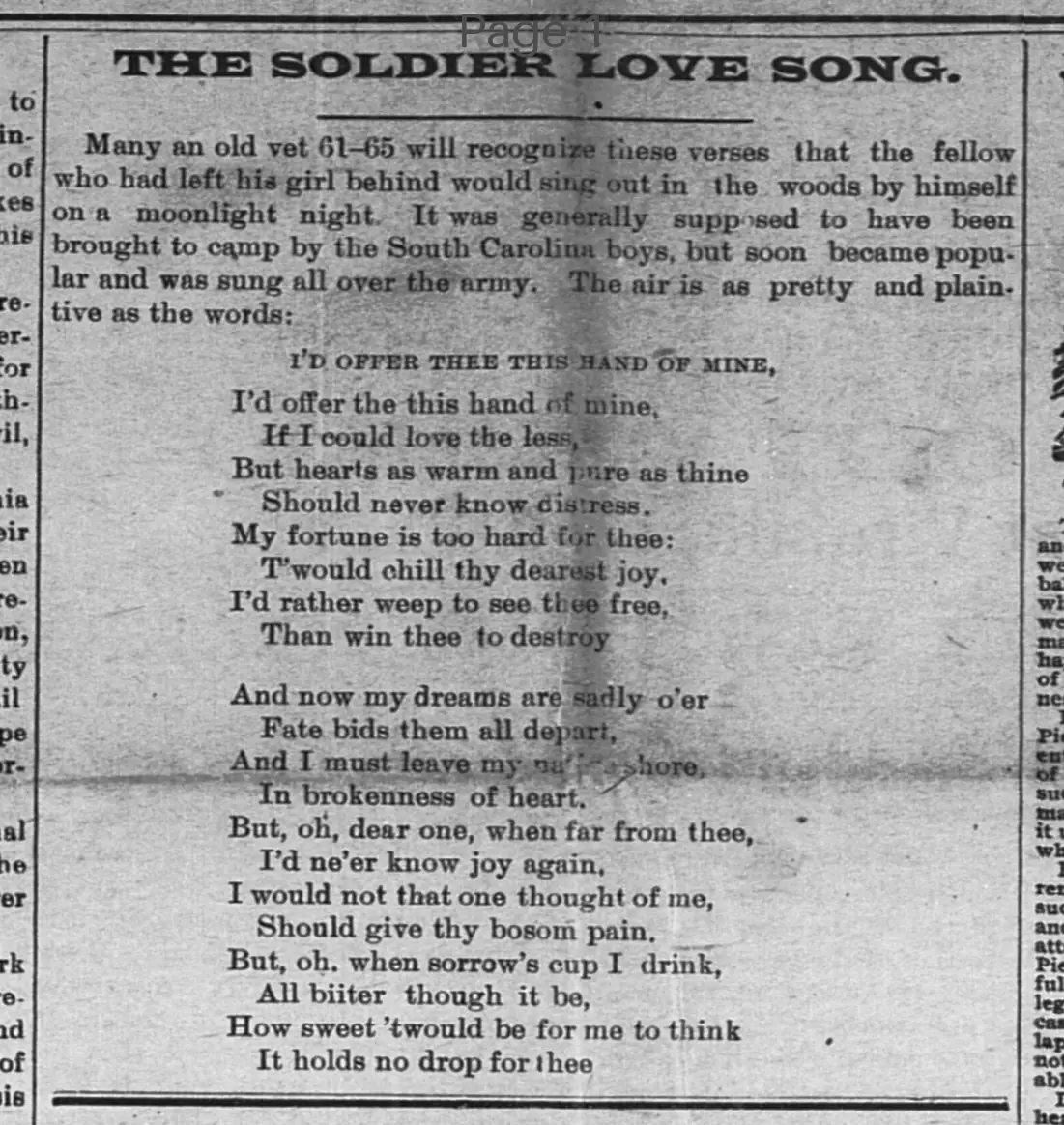
The Soldier Love Song.
Many an old vet 65 will recognize these verses that the fellow who had left his girl behind would sing out in the woods by himself on a moonlight night. It was generally supposed to have been brought to camp by the South Carolina boys, but soon became popular and was sung all over the army. The air is as pretty and plaintive as the words:
I'd offer thee this hand of mine,
If I could love thee less,
But hearts as warm and pure as thine
Should never know distress.
My fortune is too hard for thee:
'Twould chill thy dearest joy.
I'd rather weep to see thee free,
Than win thee to destroy.
And now my dreams are sadly o'er
Fate bids them all depart,
And I must leave my native shore
In brokenness of heart.
But, oh, dear one, when far from thee,
I'd ne'er know joy again,
I would not that one thought of me,
Should give thy bosom pain.
But, oh, when sorrow's cup I drink,
All bitter though it be,
How sweet 'twould be for me to think
It holds no drop for thee.
Many an old vet 65 will recognize these verses that the fellow who had left his girl behind would sing out in the woods by himself on a moonlight night. It was generally supposed to have been brought to camp by the South Carolina boys, but soon became popular and was sung all over the army. The air is as pretty and plaintive as the words:
I'd offer thee this hand of mine,
If I could love thee less,
But hearts as warm and pure as thine
Should never know distress.
My fortune is too hard for thee:
'Twould chill thy dearest joy.
I'd rather weep to see thee free,
Than win thee to destroy.
And now my dreams are sadly o'er
Fate bids them all depart,
And I must leave my native shore
In brokenness of heart.
But, oh, dear one, when far from thee,
I'd ne'er know joy again,
I would not that one thought of me,
Should give thy bosom pain.
But, oh, when sorrow's cup I drink,
All bitter though it be,
How sweet 'twould be for me to think
It holds no drop for thee.
What sub-type of article is it?
Song
Ballad
What themes does it cover?
Love Courtship
War Military
What keywords are associated?
Soldier Love Song
South Carolina Boys
Army Camp
Moonlight Night
Farewell Verse
Plaintive Air
Poem Details
Title
The Soldier Love Song.
Subject
Soldier's Farewell To His Beloved Before Departing For War
Form / Style
Rhymed Quatrains With Plaintive Melody
Key Lines
I'd Offer Thee This Hand Of Mine,
If I Could Love Thee Less,
But Hearts As Warm And Pure As Thine
Should Never Know Distress.
My Fortune Is Too Hard For Thee:
'Twould Chill Thy Dearest Joy.
I'd Rather Weep To See Thee Free,
Than Win Thee To Destroy.
But, Oh, When Sorrow's Cup I Drink,
All Bitter Though It Be,
How Sweet 'Twould Be For Me To Think
It Holds No Drop For Thee.