Thank you for visiting SNEWPapers!
Sign up free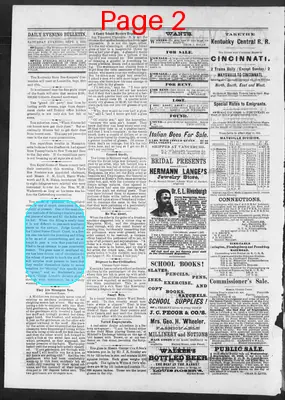
Story
September 2, 1882
Evening Bulletin
Maysville, Mason County, Kentucky
What is this article about?
Legal ruling in Boston deems punching and filling silver coins with tin foil as counterfeiting; passing such coins invites penalties, warning against circulation of debased currency.
Clipping
OCR Quality
98%
Excellent
Full Text
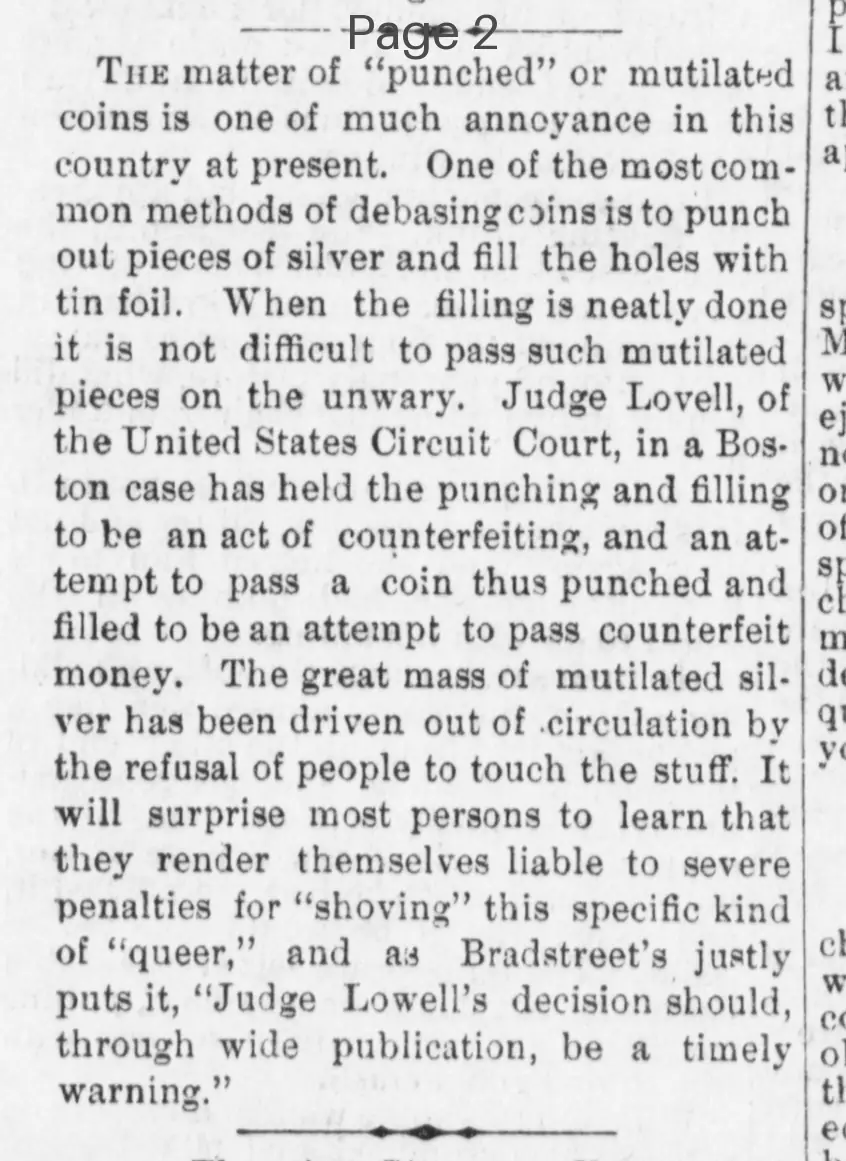
The matter of "punched" or mutilated coins is one of much annoyance in this country at present. One of the most common methods of debasing coins is to punch out pieces of silver and fill the holes with tin foil. When the filling is neatly done it is not difficult to pass such mutilated pieces on the unwary. Judge Lovell, of the United States Circuit Court, in a Boston case has held the punching and filling to be an act of counterfeiting, and an attempt to pass a coin thus punched and filled to be an attempt to pass counterfeit money. The great mass of mutilated silver has been driven out of circulation by the refusal of people to touch the stuff. It will surprise most persons to learn that they render themselves liable to severe penalties for "shoving" this specific kind of "queer," and as Bradstreet's justly puts it, "Judge Lovell's decision should, through wide publication, be a timely warning."
What sub-type of article is it?
Crime Story
Deception Fraud
Curiosity
What themes does it cover?
Crime Punishment
Deception
Justice
What keywords are associated?
Mutilated Coins
Coin Debasement
Counterfeiting
Tin Foil Filling
Judge Lovell Decision
What entities or persons were involved?
Judge Lovell
Where did it happen?
Boston
Story Details
Key Persons
Judge Lovell
Location
Boston
Story Details
Mutilated silver coins are punched and filled with tin foil to debase them, which Judge Lovell ruled as counterfeiting in a Boston case; passing such coins risks severe penalties, serving as a warning.