Thank you for visiting SNEWPapers!
Sign up free
Literary
January 4, 1913
Spirit Of The Age
Woodstock, Windsor County, Vermont
What is this article about?
In a summer lakeside setting, young Orpha listens to married Mrs. Healy gossip about a prolonged engagement, prompting Orpha to reflect on her unspoken love for Stanley Long. Avoiding stratagems, Orpha encounters Stanley, leading to their mutual confession of love.
Merged-components note: Continuation of the same fiction story, with sequential narrative flow across components.
Clipping
OCR Quality
98%
Excellent
Full Text
By JEANNE O. LOIZEAUX,
Orpha did not lift her eyes from her embroidery, but she was all ears to Mrs. Healy's chatter. That lady rocked, did complicated Irish crochet--and gossiped, each performance perfect of its kind, and a refutation of the adage that only one thing at a time can be done well!
Orpha's sister had left her to entertain her guest for an hour on the wide, vine-covered veranda, with its rugs, tea table, easy chairs and other paraphernalia of summer idleness, and the girl found her duty best performed by a system of listening. The young matron had discussed fashion, the lake society, the latest novel, and finally launched into a running commentary on love affairs. Safe herself in the haven of a happy marriage, she considered herself a judge of storms on life's sea, and wise unto the matrimonial salvation of all who would accept her advice.
Mrs. Healy swung a pretty tan pump below her narrow skirt, and audibly considered the case of Rose Danison and George Saint.
"They've been engaged forever, and nobody knows why they don't marry and be out of their misery! I say it is her fault that he doesn't insist on her choosing the day. She makes him too content as he is. A man has to be brought to time occasionally. He gets too complacent, too sure of a girl, and needs to be waked up. She ought to make him jealous, or go abroad a year, or even break the engagement! Instead, she waits ten years and acquires a patient look and great sweetness of character, and some day, being only an average man, he will prefer mere pink cheeks, bright eyes and impatience! Don't you think so?"
Orpha lifted her dark head, and her calm eyes rested a moment on the plump little matron, glad that her secret was safely hidden in her own heart and that people could not thus discuss her and Stanley Long. For the first time she was glad that she and Stan were not engaged, though she was as she had been all summer, miserable because he neither declared his love nor went away. Mrs. Healy, being a stranger, of course knew nothing about Stanley, and the girl hoped her natural reserve had kept it from her own world,
"Don't you think so?" persisted the older woman,
Orpha rose in her deliberate way folding her embroidery, and stood, tall and slender in the dying light of afternoon. Unnoticed by them Steve, the young man of the house, had sprawled along to the rose-wreathed railing, and was listening quizzically to the girl's answer.
"I--hardly think I do," said Orpha. "I don't see how a girl with any self-respect could purposely make the man--she--cares for--jealous, or send him away when she doesn't mean it, or pretend to leave just to see if he will follow. It doesn't seem sincere, somehow. If a man does not care enough to say so, that's one thing. But he might have a real reason, and she might trust him. If she doesn't trust him, she couldn't love him, anyway, could she? Perhaps, Rose and George don't tell everybody all their secrets? Perhaps she is patient because she--understands? It might be like that, you know." She suddenly saw her nephew, only five years her junior and blushed deeply. Wise with his twenty years, he regarded the girl with favor.
"Good for you, auntie! You've got sense! A fellow would hate to be brought to time like that, if he had any self-respect and--"
"If he knew what was being done to him, which he never does," finished Mrs. Healy, with her ripple of a laugh.
"You are two solemn, sentimental children, and know nothing whatever about love. Just you wait, Steve; and as for you, Orpha--."
Steve's mother came along just then, taking off her gloves and dropping into the first chair, regarding first her son and then her sister with favor.
"As for Orpha," she said, "she is a dear, and I'm glad she's here for her vacation, and since she is, I want her to go out to the lake and see the sunset. She loves it, and she looks a little solemn.--You might go along, Steve."
The boy bowed with mock ceremony to his mother. "I'm not wanted. Auntie loves her own company. Besides, it makes me feel like a silly little boy to be nephew to a girl so pretty that everybody turns to look at her. If she wants me to follow as a bodyguard I'll go--"
Orpha, already on the way, laughed him to scorn over her shoulder. "No. I don't want you. You're too young and silly! Besides--"
"Besides, she has other fish to fry, mother. She is not the only sunset-lover that dawdles about the cliffs of a summer's evening! Most romantic, I call it!" She fled his impudence, her sister and Mrs. Healy, and took refuge across the garden, down the path through the woods toward the pretty lake. This time she hoped Stanley would not be there. She wished that she herself did not know she loved him before he had in words declared his love for her. Sure at heart of him, she wondered wistfully at his silence, her maidenly dignity up in arms the while.
As she straightened back to the brisk lake breeze, striding off on her lithe, healthy fashion, her mind reverted to Mrs. Healy and her talk, which she hated. The girl's nobility rose high and above subterfuge and stratagem. She would never help a man with his wooing, nor hurry him, by word or act, or even by thought. If love were less than free and spontaneous, it was not real love, and she would have none of it.
Then at the turn of a cliff she saw Stanley, and it came to her that, unasked, she was going to meet him. It was a little like showing her heart. He had not seen her yet, and she slipped back behind a great rock and out of sight, ran swiftly down to the sandy strip of beach and away from him, her cheeks on fire, her heart beating hard. If he did care, did want her, he could seek her out and say so, and until he did this, she would not dawdle about alone on the veranda; but neither would she stoop to an attempt to make him jealous--she would not encourage Hal Porter.
As she turned toward home she vowed a mental and spiritual vow of loyalty to Stanley, and to him alone. She would trust her love and leave it to his manliness and discretion to show her heart when the fullness of time should have come.
The sun had quite gone down, and the first dusk came, and with it great peace and comfort to the girl after the unrest of the past few weeks. In this mood, Orpha came hurrying up the wood path, aware that she should not be alone, when she heard rapid steps behind her. She quickened her own pace, a little fearful, but in a moment the steps came closer and she heard her name.
"Orpha! Orpha, wait for me?" Another instant and Stanley was close at her side, a little out of breath.
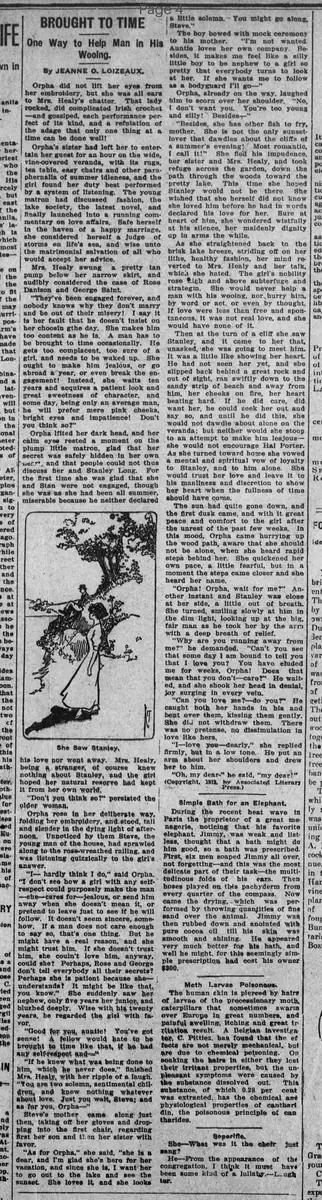
She turned, smiling slowly at him in the dim light, looking up at the big, fair man as he took her by the arm with a deep breath of relief.
"Why are you running away from me?" he demanded. "Can't you see that some day I am bound to tell you that I love you? You have eluded me for weeks, Orpha! Does that mean that you don't--care?" He waited, and she shook her head in denial, joy surging in every vein.
"Can you love me?--do you?" He caught both her hands in his and bent over them, kissing them gently.
She did not withdraw them. There was no pretense, no dissimulation in love like hers,
"I--love you--dearly," she replied firmly, but in a low tone. He put an arm about her shoulders and drew her to him.
"Oh, my dear," he said, "my dear!"
(Copyright, 1913, by Associated Literary Press.)
Orpha did not lift her eyes from her embroidery, but she was all ears to Mrs. Healy's chatter. That lady rocked, did complicated Irish crochet--and gossiped, each performance perfect of its kind, and a refutation of the adage that only one thing at a time can be done well!
Orpha's sister had left her to entertain her guest for an hour on the wide, vine-covered veranda, with its rugs, tea table, easy chairs and other paraphernalia of summer idleness, and the girl found her duty best performed by a system of listening. The young matron had discussed fashion, the lake society, the latest novel, and finally launched into a running commentary on love affairs. Safe herself in the haven of a happy marriage, she considered herself a judge of storms on life's sea, and wise unto the matrimonial salvation of all who would accept her advice.
Mrs. Healy swung a pretty tan pump below her narrow skirt, and audibly considered the case of Rose Danison and George Saint.
"They've been engaged forever, and nobody knows why they don't marry and be out of their misery! I say it is her fault that he doesn't insist on her choosing the day. She makes him too content as he is. A man has to be brought to time occasionally. He gets too complacent, too sure of a girl, and needs to be waked up. She ought to make him jealous, or go abroad a year, or even break the engagement! Instead, she waits ten years and acquires a patient look and great sweetness of character, and some day, being only an average man, he will prefer mere pink cheeks, bright eyes and impatience! Don't you think so?"
Orpha lifted her dark head, and her calm eyes rested a moment on the plump little matron, glad that her secret was safely hidden in her own heart and that people could not thus discuss her and Stanley Long. For the first time she was glad that she and Stan were not engaged, though she was as she had been all summer, miserable because he neither declared his love nor went away. Mrs. Healy, being a stranger, of course knew nothing about Stanley, and the girl hoped her natural reserve had kept it from her own world,
"Don't you think so?" persisted the older woman,
Orpha rose in her deliberate way folding her embroidery, and stood, tall and slender in the dying light of afternoon. Unnoticed by them Steve, the young man of the house, had sprawled along to the rose-wreathed railing, and was listening quizzically to the girl's answer.
"I--hardly think I do," said Orpha. "I don't see how a girl with any self-respect could purposely make the man--she--cares for--jealous, or send him away when she doesn't mean it, or pretend to leave just to see if he will follow. It doesn't seem sincere, somehow. If a man does not care enough to say so, that's one thing. But he might have a real reason, and she might trust him. If she doesn't trust him, she couldn't love him, anyway, could she? Perhaps, Rose and George don't tell everybody all their secrets? Perhaps she is patient because she--understands? It might be like that, you know." She suddenly saw her nephew, only five years her junior and blushed deeply. Wise with his twenty years, he regarded the girl with favor.
"Good for you, auntie! You've got sense! A fellow would hate to be brought to time like that, if he had any self-respect and--"
"If he knew what was being done to him, which he never does," finished Mrs. Healy, with her ripple of a laugh.
"You are two solemn, sentimental children, and know nothing whatever about love. Just you wait, Steve; and as for you, Orpha--."
Steve's mother came along just then, taking off her gloves and dropping into the first chair, regarding first her son and then her sister with favor.
"As for Orpha," she said, "she is a dear, and I'm glad she's here for her vacation, and since she is, I want her to go out to the lake and see the sunset. She loves it, and she looks a little solemn.--You might go along, Steve."
The boy bowed with mock ceremony to his mother. "I'm not wanted. Auntie loves her own company. Besides, it makes me feel like a silly little boy to be nephew to a girl so pretty that everybody turns to look at her. If she wants me to follow as a bodyguard I'll go--"
Orpha, already on the way, laughed him to scorn over her shoulder. "No. I don't want you. You're too young and silly! Besides--"
"Besides, she has other fish to fry, mother. She is not the only sunset-lover that dawdles about the cliffs of a summer's evening! Most romantic, I call it!" She fled his impudence, her sister and Mrs. Healy, and took refuge across the garden, down the path through the woods toward the pretty lake. This time she hoped Stanley would not be there. She wished that she herself did not know she loved him before he had in words declared his love for her. Sure at heart of him, she wondered wistfully at his silence, her maidenly dignity up in arms the while.
As she straightened back to the brisk lake breeze, striding off on her lithe, healthy fashion, her mind reverted to Mrs. Healy and her talk, which she hated. The girl's nobility rose high and above subterfuge and stratagem. She would never help a man with his wooing, nor hurry him, by word or act, or even by thought. If love were less than free and spontaneous, it was not real love, and she would have none of it.
Then at the turn of a cliff she saw Stanley, and it came to her that, unasked, she was going to meet him. It was a little like showing her heart. He had not seen her yet, and she slipped back behind a great rock and out of sight, ran swiftly down to the sandy strip of beach and away from him, her cheeks on fire, her heart beating hard. If he did care, did want her, he could seek her out and say so, and until he did this, she would not dawdle about alone on the veranda; but neither would she stoop to an attempt to make him jealous--she would not encourage Hal Porter.
As she turned toward home she vowed a mental and spiritual vow of loyalty to Stanley, and to him alone. She would trust her love and leave it to his manliness and discretion to show her heart when the fullness of time should have come.
The sun had quite gone down, and the first dusk came, and with it great peace and comfort to the girl after the unrest of the past few weeks. In this mood, Orpha came hurrying up the wood path, aware that she should not be alone, when she heard rapid steps behind her. She quickened her own pace, a little fearful, but in a moment the steps came closer and she heard her name.
"Orpha! Orpha, wait for me?" Another instant and Stanley was close at her side, a little out of breath.
She turned, smiling slowly at him in the dim light, looking up at the big, fair man as he took her by the arm with a deep breath of relief.
"Why are you running away from me?" he demanded. "Can't you see that some day I am bound to tell you that I love you? You have eluded me for weeks, Orpha! Does that mean that you don't--care?" He waited, and she shook her head in denial, joy surging in every vein.
"Can you love me?--do you?" He caught both her hands in his and bent over them, kissing them gently.
She did not withdraw them. There was no pretense, no dissimulation in love like hers,
"I--love you--dearly," she replied firmly, but in a low tone. He put an arm about her shoulders and drew her to him.
"Oh, my dear," he said, "my dear!"
(Copyright, 1913, by Associated Literary Press.)
What sub-type of article is it?
Prose Fiction
What themes does it cover?
Love Romance
Moral Virtue
What keywords are associated?
Romance
Engagement
Jealousy
Sincerity
Love Confession
Matrimony
Gossip
What entities or persons were involved?
By Jeanne O. Loizeaux
Literary Details
Author
By Jeanne O. Loizeaux
Key Lines
"I Hardly Think I Do," Said Orpha. "I Don't See How A Girl With Any Self Respect Could Purposely Make The Man She Cares For Jealous, Or Send Him Away When She Doesn't Mean It, Or Pretend To Leave Just To See If He Will Follow. It Doesn't Seem Sincere, Somehow."
"I Love You Dearly," She Replied Firmly, But In A Low Tone. He Put An Arm About Her Shoulders And Drew Her To Him.
"Oh, My Dear," He Said, "My Dear!"