Thank you for visiting SNEWPapers!
Sign up free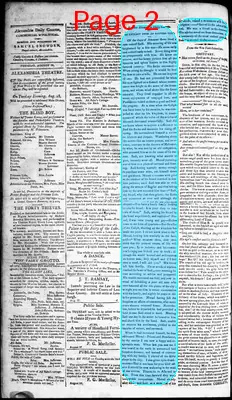
Literary
August 28, 1810
Alexandria Daily Gazette, Commercial & Political
Alexandria, Virginia
What is this article about?
An Eastern tale of Sadi, who enjoys prosperity until a caliph's edict causes economic hardship, leading to despair and drunkenness. His old friend Morad advises industry and self-reliance, helping Sadi recover his wealth and family life. Sadi later honors Morad with a monument after his death.
Clipping
OCR Quality
95%
Excellent
Full Text
For the Alexandria Daily Gazette
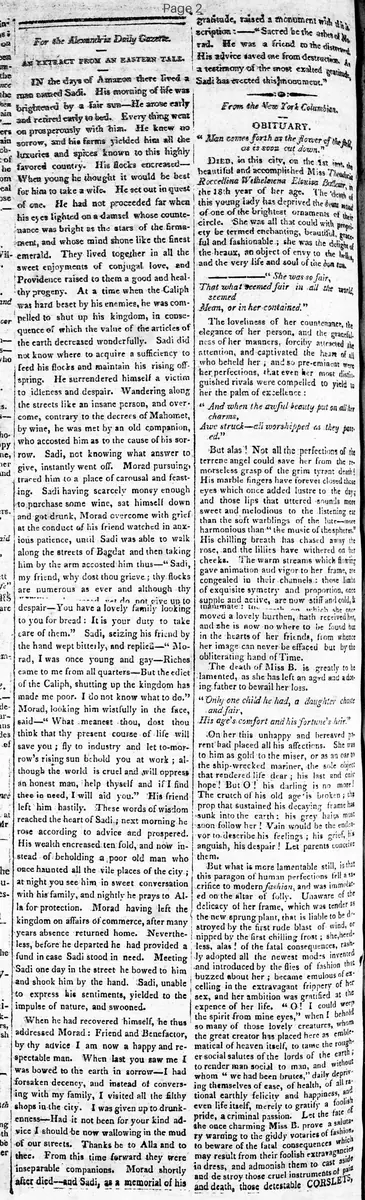
AN EXTRACT FROM AN EASTERN TALE.
IN the days of Amazon there lived a man called Sadi. His morning of life was brightened by a fair sun--He arose early and retired early to bed. Every thing went on prosperously with him. He knew no sorrow, and his farms yielded him all the luxuries and spices known to this highly favored country. His flocks increased--When young he thought it would be best for him to take a wife. He set out in quest of one. He had not proceeded far when his eyes lighted on a damsel whose countenance was bright as the stars of the firmament, and whose mind shone like the finest emerald. They lived together in all the sweet enjoyments of conjugal love, and Providence raised to them a good and healthy progeny. At a time when the Caliph was hard beset by his enemies, he was compelled to shut up his kingdom, in consequence of which the value of the articles of the earth decreased wonderfully. Sadi did not know where to acquire a sufficiency to feed his flocks and maintain his rising offspring. He surrendered himself a victim to idleness and despair. Wandering along the streets like an insane person, and overcome, contrary to the decrees of Mahomet, by wine, he was met by an old companion, who accosted him as to the cause of his sorrow. Sadi, not knowing what answer to give, instantly went off. Morad pursuing: traced him to a place of carousal and feasting. Sadi having scarcely money enough to purchase some wine, sat himself down and got drunk, Morad overcome with grief at the conduct of his friend watched in anxious patience, until Sadi was able to walk along the streets of Bagdat and then taking him by the arm accosted him thus--"Sadi, my friend, why dost thou grieve; thy flocks are numerous as ever and although thy
-a.d yet do not give up to despair--You have a lovely family looking to you for bread: It is your duty to take care of them."
Sadi, seizing his friend by the hand wept bitterly, and replied--"Morad, I was once young and gay--Riches came to me from all quarters--But the edict of the Caliph, shutting up the kingdom has made me poor. I do not know what to do."
Morad, looking him wistfully in the face, said "What meanest thou, dost thou think that thy present course of life will save you; fly to industry and let to-morrow's rising sun behold you at work; although the world is cruel and will oppress an honest man, help thyself and if I find thee in need, I will aid you." His friend left him hastily. These words of wisdom reached the heart of Sadi; next morning he rose according to advice and prospered. His wealth increased ten fold, and now instead of beholding a poor old man who once haunted all the vile places of the city; at night you see him in sweet conversation with his family, and nightly he prays to Alla for protection. Morad having left the kingdom on affairs of commerce, after many years absence returned home. Nevertheless, before he departed he had provided a fund in case Sadi stood in need. Meeting Sadi one day in the street he bowed to him and shook him by the hand. Sadi, unable to express his sentiments, yielded to the impulse of nature, and swooned.
When he had recovered himself, he thus addressed Morad: Friend and Benefactor, by thy advice I am now a happy and respectable man. When last you saw me I was bowed to the earth in sorrow--I had forsaken decency, and instead of conversing with my family, I visited all the filthy shops in the city. I was given up to drunkenness--Had it not been for your kind advice I should be now wallowing in the mud of our streets. Thanks be to Alla and to thee. From this time forward they were inseparable companions. Morad shortly after died--and Sadi, as a memorial of his gratitude, raised a monument with this inscription:--"Sacred be the ashes of Morad. He was a friend to the distressed His advice saved me from destruction. As a testimony of the most exalted gratitude, Sadi has erected this monument."
AN EXTRACT FROM AN EASTERN TALE.
IN the days of Amazon there lived a man called Sadi. His morning of life was brightened by a fair sun--He arose early and retired early to bed. Every thing went on prosperously with him. He knew no sorrow, and his farms yielded him all the luxuries and spices known to this highly favored country. His flocks increased--When young he thought it would be best for him to take a wife. He set out in quest of one. He had not proceeded far when his eyes lighted on a damsel whose countenance was bright as the stars of the firmament, and whose mind shone like the finest emerald. They lived together in all the sweet enjoyments of conjugal love, and Providence raised to them a good and healthy progeny. At a time when the Caliph was hard beset by his enemies, he was compelled to shut up his kingdom, in consequence of which the value of the articles of the earth decreased wonderfully. Sadi did not know where to acquire a sufficiency to feed his flocks and maintain his rising offspring. He surrendered himself a victim to idleness and despair. Wandering along the streets like an insane person, and overcome, contrary to the decrees of Mahomet, by wine, he was met by an old companion, who accosted him as to the cause of his sorrow. Sadi, not knowing what answer to give, instantly went off. Morad pursuing: traced him to a place of carousal and feasting. Sadi having scarcely money enough to purchase some wine, sat himself down and got drunk, Morad overcome with grief at the conduct of his friend watched in anxious patience, until Sadi was able to walk along the streets of Bagdat and then taking him by the arm accosted him thus--"Sadi, my friend, why dost thou grieve; thy flocks are numerous as ever and although thy
-a.d yet do not give up to despair--You have a lovely family looking to you for bread: It is your duty to take care of them."
Sadi, seizing his friend by the hand wept bitterly, and replied--"Morad, I was once young and gay--Riches came to me from all quarters--But the edict of the Caliph, shutting up the kingdom has made me poor. I do not know what to do."
Morad, looking him wistfully in the face, said "What meanest thou, dost thou think that thy present course of life will save you; fly to industry and let to-morrow's rising sun behold you at work; although the world is cruel and will oppress an honest man, help thyself and if I find thee in need, I will aid you." His friend left him hastily. These words of wisdom reached the heart of Sadi; next morning he rose according to advice and prospered. His wealth increased ten fold, and now instead of beholding a poor old man who once haunted all the vile places of the city; at night you see him in sweet conversation with his family, and nightly he prays to Alla for protection. Morad having left the kingdom on affairs of commerce, after many years absence returned home. Nevertheless, before he departed he had provided a fund in case Sadi stood in need. Meeting Sadi one day in the street he bowed to him and shook him by the hand. Sadi, unable to express his sentiments, yielded to the impulse of nature, and swooned.
When he had recovered himself, he thus addressed Morad: Friend and Benefactor, by thy advice I am now a happy and respectable man. When last you saw me I was bowed to the earth in sorrow--I had forsaken decency, and instead of conversing with my family, I visited all the filthy shops in the city. I was given up to drunkenness--Had it not been for your kind advice I should be now wallowing in the mud of our streets. Thanks be to Alla and to thee. From this time forward they were inseparable companions. Morad shortly after died--and Sadi, as a memorial of his gratitude, raised a monument with this inscription:--"Sacred be the ashes of Morad. He was a friend to the distressed His advice saved me from destruction. As a testimony of the most exalted gratitude, Sadi has erected this monument."
What sub-type of article is it?
Prose Fiction
What themes does it cover?
Moral Virtue
Friendship
What keywords are associated?
Eastern Tale
Moral Instruction
Friendship
Industry
Redemption
Prosperity
Despair
Literary Details
Title
An Extract From An Eastern Tale.
Key Lines
"Sadi, My Friend, Why Dost Thou Grieve; Thy Flocks Are Numerous As Ever And Although Thy A.D Yet Do Not Give Up To Despair You Have A Lovely Family Looking To You For Bread: It Is Your Duty To Take Care Of Them."
"What Meanest Thou, Dost Thou Think That Thy Present Course Of Life Will Save You; Fly To Industry And Let To Morrow's Rising Sun Behold You At Work; Although The World Is Cruel And Will Oppress An Honest Man, Help Thyself And If I Find Thee In Need, I Will Aid You."
"Sacred Be The Ashes Of Morad. He Was A Friend To The Distressed His Advice Saved Me From Destruction. As A Testimony Of The Most Exalted Gratitude, Sadi Has Erected This Monument."