Thank you for visiting SNEWPapers!
Sign up free
Editorial
November 22, 1802
The National Intelligencer And Washington Advertiser
Washington, District Of Columbia
What is this article about?
An editorial in the National Intelligencer critiques John Adams's reply to Quincy citizens, condemning his administration's measures as erroneous and confirming Republican justifications for replacing the Federalists. It argues against forgiving political vices that endangered liberty.
Clipping
OCR Quality
95%
Excellent
Full Text
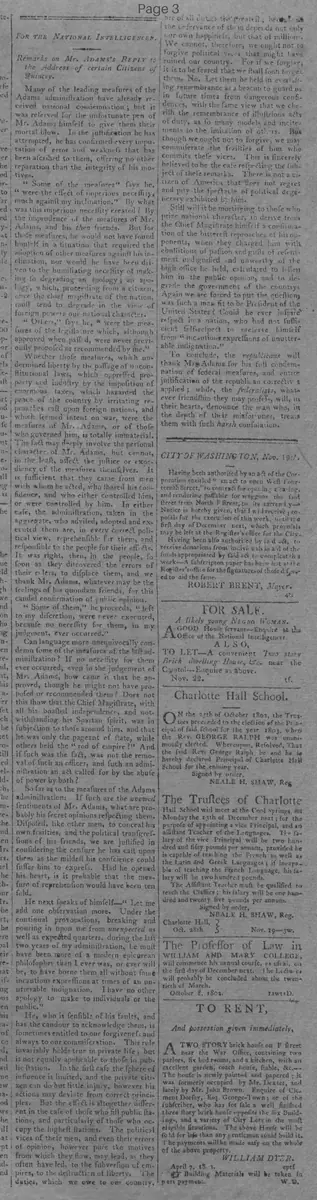
FOR THE NATIONAL INTELLIGENCER.
Remarks on Mr. Adams's Reply to the Address of certain Citizens of Quincy.
Many of the leading measures of the Adams administration have already received national condemnation ; but it was reserved for the unfortunate pen of Mr. Adams himself to give them their mortal blow. In the justification he has attempted, he has confirmed every imputation of error and weakness that has been ascribed to them, offering no other reparation than the integrity of his motives.
"Some of the measures" says he, "were the effect of imperious necessity, much against my inclination." By what was this imperious necessity created ? By the imprudence of the measures of Mr. Adams, and his then friends. But for those measures, he would not have found himself in a situation that required the adoption of other measures against his inclination, nor would he have been driven to the humiliating necessity of making so degrading an apology ; an apology, which, proceeding from a citizen, once the chief magistrate of the nation, must tend to degrade in the view of foreign powers our national character.
"Others," says he, "were the measures of the legislature which, although approved when passed, were never previously proposed or recommended by me."
Whether those measures, which undermined liberty by the passage of unconstitutional laws, which oppressed property and industry by the imposition of enormous taxes, which hazarded the peace of the country by irritating reproaches cast upon foreign nations, and which seemed intent on war, were the measures of Mr. Adams, or of those who governed him, is totally immaterial. The fact may deeply involve the personal character of Mr. Adams, but cannot, in the least, affect the justice or expediency of the measures themselves. It is sufficient that they came from men with whom he acted, who shared his confidence, and who either controlled him, or were controlled by him. In either case, the administration, taken in the aggregate, who advised, adopted and executed them are, in every correct political view, reprehensible for them, and responsible to the people for their effects. It was right, then, in the people, as soon as they discovered the errors of their rulers, to displace them, and we thank Mr. Adams, whatever may be the feelings of his quondam friends, for this candid confirmation of public opinion.
"Some of them," he proceeds, "left to my discretion, were never executed, because no necessity for them, in my judgment, ever occurred."
Can language more unequivocally condemn some of the measures of the late administration ? If no necessity for them ever occurred, even in the judgement of Mr. Adams, how came it that he approved, though he might not have proposed or recommended them ? Does not this show that the Chief Magistrate, with all his boasted independence, and notwithstanding his Spartan spirit, was in subjection to those around him, and that he was only the pageant of state, while others held the "rod of empire ?" And if such was the fact, was not the removal of such an officer, and such an administration an act called for by the abuse of power by both?
So far as to the measures of the Adams administration: If such are the avowed sentiments of Mr. Adams, what are probably his secret opinions respecting them. Disposed, like other men, to conceal his own frailties, and the political transgressions of his friends, we are justified in considering the censure he has cast upon them as the mildest his conscience could suffer him to express. Had he opened his heart, is it probable that the measure of reprehension would have been ten fold.
He next speaks of himself "Let me add one observation more. Under the continual provocations, breaking and pouring in upon me from unexpected as well as expected quarters, during the last two years of my administration, he must have been more of a modern epicurean philosopher than I ever was, or ever will be, to have borne them all without one incautious expression at times of an utterable indignation, I have no other apology to make to individuals or the public."
He, who is sensible of his faults, and has the candour to acknowledge them, is sometimes entitled to our forgiveness: and always to our commiseration. This rule invariably holds true in private life ; but is not equally applicable to those in public station. In the first case the sphere of influence is limited, and the private citizen can do but little injury, however his actions may deviate from correct principles. But the effect is altogether different in the case of those who fill public stations, and particularly of those who occupy the highest stations. The political vices of these men, and even their errors of opinion, however pure the motives from which they flow, may lead, as they often have led, to the subversion of empires, to the destruction of liberty. The duties, which we owe to our country, are of all duties the greatest: because the observance of them depends not only our own happiness, but that of millions
We cannot, therefore, we ought not to forgive political vices that might have ruined our country. For if we forgive. it is to be feared that we shall soon forget them. No. Let them be held in everlasting remembrance as a beacon to guard us in future times from dangerous confidences, with the same view that we cherish the remembrance of illustrious acts of duty, as so many models and incitements to the imitation of others. But though we ought not to forgive, we may commiserate the frailties of him who commits these vices. This is sincerely believed to be the case respecting the subject of these remarks. There is not a citizen of America that does not regret and pity the spectacle of political degradation exhibited by him.
Still will it be mortifying to those who prize national character, to derive from the Chief Magistrate himself a corroboration of the bitterest reproaches of his opponents, when they charged him with ebullitions of passion and gusts of resentment undignified and unworthy of the high office he held, calculated to lessen him in the public opinion, and to degrade the government of the country
Again we are forced to put the question was such a man fit to be President of the United States ? Could he ever inspire respect in a nation, who had not sufficient self-respect to preserve himself from "incautious expressions of unutterable indignation."
To conclude. the republicans will thank Mr. Adams for his full condemnation of federal measures, and entire justification of the republican corrective applied; while, the federalists, whatever friendship they may profess, will, in their hearts, denounce the man who, in the depth of their misfortunes, treats them with such harsh consolation.
Remarks on Mr. Adams's Reply to the Address of certain Citizens of Quincy.
Many of the leading measures of the Adams administration have already received national condemnation ; but it was reserved for the unfortunate pen of Mr. Adams himself to give them their mortal blow. In the justification he has attempted, he has confirmed every imputation of error and weakness that has been ascribed to them, offering no other reparation than the integrity of his motives.
"Some of the measures" says he, "were the effect of imperious necessity, much against my inclination." By what was this imperious necessity created ? By the imprudence of the measures of Mr. Adams, and his then friends. But for those measures, he would not have found himself in a situation that required the adoption of other measures against his inclination, nor would he have been driven to the humiliating necessity of making so degrading an apology ; an apology, which, proceeding from a citizen, once the chief magistrate of the nation, must tend to degrade in the view of foreign powers our national character.
"Others," says he, "were the measures of the legislature which, although approved when passed, were never previously proposed or recommended by me."
Whether those measures, which undermined liberty by the passage of unconstitutional laws, which oppressed property and industry by the imposition of enormous taxes, which hazarded the peace of the country by irritating reproaches cast upon foreign nations, and which seemed intent on war, were the measures of Mr. Adams, or of those who governed him, is totally immaterial. The fact may deeply involve the personal character of Mr. Adams, but cannot, in the least, affect the justice or expediency of the measures themselves. It is sufficient that they came from men with whom he acted, who shared his confidence, and who either controlled him, or were controlled by him. In either case, the administration, taken in the aggregate, who advised, adopted and executed them are, in every correct political view, reprehensible for them, and responsible to the people for their effects. It was right, then, in the people, as soon as they discovered the errors of their rulers, to displace them, and we thank Mr. Adams, whatever may be the feelings of his quondam friends, for this candid confirmation of public opinion.
"Some of them," he proceeds, "left to my discretion, were never executed, because no necessity for them, in my judgment, ever occurred."
Can language more unequivocally condemn some of the measures of the late administration ? If no necessity for them ever occurred, even in the judgement of Mr. Adams, how came it that he approved, though he might not have proposed or recommended them ? Does not this show that the Chief Magistrate, with all his boasted independence, and notwithstanding his Spartan spirit, was in subjection to those around him, and that he was only the pageant of state, while others held the "rod of empire ?" And if such was the fact, was not the removal of such an officer, and such an administration an act called for by the abuse of power by both?
So far as to the measures of the Adams administration: If such are the avowed sentiments of Mr. Adams, what are probably his secret opinions respecting them. Disposed, like other men, to conceal his own frailties, and the political transgressions of his friends, we are justified in considering the censure he has cast upon them as the mildest his conscience could suffer him to express. Had he opened his heart, is it probable that the measure of reprehension would have been ten fold.
He next speaks of himself "Let me add one observation more. Under the continual provocations, breaking and pouring in upon me from unexpected as well as expected quarters, during the last two years of my administration, he must have been more of a modern epicurean philosopher than I ever was, or ever will be, to have borne them all without one incautious expression at times of an utterable indignation, I have no other apology to make to individuals or the public."
He, who is sensible of his faults, and has the candour to acknowledge them, is sometimes entitled to our forgiveness: and always to our commiseration. This rule invariably holds true in private life ; but is not equally applicable to those in public station. In the first case the sphere of influence is limited, and the private citizen can do but little injury, however his actions may deviate from correct principles. But the effect is altogether different in the case of those who fill public stations, and particularly of those who occupy the highest stations. The political vices of these men, and even their errors of opinion, however pure the motives from which they flow, may lead, as they often have led, to the subversion of empires, to the destruction of liberty. The duties, which we owe to our country, are of all duties the greatest: because the observance of them depends not only our own happiness, but that of millions
We cannot, therefore, we ought not to forgive political vices that might have ruined our country. For if we forgive. it is to be feared that we shall soon forget them. No. Let them be held in everlasting remembrance as a beacon to guard us in future times from dangerous confidences, with the same view that we cherish the remembrance of illustrious acts of duty, as so many models and incitements to the imitation of others. But though we ought not to forgive, we may commiserate the frailties of him who commits these vices. This is sincerely believed to be the case respecting the subject of these remarks. There is not a citizen of America that does not regret and pity the spectacle of political degradation exhibited by him.
Still will it be mortifying to those who prize national character, to derive from the Chief Magistrate himself a corroboration of the bitterest reproaches of his opponents, when they charged him with ebullitions of passion and gusts of resentment undignified and unworthy of the high office he held, calculated to lessen him in the public opinion, and to degrade the government of the country
Again we are forced to put the question was such a man fit to be President of the United States ? Could he ever inspire respect in a nation, who had not sufficient self-respect to preserve himself from "incautious expressions of unutterable indignation."
To conclude. the republicans will thank Mr. Adams for his full condemnation of federal measures, and entire justification of the republican corrective applied; while, the federalists, whatever friendship they may profess, will, in their hearts, denounce the man who, in the depth of their misfortunes, treats them with such harsh consolation.
What sub-type of article is it?
Partisan Politics
Constitutional
Foreign Affairs
What keywords are associated?
Adams Administration
Federal Measures
Republican Corrective
Unconstitutional Laws
Political Vices
National Character
Partisan Criticism
What entities or persons were involved?
Mr. Adams
Adams Administration
Republicans
Federalists
Citizens Of Quincy
Editorial Details
Primary Topic
Criticism Of John Adams's Administration Measures And Defense Of Republican Opposition
Stance / Tone
Strongly Anti Adams And Pro Republican, Condemning Political Vices
Key Figures
Mr. Adams
Adams Administration
Republicans
Federalists
Citizens Of Quincy
Key Arguments
Adams's Reply Confirms Errors In His Administration's Measures
Measures Arose From Imprudence, Leading To Necessity Against His Inclination
Legislative Measures Undermined Liberty Via Unconstitutional Laws And Taxes
Measures Hazarded Peace By Irritating Foreign Nations And Intent On War
Adams Approved Measures He Later Deemed Unnecessary, Showing Subjection To Others
Political Vices In High Office Cannot Be Forgiven As They Endanger Liberty
Adams's Expressions Of Indignation Degraded National Character
Republicans Justified In Displacing The Administration