Thank you for visiting SNEWPapers!
Sign up free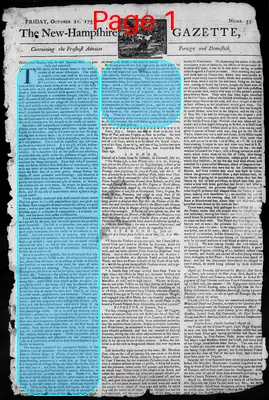
Literary
October 21, 1757
The New Hampshire Gazette
Portsmouth, Rockingham County, New Hampshire
What is this article about?
This philosophical essay examines why ignorant individuals are often the most conceited, attributing it to unchecked self-love, weak perception limiting awareness, and failure to compare one's abilities with others. It uses metaphors from medicine and optics to explain mental faculties and the need for self-examination and knowledge pursuit.
Clipping
OCR Quality
98%
Excellent
Full Text
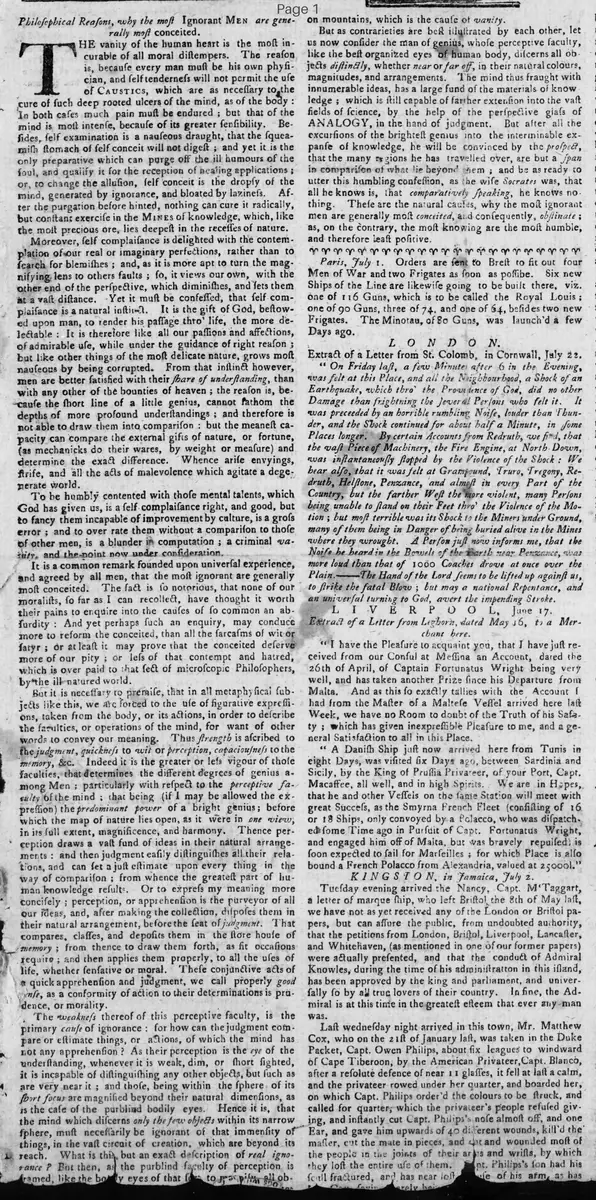
Philosophical Reasons, why the most Ignorant Men are generally most conceited.
The vanity of the human heart is the most incurable of all moral distempers. The reason is, because every man must be his own physician, and self-tenderness will not permit the use of Caustics, which are as necessary to the cure of such deep rooted ulcers of the mind, as of the body: In both cases much pain must be endured; but that of the mind is most intense, because of its greater sensibility. Besides, self examination is a nauseous draught, that the queasy stomach of self conceit will not digest; and yet it is the only preparative which can purge off the ill humours of the soul, and qualify it for the reception of healing applications; or, to change the allusion, self conceit is the dropsy of the mind, generated by ignorance, and bloated by laziness. After the purgation before hinted, nothing can cure it radically, but constant exercise in the Mines of knowledge, which, like the most precious ore, lies deepest in the recesses of nature.
Moreover, self complacence is delighted with the contemplation of our real or imaginary perfections, rather than to search for blemishes; and, as it is more apt to turn the magnifying lens to others faults; so, it views our own, with the other end of the perspective, which diminishes, and sets them at a vast distance. Yet it must be confessed, that self complacence is a natural instinct. It is the gift of God, bestowed upon man, to render his passage thro' life, the more delectable: It is therefore like all our passions and affections, of admirable use, while under the guidance of right reason; but like other things of the most delicate nature, grows most nauseous by being corrupted. From that instinct however, men are better satisfied with their share of understanding, than with any other of the bounties of heaven; the reason is, because the short line of a little genius, cannot fathom the depths of more profound understandings; and therefore is not able to draw them into comparison: but the meanest capacity can compare the external gifts of nature, or fortune, (as mechanicks do their wares, by weight or measure) and determine the exact difference. Whence arise envyings, strife, and all the acts of malevolence which agitate a degenerate world.
To be humbly contented with those mental talents, which God has given us, is a self-complacence right, and good, but to fancy them incapable of improvement by culture, is a gross error; and to over rate them without a comparison to those of other men, is a blunder in computation; a criminal vanity. and the point now under consideration.
It is a common remark founded upon universal experience, and agreed by all men, that the most ignorant are generally most conceited. The fact is so notorious, that none of our moralists, so far as I can recollect, have thought it worth their pains to enquire into the causes of so common an absurdity: And yet perhaps such an enquiry, may conduce more to reform the conceited, than all the sarcasms of wit or satyr; or at least it may prove that the conceited deserve more of our pity; or less of that contempt and hatred. which is over paid to that sect of microscopic Philosophers, by the ill natured world.
But it is necessary to premise, that in all metaphysical subjects like this, we are forced to the use of figurative expressions, taken from the body, or its actions, in order to describe the faculties, or operations of the mind, for want of other words to convey our meaning. Thus strength is ascribed to the judgment, quickness to wit or perception, capaciousness to the memory, &c. Indeed it is the greater or less vigour of those faculties, that determines the different degrees of genius among Men; particularly with respect to the perceptive faculty of the mind: that being (if I may be allowed the expression) the predominant power of a bright genius; before which the map of nature lies open, as it were in one view; in its full extent, magnificence, and harmony. Thence perception draws a vast fund of ideas in their natural arrangements: and then judgment easily distinguishes all their relations, and can set a just estimate upon every thing in the way of comparison; from whence the greatest part of human knowledge results. Or to express my meaning more concisely; perception, or apprehension is the purveyor of all our ideas, and, after making the collection. disposes them in their natural arrangement, before the seat of judgment. That compares, classes, and deposites them in the store house of memory; from thence to draw them forth, as fit occasions require; and then applies them properly, to all the uses of life, whether sensitive or moral. These conjunctive acts of a quick apprehension and judgment, we call properly good sense, as a conformity of action to their determinations is prudence, or morality.
The weakness thereof of this perceptive faculty, is the primary cause of ignorance: for how can the judgment compare or estimate things, or actions, of which the mind has not any apprehension? As their perception is the eye of the understanding, whenever it is weak, dim, or short sighted, it is incapable of distinguishing any other objects, but such as are very near it; and those, being within the sphere, of its short focus are magnified beyond their natural dimensions. as is the case of the purblind bodily eyes. Hence it is. that the mind which discerns only the few objects within its narrow sphere, must necessarily be ignorant of that immensity of things, in the vast circuit of creation. which are beyond its reach. What is this. but an exact description of real ignorance? But then, as the purblind faculty of perception is framed, like the body eyes of that sort to grasp all objects on mountains, which is the cause of vanity.
The vanity of the human heart is the most incurable of all moral distempers. The reason is, because every man must be his own physician, and self-tenderness will not permit the use of Caustics, which are as necessary to the cure of such deep rooted ulcers of the mind, as of the body: In both cases much pain must be endured; but that of the mind is most intense, because of its greater sensibility. Besides, self examination is a nauseous draught, that the queasy stomach of self conceit will not digest; and yet it is the only preparative which can purge off the ill humours of the soul, and qualify it for the reception of healing applications; or, to change the allusion, self conceit is the dropsy of the mind, generated by ignorance, and bloated by laziness. After the purgation before hinted, nothing can cure it radically, but constant exercise in the Mines of knowledge, which, like the most precious ore, lies deepest in the recesses of nature.
Moreover, self complacence is delighted with the contemplation of our real or imaginary perfections, rather than to search for blemishes; and, as it is more apt to turn the magnifying lens to others faults; so, it views our own, with the other end of the perspective, which diminishes, and sets them at a vast distance. Yet it must be confessed, that self complacence is a natural instinct. It is the gift of God, bestowed upon man, to render his passage thro' life, the more delectable: It is therefore like all our passions and affections, of admirable use, while under the guidance of right reason; but like other things of the most delicate nature, grows most nauseous by being corrupted. From that instinct however, men are better satisfied with their share of understanding, than with any other of the bounties of heaven; the reason is, because the short line of a little genius, cannot fathom the depths of more profound understandings; and therefore is not able to draw them into comparison: but the meanest capacity can compare the external gifts of nature, or fortune, (as mechanicks do their wares, by weight or measure) and determine the exact difference. Whence arise envyings, strife, and all the acts of malevolence which agitate a degenerate world.
To be humbly contented with those mental talents, which God has given us, is a self-complacence right, and good, but to fancy them incapable of improvement by culture, is a gross error; and to over rate them without a comparison to those of other men, is a blunder in computation; a criminal vanity. and the point now under consideration.
It is a common remark founded upon universal experience, and agreed by all men, that the most ignorant are generally most conceited. The fact is so notorious, that none of our moralists, so far as I can recollect, have thought it worth their pains to enquire into the causes of so common an absurdity: And yet perhaps such an enquiry, may conduce more to reform the conceited, than all the sarcasms of wit or satyr; or at least it may prove that the conceited deserve more of our pity; or less of that contempt and hatred. which is over paid to that sect of microscopic Philosophers, by the ill natured world.
But it is necessary to premise, that in all metaphysical subjects like this, we are forced to the use of figurative expressions, taken from the body, or its actions, in order to describe the faculties, or operations of the mind, for want of other words to convey our meaning. Thus strength is ascribed to the judgment, quickness to wit or perception, capaciousness to the memory, &c. Indeed it is the greater or less vigour of those faculties, that determines the different degrees of genius among Men; particularly with respect to the perceptive faculty of the mind: that being (if I may be allowed the expression) the predominant power of a bright genius; before which the map of nature lies open, as it were in one view; in its full extent, magnificence, and harmony. Thence perception draws a vast fund of ideas in their natural arrangements: and then judgment easily distinguishes all their relations, and can set a just estimate upon every thing in the way of comparison; from whence the greatest part of human knowledge results. Or to express my meaning more concisely; perception, or apprehension is the purveyor of all our ideas, and, after making the collection. disposes them in their natural arrangement, before the seat of judgment. That compares, classes, and deposites them in the store house of memory; from thence to draw them forth, as fit occasions require; and then applies them properly, to all the uses of life, whether sensitive or moral. These conjunctive acts of a quick apprehension and judgment, we call properly good sense, as a conformity of action to their determinations is prudence, or morality.
The weakness thereof of this perceptive faculty, is the primary cause of ignorance: for how can the judgment compare or estimate things, or actions, of which the mind has not any apprehension? As their perception is the eye of the understanding, whenever it is weak, dim, or short sighted, it is incapable of distinguishing any other objects, but such as are very near it; and those, being within the sphere, of its short focus are magnified beyond their natural dimensions. as is the case of the purblind bodily eyes. Hence it is. that the mind which discerns only the few objects within its narrow sphere, must necessarily be ignorant of that immensity of things, in the vast circuit of creation. which are beyond its reach. What is this. but an exact description of real ignorance? But then, as the purblind faculty of perception is framed, like the body eyes of that sort to grasp all objects on mountains, which is the cause of vanity.
What sub-type of article is it?
Essay
What themes does it cover?
Moral Virtue
What keywords are associated?
Ignorance
Conceit
Vanity
Self Examination
Perception
Judgment
Moral Distempers
Human Nature
Literary Details
Title
Philosophical Reasons, Why The Most Ignorant Men Are Generally Most Conceited.
Key Lines
The Vanity Of The Human Heart Is The Most Incurable Of All Moral Distempers.
Self Conceit Is The Dropsy Of The Mind, Generated By Ignorance, And Bloated By Laziness.
It Is A Common Remark Founded Upon Universal Experience, And Agreed By All Men, That The Most Ignorant Are Generally Most Conceited.
Perception, Or Apprehension Is The Purveyor Of All Our Ideas
The Purblind Faculty Of Perception Is Framed, Like The Body Eyes Of That Sort To Grasp All Objects On Mountains, Which Is The Cause Of Vanity.