Thank you for visiting SNEWPapers!
Sign up free
Literary
October 24, 1821
The Hillsborough Recorder
Hillsboro, Orange County, North Carolina
What is this article about?
A collection of extracts advising on women's education in domestic skills, frugality, and housewifery to promote health, economy, and societal usefulness, emphasizing these as essential for marriage and family life over superficial accomplishments.
Clipping
OCR Quality
95%
Excellent
Full Text
From the True American.
MISCELLANEOUS EXTRACTS
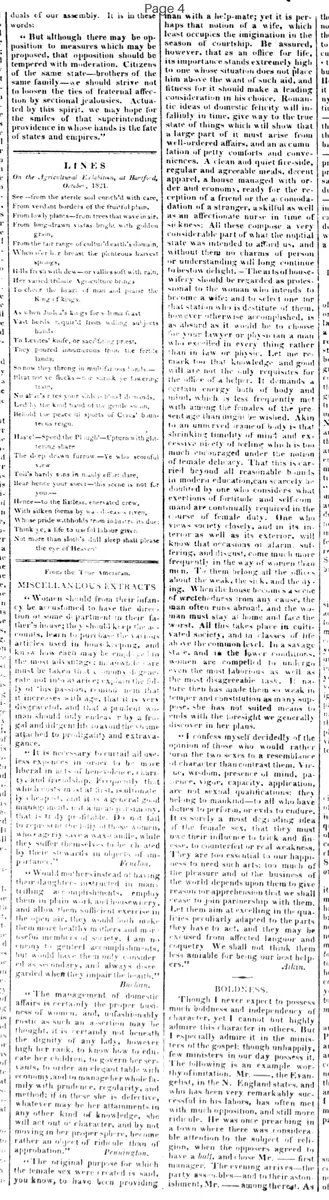
Women should from their infancy be accustomed to have the direction of some department in their father's house; they should keep the accounts, learn to purchase the various articles used in housekeeping, and know how each may be economized to the most advantage: much care must be taken that this does not degenerate into avarice; caution the folly of this passion, informing him that it increases with age, that it is very disgraceful, and that a prudent woman should only endeavor by a frugal and diligent life to avoid the shame attached to prodigality and extravagance.
It is necessary to curtail all useless expenses in order to be more liberal in acts of benevolence, charity, and friendship. Frequently that which costs most is ultimately cheapest, and it is a general good management, so a man employs. that it is doubly profitable. Do not fail to represent millers to those women who eagerly save wax candles, while they suffer themselves to be cheated by their stewards in objects of importance.
Would mothers instead of having their daughters instructed in musing accomplishments, employ them in plain work and housewifery, and allow them sufficient exercise in the open air, they would soon make them more healthy mothers and more useful members of society. I am no enemy to genteel accomplishments, but would have them only considered as secondary, and always disregarded when they impair the health.
The management of domestic affairs is certainly the proper business of women, and, unfashionably rustic as such an assertion may be thought, it is certainly not beneath the dignity of any lady, however high her rank, to know how to educate her children, to govern her servants, to order an elegant table with economy, and to manage her whole family with prudence, regularity, and method: if in these she is defective, whatever may be her attainments in any other kind of knowledge, she will act out of character, and by not moving in her proper sphere, become rather an object of ridicule than of approbation.
The original purpose for which the female sex were created is said, you know, to have been providing man with a help-mate; yet it is perhaps that notion of a wife, which least occupies the imagination in the season of courtship. Be assured, however, that as an office for life, its importance stands extremely high to one whose situation does not place him above the want of such aid, and fitness for it should make a leading consideration in his choice. Romantic ideas of domestic felicity will infallibly in time, give way to the true state of things which will show that a large part of it must arise from well-ordered affairs, and an accumulation of petty comforts and conveniences. A clean and quiet fire-side, regular and agreeable meals, decent apparel, a house managed with order and economy, ready for the reception of a friend or the accommodation of a stranger, a skilful as well as an affectionate nurse in time of sickness: All these compose a very considerable part of what the nuptial state was intended to afford us, and without them no charms of person or understanding will long continue to bestow delight.—The arts of housewifery should be regarded as professional to the woman who intends to become a wife: and to select one for that station who is destitute of them, however otherwise accomplished, is as absurd as it would be to choose for your lawyer or physician a man who excelled in every thing rather than in law or physic. Let me remark too that knowledge and good will are not the only requisites for the office of a helper. It demands a certain energy both of body and mind, which is less frequently met with among the females of the present age than might be wished. Akin to an unnerved frame of body is that shrinking timidity of mind and excessive nicety of feeling which is too much encouraged under the notion of female delicacy. That this is carried beyond all reasonable bounds in modern education, can scarcely be doubted by one who considers what exertions of fortitude and self-command are continually required in the course of female duty. One who views society closely, and in its interior as well as its exterior, will know that occasions of alarm, suffering, and disgust, come much more frequently in the way of women than men. To them belong all the office about the weak, the sick, and the dying. When the house becomes a scene of wretchedness from any cause, the man often runs abroad, and the woman must stay at home and face the worst. All this takes place in cultivated society, and in classes of life above the common level. In a savage state, and in the lower conditions, women are compelled to undergo even the most laborious as well as the most disagreeable task. If nature has made them so weak in temper and constitution as many suppose, she has not suited means to ends with the foresight we generally discover in her plans.
I confess myself decidedly of the opinion of those who would rather bring the two sexes to a resemblance of character than contrast them. Virtue, wisdom, presence of mind, patience, vigor, capacity, application, are not sexual qualifications: they belong to mankind—to all who have duties to perform, or evils to endure. It is surely a most degrading idea of the female sex, that they must owe their influence to trick and finesse, to counterfeit or real weakness. They are too essential to our happiness to need such arts: too much of the pleasure and of the business of the world depends upon them to give reason for apprehension that we shall cease to join partnership with them. Let them aim at excelling in the qualities peculiarly adapted to the parts they have to act, and they may be excused from affected languor and coquetry. We shall not think them less amiable for being our best helpers.
MISCELLANEOUS EXTRACTS
Women should from their infancy be accustomed to have the direction of some department in their father's house; they should keep the accounts, learn to purchase the various articles used in housekeeping, and know how each may be economized to the most advantage: much care must be taken that this does not degenerate into avarice; caution the folly of this passion, informing him that it increases with age, that it is very disgraceful, and that a prudent woman should only endeavor by a frugal and diligent life to avoid the shame attached to prodigality and extravagance.
It is necessary to curtail all useless expenses in order to be more liberal in acts of benevolence, charity, and friendship. Frequently that which costs most is ultimately cheapest, and it is a general good management, so a man employs. that it is doubly profitable. Do not fail to represent millers to those women who eagerly save wax candles, while they suffer themselves to be cheated by their stewards in objects of importance.
Would mothers instead of having their daughters instructed in musing accomplishments, employ them in plain work and housewifery, and allow them sufficient exercise in the open air, they would soon make them more healthy mothers and more useful members of society. I am no enemy to genteel accomplishments, but would have them only considered as secondary, and always disregarded when they impair the health.
The management of domestic affairs is certainly the proper business of women, and, unfashionably rustic as such an assertion may be thought, it is certainly not beneath the dignity of any lady, however high her rank, to know how to educate her children, to govern her servants, to order an elegant table with economy, and to manage her whole family with prudence, regularity, and method: if in these she is defective, whatever may be her attainments in any other kind of knowledge, she will act out of character, and by not moving in her proper sphere, become rather an object of ridicule than of approbation.
The original purpose for which the female sex were created is said, you know, to have been providing man with a help-mate; yet it is perhaps that notion of a wife, which least occupies the imagination in the season of courtship. Be assured, however, that as an office for life, its importance stands extremely high to one whose situation does not place him above the want of such aid, and fitness for it should make a leading consideration in his choice. Romantic ideas of domestic felicity will infallibly in time, give way to the true state of things which will show that a large part of it must arise from well-ordered affairs, and an accumulation of petty comforts and conveniences. A clean and quiet fire-side, regular and agreeable meals, decent apparel, a house managed with order and economy, ready for the reception of a friend or the accommodation of a stranger, a skilful as well as an affectionate nurse in time of sickness: All these compose a very considerable part of what the nuptial state was intended to afford us, and without them no charms of person or understanding will long continue to bestow delight.—The arts of housewifery should be regarded as professional to the woman who intends to become a wife: and to select one for that station who is destitute of them, however otherwise accomplished, is as absurd as it would be to choose for your lawyer or physician a man who excelled in every thing rather than in law or physic. Let me remark too that knowledge and good will are not the only requisites for the office of a helper. It demands a certain energy both of body and mind, which is less frequently met with among the females of the present age than might be wished. Akin to an unnerved frame of body is that shrinking timidity of mind and excessive nicety of feeling which is too much encouraged under the notion of female delicacy. That this is carried beyond all reasonable bounds in modern education, can scarcely be doubted by one who considers what exertions of fortitude and self-command are continually required in the course of female duty. One who views society closely, and in its interior as well as its exterior, will know that occasions of alarm, suffering, and disgust, come much more frequently in the way of women than men. To them belong all the office about the weak, the sick, and the dying. When the house becomes a scene of wretchedness from any cause, the man often runs abroad, and the woman must stay at home and face the worst. All this takes place in cultivated society, and in classes of life above the common level. In a savage state, and in the lower conditions, women are compelled to undergo even the most laborious as well as the most disagreeable task. If nature has made them so weak in temper and constitution as many suppose, she has not suited means to ends with the foresight we generally discover in her plans.
I confess myself decidedly of the opinion of those who would rather bring the two sexes to a resemblance of character than contrast them. Virtue, wisdom, presence of mind, patience, vigor, capacity, application, are not sexual qualifications: they belong to mankind—to all who have duties to perform, or evils to endure. It is surely a most degrading idea of the female sex, that they must owe their influence to trick and finesse, to counterfeit or real weakness. They are too essential to our happiness to need such arts: too much of the pleasure and of the business of the world depends upon them to give reason for apprehension that we shall cease to join partnership with them. Let them aim at excelling in the qualities peculiarly adapted to the parts they have to act, and they may be excused from affected languor and coquetry. We shall not think them less amiable for being our best helpers.
What sub-type of article is it?
Essay
What themes does it cover?
Moral Virtue
Social Manners
What keywords are associated?
Women Education
Domestic Economy
Housewifery
Female Duties
Moral Instruction
Frugality
Marriage Roles
What entities or persons were involved?
From The True American
Literary Details
Title
Miscellaneous Extracts
Author
From The True American
Subject
Advice On Women's Domestic Education And Roles
Form / Style
Prose Reflections On Female Duties And Economy
Key Lines
Women Should From Their Infancy Be Accustomed To Have The Direction Of Some Department In Their Father's House; They Should Keep The Accounts, Learn To Purchase The Various Articles Used In Housekeeping, And Know How Each May Be Economized To The Most Advantage.
The Management Of Domestic Affairs Is Certainly The Proper Business Of Women, And, Unfashionably Rustic As Such An Assertion May Be Thought, It Is Certainly Not Beneath The Dignity Of Any Lady, However High Her Rank, To Know How To Educate Her Children, To Govern Her Servants, To Order An Elegant Table With Economy, And To Manage Her Whole Family With Prudence, Regularity, And Method.
The Arts Of Housewifery Should Be Regarded As Professional To The Woman Who Intends To Become A Wife: And To Select One For That Station Who Is Destitute Of Them, However Otherwise Accomplished, Is As Absurd As It Would Be To Choose For Your Lawyer Or Physician A Man Who Excelled In Every Thing Rather Than In Law Or Physic.
I Confess Myself Decidedly Of The Opinion Of Those Who Would Rather Bring The Two Sexes To A Resemblance Of Character Than Contrast Them.
Let Them Aim At Excelling In The Qualities Peculiarly Adapted To The Parts They Have To Act, And They May Be Excused From Affected Languor And Coquetry.