Thank you for visiting SNEWPapers!
Sign up free
The Nome Nugget
Nome, Nome County, Alaska
What is this article about?
Republican Senator Ball of Minnesota announces he will vote for President Roosevelt in the fall elections, praising his handling of foreign policy issues over GOP nominee Gov. Dewey.
Clipping
OCR Quality
Full Text
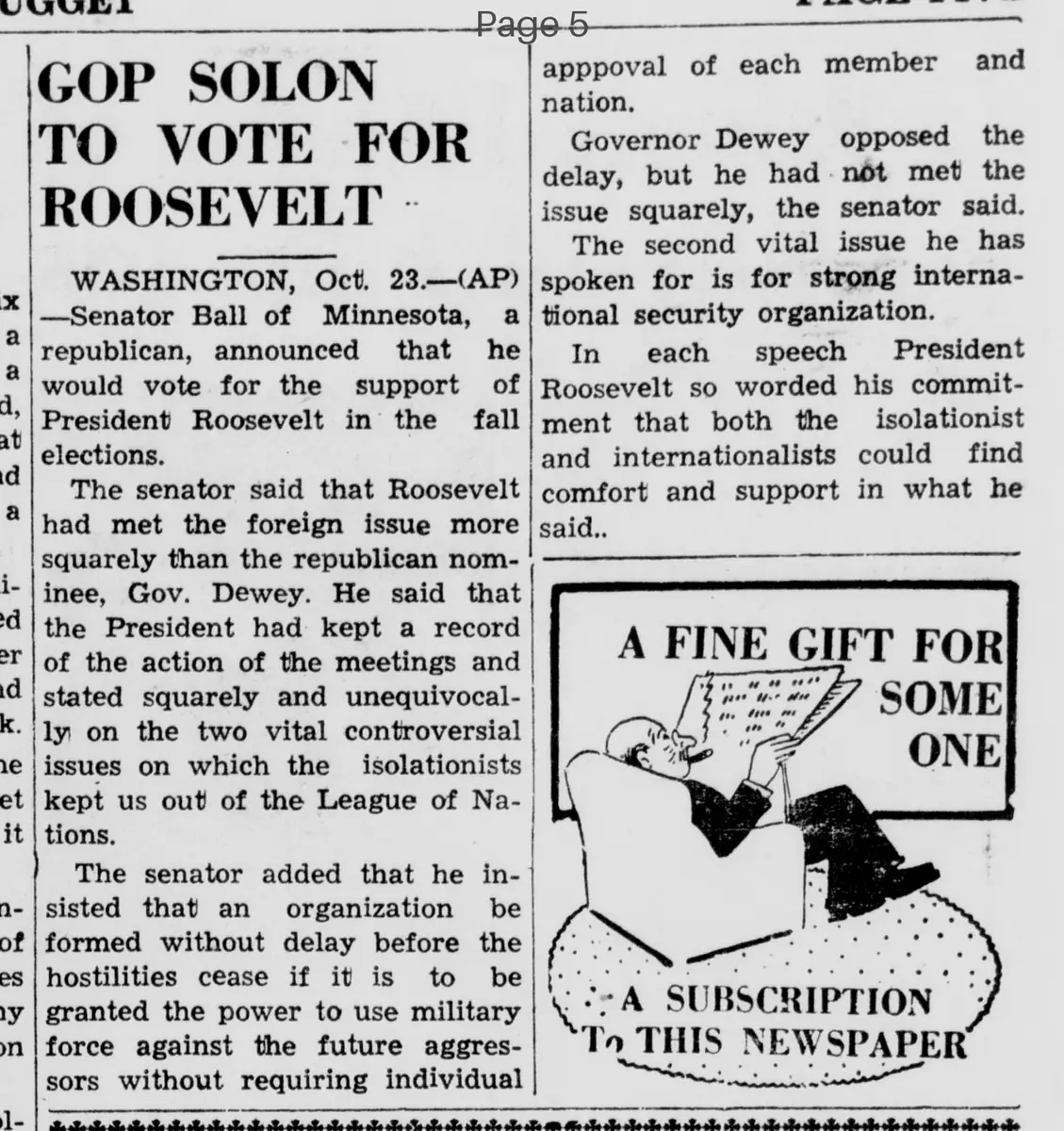
WASHINGTON, Oct. 23.--(AP)--
Senator Ball of Minnesota, a republican, announced that he would vote for the support of President Roosevelt in the fall elections.
The senator said that Roosevelt had met the foreign issue more squarely than the republican nominee, Gov. Dewey. He said that the President had kept a record of the action of the meetings and stated squarely and unequivocally on the two vital controversial issues on which the isolationists kept us out of the League of Nations.
The senator added that he insisted that an organization be formed without delay before hostilities cease if it is to be granted the power to use military force against the future aggressors without requiring individual approval of each member and nation.
Governor Dewey opposed the delay, but he had not met the issue squarely, the senator said.
The second vital issue he has spoken for is for strong international security organization.
In each speech President Roosevelt so worded his commitment that both the isolationist and internationalists could find comfort and support in what he said.
What sub-type of article is it?
What keywords are associated?
What entities or persons were involved?
Where did it happen?
Domestic News Details
Primary Location
Washington
Event Date
Oct. 23
Key Persons
Outcome
senator ball announced he would vote for president roosevelt in the fall elections.
Event Details
Senator Ball, a Republican from Minnesota, announced his support for President Roosevelt, stating that Roosevelt had addressed foreign issues more squarely than Republican nominee Gov. Dewey, particularly on international organization and security. He criticized Dewey for not meeting the issue squarely and praised Roosevelt's wording that appealed to both isolationists and internationalists.