Thank you for visiting SNEWPapers!
Sign up free
Literary
July 31, 1767
The New Hampshire Gazette And Historical Chronicle
Portsmouth, Greenland, Rockingham County, New Hampshire
What is this article about?
An essay exploring how people derive happiness from detraction and scandal, using anecdotes of a gout patient, a spiteful married couple who thrive on neighbors' misfortunes, and reflections on marital indifference and the pleasure of tormenting.
Clipping
OCR Quality
98%
Excellent
Full Text
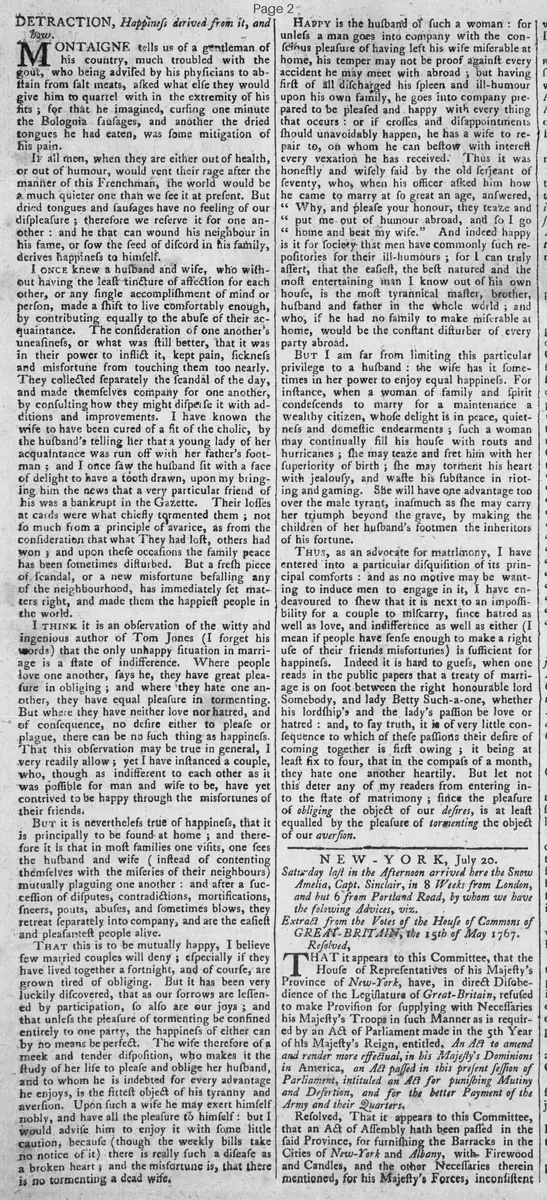
DETRACTION,
Happiness derived from it, and how.
Montaigne tells us of a gentleman of his country, much troubled with the gout, who being advised by his physicians to abstain from all meats, asked what else they would give him to quarrel with in the extremity of his fits; for that he imagined, curing one minute the Bologna sausages, and another the dried tongues he had eaten, was some mitigation of his pain.
If all men, when they are either out of health, or out of humour, would vent their rage after the manner of this Frenchman, the world would be a much quieter one than we see it at present. But dried tongues and sausages have no feeling of our displeasure; therefore we reserve it for one another: and he that can wound his neighbour in his fame, or sow the seed of discord in his family, derives happiness to himself.
I once knew a husband and wife, who without having the least tincture of affection for each other, or any single accomplishment of mind or person, made a shift to live comfortably enough, by contributing equally to the abuse of their acquaintance. The consideration of one another's uneasiness, or what was still better, that it was in their power to inflict it, kept pain, sickness and misfortune from touching them too nearly.
They collected separately the scandal of the day, and made themselves company for one another, by consulting how they might disperse it with additions and improvements. I have known the wife to have been cured of a fit of the cholic, by the husband's telling her that a young lady of her acquaintance was run off with her father's footman: and I once saw the husband sit with a face of delight to have a tooth drawn, upon my bringing him the news that a very particular friend of his was a bankrupt in the Gazette. Their losses at cards were what chiefly tormented them: not so much from a principle of avarice, as from the consideration that what they had lost, others had won; and upon these occasions the family peace has been sometimes disturbed. But a fresh piece of scandal, or a new misfortune befalling any of the neighbourhood, has immediately set matters right, and made them the happiest people in the world.
I think it is an observation of the witty and ingenious author of Tom Jones (I forget his words) that the only unhappy situation in marriage is a state of indifference. Where people love one another, says he, they have great pleasure in obliging; and where they hate one another, they have equal pleasure in tormenting. But where they have neither love nor hatred, and of consequence, no desire either to please or plague, there can be no such thing as happiness.
That this observation may be true in general, I very readily allow; yet I have instanced a couple, who, though as indifferent to each other as it was possible for man and wife to be, have yet contrived to be happy through the misfortunes of their friends.
But it is nevertheless true of happiness, that it is principally to be found at home; and therefore it is that in most families one visits, one sees the husband and wife (instead of contenting themselves with the miseries of their neighbours) mutually plaguing one another: and after a succession of disputes, contradictions, mortifications, sneers, pouts, abuses, and sometimes blows, they retreat separately into company, and are the easiest and pleasantest people alive.
That this is to be mutually happy, I believe few married couples will deny; especially if they have lived together a fortnight, and of course, are grown tired of obliging. But it has been very luckily discovered, that as our sorrows are lessened by participation, so also are our joys; and that unless the pleasure of tormenting be confined entirely to one party, the happiness of either can by no means be perfect. The wife therefore of a meek and tender disposition, who makes it the study of her life to please and oblige her husband, and to whom he is indebted for every advantage he enjoys, is the fittest object of his tyranny and aversion. Upon such a wife he may exert himself nobly, and have all the pleasure to himself: but I would advise him to enjoy it with some little caution, because (though the weekly bills take no notice of it) there is really such a disease as a broken heart; and the misfortune is, that there is no tormenting a dead wife.
Happiness derived from it, and how.
Montaigne tells us of a gentleman of his country, much troubled with the gout, who being advised by his physicians to abstain from all meats, asked what else they would give him to quarrel with in the extremity of his fits; for that he imagined, curing one minute the Bologna sausages, and another the dried tongues he had eaten, was some mitigation of his pain.
If all men, when they are either out of health, or out of humour, would vent their rage after the manner of this Frenchman, the world would be a much quieter one than we see it at present. But dried tongues and sausages have no feeling of our displeasure; therefore we reserve it for one another: and he that can wound his neighbour in his fame, or sow the seed of discord in his family, derives happiness to himself.
I once knew a husband and wife, who without having the least tincture of affection for each other, or any single accomplishment of mind or person, made a shift to live comfortably enough, by contributing equally to the abuse of their acquaintance. The consideration of one another's uneasiness, or what was still better, that it was in their power to inflict it, kept pain, sickness and misfortune from touching them too nearly.
They collected separately the scandal of the day, and made themselves company for one another, by consulting how they might disperse it with additions and improvements. I have known the wife to have been cured of a fit of the cholic, by the husband's telling her that a young lady of her acquaintance was run off with her father's footman: and I once saw the husband sit with a face of delight to have a tooth drawn, upon my bringing him the news that a very particular friend of his was a bankrupt in the Gazette. Their losses at cards were what chiefly tormented them: not so much from a principle of avarice, as from the consideration that what they had lost, others had won; and upon these occasions the family peace has been sometimes disturbed. But a fresh piece of scandal, or a new misfortune befalling any of the neighbourhood, has immediately set matters right, and made them the happiest people in the world.
I think it is an observation of the witty and ingenious author of Tom Jones (I forget his words) that the only unhappy situation in marriage is a state of indifference. Where people love one another, says he, they have great pleasure in obliging; and where they hate one another, they have equal pleasure in tormenting. But where they have neither love nor hatred, and of consequence, no desire either to please or plague, there can be no such thing as happiness.
That this observation may be true in general, I very readily allow; yet I have instanced a couple, who, though as indifferent to each other as it was possible for man and wife to be, have yet contrived to be happy through the misfortunes of their friends.
But it is nevertheless true of happiness, that it is principally to be found at home; and therefore it is that in most families one visits, one sees the husband and wife (instead of contenting themselves with the miseries of their neighbours) mutually plaguing one another: and after a succession of disputes, contradictions, mortifications, sneers, pouts, abuses, and sometimes blows, they retreat separately into company, and are the easiest and pleasantest people alive.
That this is to be mutually happy, I believe few married couples will deny; especially if they have lived together a fortnight, and of course, are grown tired of obliging. But it has been very luckily discovered, that as our sorrows are lessened by participation, so also are our joys; and that unless the pleasure of tormenting be confined entirely to one party, the happiness of either can by no means be perfect. The wife therefore of a meek and tender disposition, who makes it the study of her life to please and oblige her husband, and to whom he is indebted for every advantage he enjoys, is the fittest object of his tyranny and aversion. Upon such a wife he may exert himself nobly, and have all the pleasure to himself: but I would advise him to enjoy it with some little caution, because (though the weekly bills take no notice of it) there is really such a disease as a broken heart; and the misfortune is, that there is no tormenting a dead wife.
What sub-type of article is it?
Essay
Satire
What themes does it cover?
Social Manners
Moral Virtue
What keywords are associated?
Detraction
Happiness
Scandal
Marriage
Indifference
Tormenting
Misfortune
Satire
Literary Details
Title
Detraction, Happiness Derived From It, And How.
Key Lines
If All Men, When They Are Either Out Of Health, Or Out Of Humour, Would Vent Their Rage After The Manner Of This Frenchman, The World Would Be A Much Quieter One Than We See It At Present.
He That Can Wound His Neighbour In His Fame, Or Sow The Seed Of Discord In His Family, Derives Happiness To Himself.
The Only Unhappy Situation In Marriage Is A State Of Indifference. Where People Love One Another, Says He, They Have Great Pleasure In Obliging; And Where They Hate One Another, They Have Equal Pleasure In Tormenting.
Unless The Pleasure Of Tormenting Be Confined Entirely To One Party, The Happiness Of Either Can By No Means Be Perfect.
There Is Really Such A Disease As A Broken Heart; And The Misfortune Is, That There Is No Tormenting A Dead Wife.