Thank you for visiting SNEWPapers!
Sign up free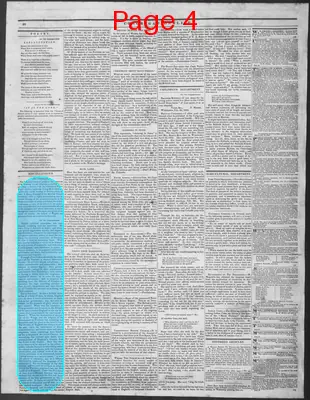
Literary
March 7, 1840
The Congregationalist
Hartford, Hartford County, Connecticut
What is this article about?
Excerpt from John P. Brace's lecture on Walter Scott's writings, defending the Puritans against Scott's negative portrayals in his novels. It praises Puritan contributions to English and American liberty, critiques Scott's Tory bias, and rehabilitates Oliver Cromwell's reputation as a great leader.
Clipping
OCR Quality
95%
Excellent
Full Text
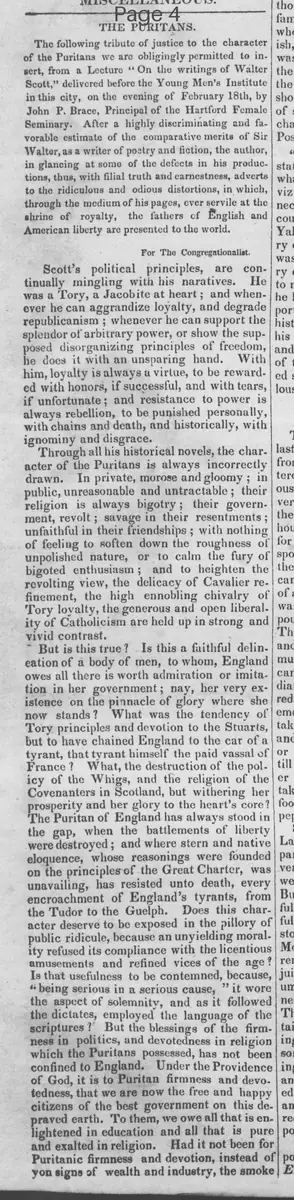
THE PURITANS.
The following tribute of justice to the character of the Puritans we are obligingly permitted to insert, from a Lecture "On the writings of Walter Scott," delivered before the Young Men's Institute in this city, on the evening of February 18th, by John P. Brace, Principal of the Hartford Female Seminary. After a highly discriminating and favorable estimate of the comparative merits of Sir Walter, as a writer of poetry and fiction, the author, in glancing at some of the defects in his productions, thus, with filial truth and earnestness, adverts to the ridiculous and odious distortions, in which, through the medium of his pages, ever servile at the shrine of royalty, the fathers of English and American liberty are presented to the world.
For The Congregationalist
Scott's political principles, are continually mingling with his narratives. He was a Tory, a Jacobite at heart; and whenever he can aggrandize loyalty, and degrade republicanism; whenever he can support the splendor of arbitrary power, or show the supposed disorganizing principles of freedom, he does it with an unsparing hand. With him, loyalty is always a virtue, to be rewarded with honors, if successful, and with tears, if unfortunate; and resistance to power is always rebellion, to be punished personally, with chains and death, and historically, with ignominy and disgrace.
Through all his historical novels, the character of the Puritans is always incorrectly drawn. In private, morose and gloomy; in public, unreasonable and untractable; their religion is always bigotry; their government, revolt; savage in their resentments; unfaithful in their friendships; with nothing of feeling to soften down the roughness of unpolished nature, or to calm the fury of bigoted enthusiasm; and to heighten the revolting view, the delicacy of Cavalier refinement, the high ennobling chivalry of Tory loyalty, the generous and open liberality of Catholicism are held up in strong and vivid contrast.
But is this true? Is this a faithful delineation of a body of men, to whom, England owes all there is worth admiration or imitation in her government; nay, her very existence on the pinnacle of glory where she now stands? What was the tendency of Tory principles and devotion to the Stuarts, but to have chained England to the car of a tyrant, that tyrant himself the paid vassal of France? What, the destruction of the policy of the Whigs, and the religion of the Covenanters in Scotland, but withering her prosperity and her glory to the heart's core?
The Puritan of England has always stood in the gap, when the battlements of liberty were destroyed; and where stern and native eloquence, whose reasonings were founded on the principles of the Great Charter, was unavailing, has resisted unto death, every encroachment of England's tyrants, from the Tudor to the Guelph. Does this character deserve to be exposed in the pillory of public ridicule, because an unyielding morality refused its compliance with the licentious amusements and refined vices of the age?
Is that usefulness to be contemned, because, "being serious in a serious cause," it wore the aspect of solemnity, and as it followed the dictates, employed the language of the scriptures? But the blessings of the firmness in politics, and devotedness in religion which the Puritans possessed, has not been confined to England. Under the Providence of God, it is to Puritan firmness and devotedness, that we are now the free and happy citizens of the best government on this depraved earth. To them, we owe all that is enlightened in education and all that is pure and exalted in religion. Had it not been for Puritanic firmness and devotion, instead of yon signs of wealth and industry, the smoke of the savage encampment might be curling amidst the forest; the war whoop might be echoing its terrors in yon cultivated fields; the canoe be tracking its solitary wake on yon calm and quiet stream; and the howlings of an idolatrous war dance break the silence of the spot, where, in the temples of God, the incense of an accepted devotion ascends to the courts of heaven.
Of all the leaders of the Puritans, no one has suffered more the misrepresentations of both historians and novelists, than Oliver Cromwell. and such are the lineaments portrayed of one. that was the master spirit of his age, that we are left in doubt, whether he was a hypocrite or enthusiast. Upon the restoration of the Stuart family, all parties. to obtain favor from government, seemed to unite in heaping on his memory all that obloquy could invent; and, with these writers, all subsequent supporters of hereditary power have united their suffrages; and even we. disbelievers in legitimacy, have echoed the same sentiments, and in consequence of reading Hume or Scott, have settled in our minds that Oliver Cromwell was a blood-thirsty bigot, who usurped the supreme power of England, by that greatest of all crimes, killing his sovereign. Strange, that those to whom the principle that all power resides, ultimately, in the people. should have done such injustice to the character of one of the greatest men that ever stood on British ground. We are not such supporters of hereditary right, as to believe, that no nation can change its dynasty, or even its mode of government, when it pleases. That can never be called usurpation which is founded on popular election. The people of England by their representatives, solemnly changed their mode of government, and by vote, appointed Oliver Cromwell their protector; the crime of usurpation was destroyed by that act. To know the true extent of the talents of Oliver Cromwell, we must look at England as she was, under the reign of the vacillating Charles, and note the rank he bore in Europe, and then observe her commercial aggrandizement, the greatness of her naval power, and the importance of her foreign conquests, the result of this well conducted policy of one, whose equal that age saw not. But it is not as the panegyrist of Oliver Cromwell that I stand here this night: and I allude to the subject, only as illustrative of a defect in Sir Walter's writings.
The following tribute of justice to the character of the Puritans we are obligingly permitted to insert, from a Lecture "On the writings of Walter Scott," delivered before the Young Men's Institute in this city, on the evening of February 18th, by John P. Brace, Principal of the Hartford Female Seminary. After a highly discriminating and favorable estimate of the comparative merits of Sir Walter, as a writer of poetry and fiction, the author, in glancing at some of the defects in his productions, thus, with filial truth and earnestness, adverts to the ridiculous and odious distortions, in which, through the medium of his pages, ever servile at the shrine of royalty, the fathers of English and American liberty are presented to the world.
For The Congregationalist
Scott's political principles, are continually mingling with his narratives. He was a Tory, a Jacobite at heart; and whenever he can aggrandize loyalty, and degrade republicanism; whenever he can support the splendor of arbitrary power, or show the supposed disorganizing principles of freedom, he does it with an unsparing hand. With him, loyalty is always a virtue, to be rewarded with honors, if successful, and with tears, if unfortunate; and resistance to power is always rebellion, to be punished personally, with chains and death, and historically, with ignominy and disgrace.
Through all his historical novels, the character of the Puritans is always incorrectly drawn. In private, morose and gloomy; in public, unreasonable and untractable; their religion is always bigotry; their government, revolt; savage in their resentments; unfaithful in their friendships; with nothing of feeling to soften down the roughness of unpolished nature, or to calm the fury of bigoted enthusiasm; and to heighten the revolting view, the delicacy of Cavalier refinement, the high ennobling chivalry of Tory loyalty, the generous and open liberality of Catholicism are held up in strong and vivid contrast.
But is this true? Is this a faithful delineation of a body of men, to whom, England owes all there is worth admiration or imitation in her government; nay, her very existence on the pinnacle of glory where she now stands? What was the tendency of Tory principles and devotion to the Stuarts, but to have chained England to the car of a tyrant, that tyrant himself the paid vassal of France? What, the destruction of the policy of the Whigs, and the religion of the Covenanters in Scotland, but withering her prosperity and her glory to the heart's core?
The Puritan of England has always stood in the gap, when the battlements of liberty were destroyed; and where stern and native eloquence, whose reasonings were founded on the principles of the Great Charter, was unavailing, has resisted unto death, every encroachment of England's tyrants, from the Tudor to the Guelph. Does this character deserve to be exposed in the pillory of public ridicule, because an unyielding morality refused its compliance with the licentious amusements and refined vices of the age?
Is that usefulness to be contemned, because, "being serious in a serious cause," it wore the aspect of solemnity, and as it followed the dictates, employed the language of the scriptures? But the blessings of the firmness in politics, and devotedness in religion which the Puritans possessed, has not been confined to England. Under the Providence of God, it is to Puritan firmness and devotedness, that we are now the free and happy citizens of the best government on this depraved earth. To them, we owe all that is enlightened in education and all that is pure and exalted in religion. Had it not been for Puritanic firmness and devotion, instead of yon signs of wealth and industry, the smoke of the savage encampment might be curling amidst the forest; the war whoop might be echoing its terrors in yon cultivated fields; the canoe be tracking its solitary wake on yon calm and quiet stream; and the howlings of an idolatrous war dance break the silence of the spot, where, in the temples of God, the incense of an accepted devotion ascends to the courts of heaven.
Of all the leaders of the Puritans, no one has suffered more the misrepresentations of both historians and novelists, than Oliver Cromwell. and such are the lineaments portrayed of one. that was the master spirit of his age, that we are left in doubt, whether he was a hypocrite or enthusiast. Upon the restoration of the Stuart family, all parties. to obtain favor from government, seemed to unite in heaping on his memory all that obloquy could invent; and, with these writers, all subsequent supporters of hereditary power have united their suffrages; and even we. disbelievers in legitimacy, have echoed the same sentiments, and in consequence of reading Hume or Scott, have settled in our minds that Oliver Cromwell was a blood-thirsty bigot, who usurped the supreme power of England, by that greatest of all crimes, killing his sovereign. Strange, that those to whom the principle that all power resides, ultimately, in the people. should have done such injustice to the character of one of the greatest men that ever stood on British ground. We are not such supporters of hereditary right, as to believe, that no nation can change its dynasty, or even its mode of government, when it pleases. That can never be called usurpation which is founded on popular election. The people of England by their representatives, solemnly changed their mode of government, and by vote, appointed Oliver Cromwell their protector; the crime of usurpation was destroyed by that act. To know the true extent of the talents of Oliver Cromwell, we must look at England as she was, under the reign of the vacillating Charles, and note the rank he bore in Europe, and then observe her commercial aggrandizement, the greatness of her naval power, and the importance of her foreign conquests, the result of this well conducted policy of one, whose equal that age saw not. But it is not as the panegyrist of Oliver Cromwell that I stand here this night: and I allude to the subject, only as illustrative of a defect in Sir Walter's writings.
What sub-type of article is it?
Essay
What themes does it cover?
Liberty Freedom
Political
Religious
What keywords are associated?
Puritans
Walter Scott
Oliver Cromwell
Liberty
Toryism
Republicanism
Historical Novels
American Liberty
What entities or persons were involved?
John P. Brace, Principal Of The Hartford Female Seminary
Literary Details
Title
The Puritans.
Author
John P. Brace, Principal Of The Hartford Female Seminary
Subject
Lecture On The Writings Of Walter Scott, Delivered Before The Young Men's Institute On February 18th
Key Lines
Scott's Political Principles, Are Continually Mingling With His Narratives. He Was A Tory, A Jacobite At Heart;
The Puritan Of England Has Always Stood In The Gap, When The Battlements Of Liberty Were Destroyed;
Under The Providence Of God, It Is To Puritan Firmness And Devotedness, That We Are Now The Free And Happy Citizens Of The Best Government On This Depraved Earth.
To Know The True Extent Of The Talents Of Oliver Cromwell, We Must Look At England As She Was, Under The Reign Of The Vacillating Charles,