Thank you for visiting SNEWPapers!
Sign up free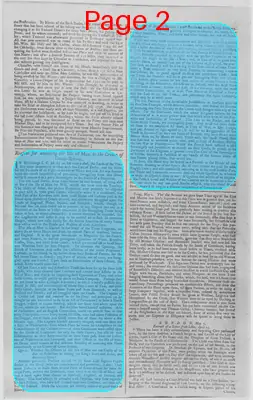
Editorial
September 26, 1751
The Virginia Gazette
Richmond, Williamsburg, Richmond County, Virginia
What is this article about?
This editorial argues for annexing the Isle of Man to the British Crown to curb rampant smuggling, which undermines trade, revenue, and the economy. It details the island's role as a hub for illicit goods from France and others, proposes purchasing rights from the Duke of Athol, and highlights historical precedents like Scottish jurisdictions.
Clipping
OCR Quality
98%
Excellent
Full Text
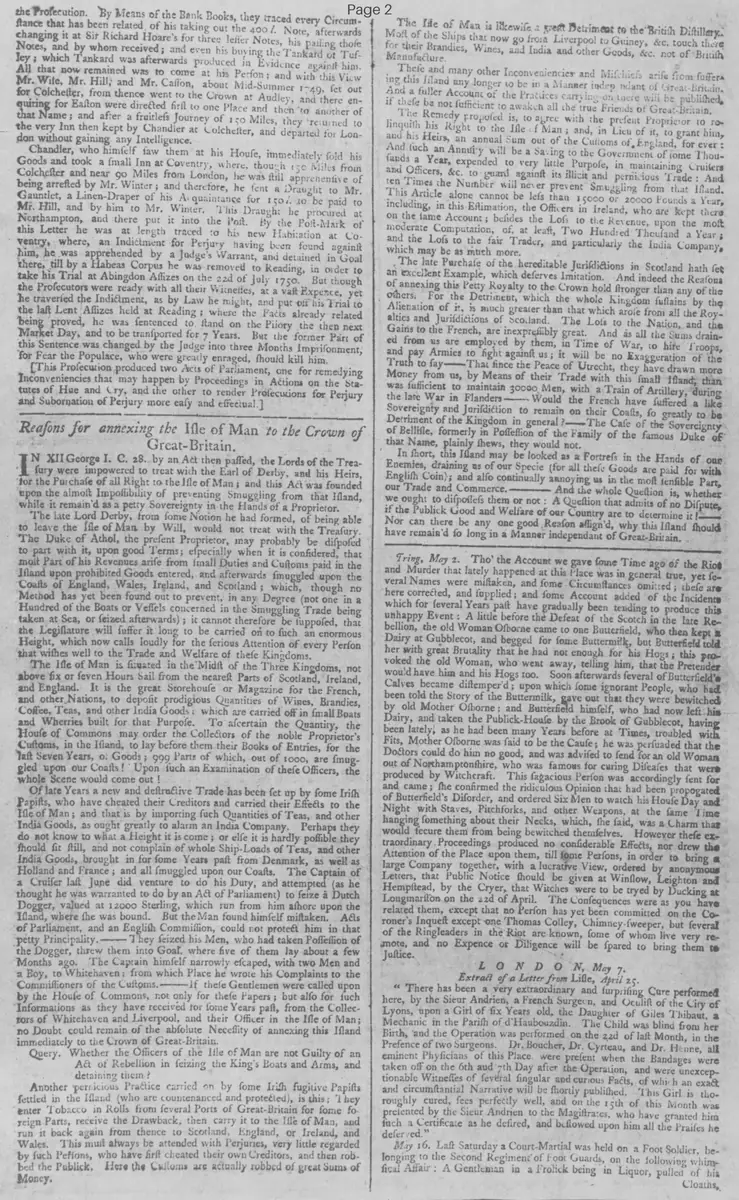
Reasons for annexing the Isle of Man to the Crown of Great-Britain.
In 12 Geo. I. c. 28. by an Act then passed, the Lords of the Treasury were impowered to treat with the Earl of Derby, and his Heirs, for the Purchase of all Right to the Isle of Man; and this Act was founded upon the almost Impossibility of preventing Smuggling from that Island, while it remain'd as a petty Sovereignty in the Hands of a Proprietor.
The late Lord Derby, from some Notion he had formed, of being able to leave the Isle of Man by Will, would not treat with the Treasury. The Duke of Athol, the present Proprietor, may probably be disposed to part with it, upon good Terms; especially when it is considered, that most Part of his Revenues arise from small Duties and Customs paid in the Island upon prohibited Goods entered, and afterwards smuggled upon the Coasts of England, Wales, Ireland, and Scotland; which, though no Method has yet been found out to prevent, in any Degree (not one in a Hundred of the Boats or Vessels concerned in the Smuggling Trade being taken at Sea, or seized afterwards); it cannot therefore be supposed, that the Legislature will suffer it long to be carried on to such an enormous Height, which now calls loudly for the serious Attention of every Person that wishes well to the Trade and Welfare of these Kingdoms.
The Isle of Man is situated in the Midst of the Three Kingdoms, not above six or seven Hours Sail from the nearest Parts of Scotland, Ireland, and England. It is the great Storehouse or Magazine for the French, and other Nations, to deposit prodigious Quantities of Wines, Brandies, Coffee, Teas, and other India Goods: which are carried off in small Boats and Wherries built for that Purpose. To ascertain the Quantity, the House of Commons may order the Collectors of the noble Proprietor's Customs, in the Island, to lay before them their Books of Entries, for the last Seven Years, of Goods; 999 Parts of which, out of 1000, are smuggled upon our Coasts! Upon such an Examination of these Officers, the whole Scene would come out!
Of late Years a new and destructive Trade has been set up by some Irish Papists, who have cheated their Creditors and carried their Effects to the Isle of Man; and that is by importing such Quantities of Teas, and other India Goods, as ought greatly to alarm an India Company, Perhaps they do not know to what a Height it is come; or else it is hardly possible they should sit still, and not complain of whole Ship-Loads of Teas, and other India Goods, brought in for some Years past from Denmark, as well as Holland and France; and all smuggled upon our Coasts. The Captain of a Cruiser last June did venture to do his Duty, and attempted (as he thought he was warranted to do by an Act of Parliament) to seize a Dutch Dogger, valued at 12000 l. Sterling, which run from him ashore upon the Island, where she was bound. But the Man found himself mistaken. Acts of Parliament, and an English Commission, could not protect him in that petty Principality.— They seized his Men, who had taken Possession of the Dogger, threw them into Gaol, where five of them lay about a few Months ago. The Captain himself narrowly escaped, with two Men and a Boy, to Whitehaven; from which Place he wrote his Complaints to the Commissioners of the Customs.
If these Gentlemen were called upon by the House of Commons, not only for these Papers; but also for such Informations as they have received for some Years past, from the Collectors of Whitehaven and Liverpool, and their Officer in the Isle of Man; no Doubt could remain of the absolute Necessity of annexing this Island immediately to the Crown of Great-Britain.
Query. Whether the Officers of the Isle of Man are not Guilty of an Act of Rebellion in seizing the King's Boats and Arms, and detaining them?
Another pernicious Practice carried on by some Irish fugitive Papists settled in the Island (who are countenanced and protected), is this; They enter Tobacco in Rolls from several Ports of Great-Britain for some foreign Parts, receive the Drawback, then carry it to the Isle of Man, and run it back again from thence to Scotland, England, or Ireland, and Wales. This must always be attended with Perjuries, very little regarded by such Persons, who have first cheated their own Creditors, and then robbed the Publick, Here the Customs are actually robbed of great Sums of Money.
The Isle of Man is likewise a great Detriment to the British Distillery. Most of the Ships that now go from Liverpool to Guinea, &c. touch there for their Brandies, Wines, and India and other Goods, &c. not of British Manufacture.
These and many other Inconveniencies and Mischiefs arise from suffering this Island any longer to be in a Manner independent of Great-Britain. And a fuller Account of the Practices carrying on there will be published if these be not sufficient to awaken all the true Friends of Great-Britain.
The Remedy proposed is, to agree with the present Proprietor to relinquish his Right to the Isle of Man; and, in Lieu of it, to grant him, and his Heirs, an annual Sum out of the Customs of England, or ever: And such an Annuity will be a Saving to the Government of some Thousands a Year, expended to very little Purpose, in maintaining Cruisers and Officers, &c. to guard against its illicit and pernicious Trade: And ten Times the Number will never prevent Smuggling from that Island.
This Article alone cannot be less than 15000 or 20000 Pounds a Year, including, in this Estimation, the Officers in Ireland, who are kept there on the same Account: besides the Loss to the Revenue, upon the most moderate Computation, of, at least, Two Hundred Thousand a Year: and the Loss to the fair Trader, and particularly the India Company, which may be as much more.
The late Purchase of the hereditable Jurisdictions in Scotland hath set an excellent Example, which deserves Imitation. And indeed the Reasons of annexing this Petty Royalty to the Crown hold stronger than any of the others. For the Detriment, which the whole Kingdom sustains by the Alienation of it, is much greater than that which arose from all the Royalties and Jurisdictions of Scotland. The Loss to the Nation, and the Gains to the French, are inexpressibly great. And as all the Sums drained from us are employed by them, in Time of War, to hire Troops, and pay Armies to fight against us; it will be no Exaggeration of the Truth to say—That since the Peace of Utrecht, they have drawn more Money from us, by Means of their Trade with this small Island, than was sufficient to maintain 30000 Men, with a Train of Artillery, during the late War in Flanders— Would the French have suffered a like Sovereignty and Jurisdiction to remain on their Coasts, so greatly to be Detriment of the Kingdom in general ?—The Case of the Sovereignty of Bellisle, formerly in Possession of the Family of the famous Duke of that Name, plainly shews, they would not.
In short, this Island may be looked as a Fortres in the Hands of our Enemies, draining us of our Specie (for all these Goods are paid for with English Coin); and also continually annoying us in the most sensible Part, our Trade and Commerce.
And the whole Question is, whether we ought to dispose them or not: A Question that admits of no Dispute, if the Publick Good and Welfare of our Country are to determine it!
Nor can there be any one good Reason assign'd, why this Island should have remain'd so long in a Manner independent of Great-Britain.
In 12 Geo. I. c. 28. by an Act then passed, the Lords of the Treasury were impowered to treat with the Earl of Derby, and his Heirs, for the Purchase of all Right to the Isle of Man; and this Act was founded upon the almost Impossibility of preventing Smuggling from that Island, while it remain'd as a petty Sovereignty in the Hands of a Proprietor.
The late Lord Derby, from some Notion he had formed, of being able to leave the Isle of Man by Will, would not treat with the Treasury. The Duke of Athol, the present Proprietor, may probably be disposed to part with it, upon good Terms; especially when it is considered, that most Part of his Revenues arise from small Duties and Customs paid in the Island upon prohibited Goods entered, and afterwards smuggled upon the Coasts of England, Wales, Ireland, and Scotland; which, though no Method has yet been found out to prevent, in any Degree (not one in a Hundred of the Boats or Vessels concerned in the Smuggling Trade being taken at Sea, or seized afterwards); it cannot therefore be supposed, that the Legislature will suffer it long to be carried on to such an enormous Height, which now calls loudly for the serious Attention of every Person that wishes well to the Trade and Welfare of these Kingdoms.
The Isle of Man is situated in the Midst of the Three Kingdoms, not above six or seven Hours Sail from the nearest Parts of Scotland, Ireland, and England. It is the great Storehouse or Magazine for the French, and other Nations, to deposit prodigious Quantities of Wines, Brandies, Coffee, Teas, and other India Goods: which are carried off in small Boats and Wherries built for that Purpose. To ascertain the Quantity, the House of Commons may order the Collectors of the noble Proprietor's Customs, in the Island, to lay before them their Books of Entries, for the last Seven Years, of Goods; 999 Parts of which, out of 1000, are smuggled upon our Coasts! Upon such an Examination of these Officers, the whole Scene would come out!
Of late Years a new and destructive Trade has been set up by some Irish Papists, who have cheated their Creditors and carried their Effects to the Isle of Man; and that is by importing such Quantities of Teas, and other India Goods, as ought greatly to alarm an India Company, Perhaps they do not know to what a Height it is come; or else it is hardly possible they should sit still, and not complain of whole Ship-Loads of Teas, and other India Goods, brought in for some Years past from Denmark, as well as Holland and France; and all smuggled upon our Coasts. The Captain of a Cruiser last June did venture to do his Duty, and attempted (as he thought he was warranted to do by an Act of Parliament) to seize a Dutch Dogger, valued at 12000 l. Sterling, which run from him ashore upon the Island, where she was bound. But the Man found himself mistaken. Acts of Parliament, and an English Commission, could not protect him in that petty Principality.— They seized his Men, who had taken Possession of the Dogger, threw them into Gaol, where five of them lay about a few Months ago. The Captain himself narrowly escaped, with two Men and a Boy, to Whitehaven; from which Place he wrote his Complaints to the Commissioners of the Customs.
If these Gentlemen were called upon by the House of Commons, not only for these Papers; but also for such Informations as they have received for some Years past, from the Collectors of Whitehaven and Liverpool, and their Officer in the Isle of Man; no Doubt could remain of the absolute Necessity of annexing this Island immediately to the Crown of Great-Britain.
Query. Whether the Officers of the Isle of Man are not Guilty of an Act of Rebellion in seizing the King's Boats and Arms, and detaining them?
Another pernicious Practice carried on by some Irish fugitive Papists settled in the Island (who are countenanced and protected), is this; They enter Tobacco in Rolls from several Ports of Great-Britain for some foreign Parts, receive the Drawback, then carry it to the Isle of Man, and run it back again from thence to Scotland, England, or Ireland, and Wales. This must always be attended with Perjuries, very little regarded by such Persons, who have first cheated their own Creditors, and then robbed the Publick, Here the Customs are actually robbed of great Sums of Money.
The Isle of Man is likewise a great Detriment to the British Distillery. Most of the Ships that now go from Liverpool to Guinea, &c. touch there for their Brandies, Wines, and India and other Goods, &c. not of British Manufacture.
These and many other Inconveniencies and Mischiefs arise from suffering this Island any longer to be in a Manner independent of Great-Britain. And a fuller Account of the Practices carrying on there will be published if these be not sufficient to awaken all the true Friends of Great-Britain.
The Remedy proposed is, to agree with the present Proprietor to relinquish his Right to the Isle of Man; and, in Lieu of it, to grant him, and his Heirs, an annual Sum out of the Customs of England, or ever: And such an Annuity will be a Saving to the Government of some Thousands a Year, expended to very little Purpose, in maintaining Cruisers and Officers, &c. to guard against its illicit and pernicious Trade: And ten Times the Number will never prevent Smuggling from that Island.
This Article alone cannot be less than 15000 or 20000 Pounds a Year, including, in this Estimation, the Officers in Ireland, who are kept there on the same Account: besides the Loss to the Revenue, upon the most moderate Computation, of, at least, Two Hundred Thousand a Year: and the Loss to the fair Trader, and particularly the India Company, which may be as much more.
The late Purchase of the hereditable Jurisdictions in Scotland hath set an excellent Example, which deserves Imitation. And indeed the Reasons of annexing this Petty Royalty to the Crown hold stronger than any of the others. For the Detriment, which the whole Kingdom sustains by the Alienation of it, is much greater than that which arose from all the Royalties and Jurisdictions of Scotland. The Loss to the Nation, and the Gains to the French, are inexpressibly great. And as all the Sums drained from us are employed by them, in Time of War, to hire Troops, and pay Armies to fight against us; it will be no Exaggeration of the Truth to say—That since the Peace of Utrecht, they have drawn more Money from us, by Means of their Trade with this small Island, than was sufficient to maintain 30000 Men, with a Train of Artillery, during the late War in Flanders— Would the French have suffered a like Sovereignty and Jurisdiction to remain on their Coasts, so greatly to be Detriment of the Kingdom in general ?—The Case of the Sovereignty of Bellisle, formerly in Possession of the Family of the famous Duke of that Name, plainly shews, they would not.
In short, this Island may be looked as a Fortres in the Hands of our Enemies, draining us of our Specie (for all these Goods are paid for with English Coin); and also continually annoying us in the most sensible Part, our Trade and Commerce.
And the whole Question is, whether we ought to dispose them or not: A Question that admits of no Dispute, if the Publick Good and Welfare of our Country are to determine it!
Nor can there be any one good Reason assign'd, why this Island should have remain'd so long in a Manner independent of Great-Britain.
What sub-type of article is it?
Economic Policy
Trade Or Commerce
Imperialism
What keywords are associated?
Isle Of Man
Smuggling
Annexation
Customs Duties
Trade Protection
British Revenue
India Company
French Trade
What entities or persons were involved?
Duke Of Athol
Earl Of Derby
House Of Commons
India Company
French
Irish Papists
Commissioners Of The Customs
Editorial Details
Primary Topic
Annexation Of The Isle Of Man To Prevent Smuggling
Stance / Tone
Strong Advocacy For Immediate Annexation
Key Figures
Duke Of Athol
Earl Of Derby
House Of Commons
India Company
French
Irish Papists
Commissioners Of The Customs
Key Arguments
Smuggling From The Isle Of Man Is Nearly Impossible To Prevent Due To Its Status As A Petty Sovereignty.
The Duke Of Athol's Revenues Derive Largely From Duties On Smuggled Goods.
The Island Serves As A Storehouse For Prohibited Goods From France, Denmark, Holland, Etc., Smuggled To British Coasts.
Irish Papists Engage In Fraudulent Trade, Importing Teas And India Goods, Alarming The India Company.
British Customs Officers Face Interference And Imprisonment When Attempting Seizures In The Island.
Annexation Would Save Government Expenses On Cruisers And Recover Massive Revenue Losses Estimated At Over 200,000 Pounds Annually.
Historical Precedent From Purchasing Scottish Jurisdictions Supports Annexation.
The Island Drains British Specie To Enemies Like France, Funding Wars Against Britain.