Thank you for visiting SNEWPapers!
Sign up free
Literary
May 29, 1813
Alexandria Gazette, Commercial And Political
Alexandria, Virginia
What is this article about?
A moral essay titled 'MONITORY' reflects on how God restrains human passions and wrath, using biblical examples like Sennacherib, Pharaoh, Joseph, Paul and Barnabas, and Christ's death to illustrate divine providence turning evil to good.
Merged-components note: Sequential reading order and text continuation of the essay 'MONITORY' on divine restraint of human passions.
Clipping
OCR Quality
88%
Good
Full Text
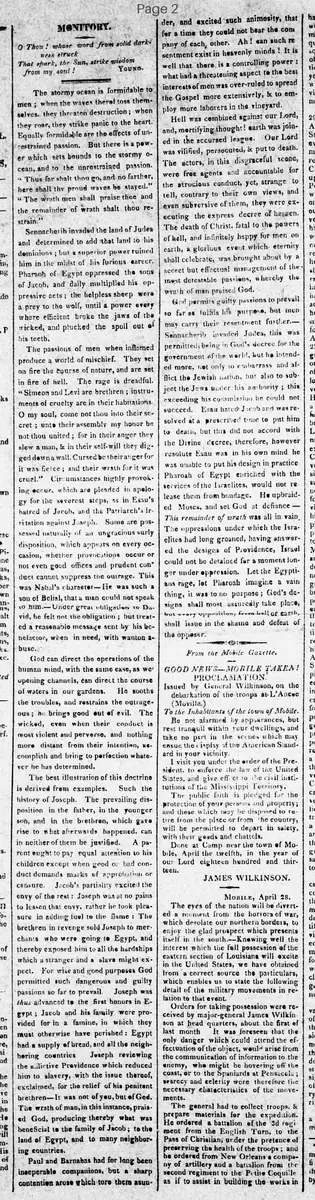
MONITORY.
O Thou! whose word from solid darkness struck
That spark, the Sun, strike wisdom from my soul!
YOUNG.
The stormy ocean is formidable to men; when the waves thereof toss themselves, they threaten destruction; when they roar, they strike panic to the heart.
Equally formidable are the effects of unrestrained passion. But there is a power which sets bounds to the stormy ocean, and to the unrestrained passion.
"Thus far shalt thou go, and no farther, here shall thy proud waves be stayed."
"The wrath of men shall praise thee and the remainder of wrath shalt thou restrain."
Sennacherib invaded the land of Judea and determined to add that land to his dominions; but a superior power ruined him in the midst of his furious career.
Pharaoh of Egypt oppressed the sons of Jacob, and daily multiplied his oppressive acts; the helpless sheep were a prey to the wolf, until a power everywhere efficient broke the jaws of the wicked, and plucked the spoil out of his teeth.
The passions of men when inflamed produce a world of mischief. They set on fire the course of nature, and are set in fire of hell. The rage is dreadful.
"Simeon and Levi are brethren; instruments of cruelty are in their habitations. O my soul, come not thou into their secret; unto their assembly my honor be not thou united; for in their anger they slew a man, & in their self-will they digged down a wall. Cursed be their anger for it was fierce; and their wrath for it was cruel." Circumstances highly provoking occur, which are pleaded in apology for the severest steps, as in Esau's hatred of Jacob, and the Patriarch's irritation against Joseph. Some are possessed naturally of an ungracious surly disposition, which appears on every occasion, whether provocations occur or not even good offices and prudent conduct cannot suppress the outrage.
This was Nabal's character—He was such a son of Belial, that a man could not speak to him.—Under great obligation to David, he felt not the obligation; but treated a reasonable message sent by his benefactor, when in need, with wanton abuse.
God can direct the operations of the human mind, with the same ease, as we opening channels, can direct the course of waters in our gardens. He sooths the troubles, and restrains the outrageous; he brings good out of evil. The wicked, even when their conduct is most violent and perverse, and nothing more distant from their intention, accomplish and bring to perfection whatever he has determined.
The best illustration of this doctrine is derived from examples. Such the history of Joseph. The prevailing disposition in the father, in the younger son, and in the brethren, which gave rise to what afterwards happened, can in neither of them be justified. A parent ought to pay equal attention to his children except when good or bad conduct demands marks of approbation or censure. Jacob's partiality excited the envy of the rest: Joseph was at no pains to lessen that envy. rather he took pleasure in adding fuel to the flame: The brethren in revenge sold Joseph to merchants who were going to Egypt, and thereby exposed him to all the hardships which a stranger and a slave might expect. For wise and good purposes God permitted such dangerous and guilty passions so far to prevail. Joseph was thus advanced to the first honors in Egypt; Jacob and his family were provided for in a famine, in which they must otherwise have perished: Egypt had a supply of bread, and all the neighboring countries Joseph reviewing the afflictive Providence which reduced him to slavery, with the issue thereof, exclaimed, for the relief of his penitent brethren—It was not you, but of God.
The wrath of man, in this instance, praised God, producing thereby what was beneficial to the family of Jacob; to the land of Egypt, and to many neighboring countries.
Paul and Barnabas had for long been inseparable companions, but a sharp contention arose which tore them asunder, and excited such animosity, that for a time they could not bear the company of each other. Ah! can such resentment exist in heavenly minds! It is well that there is a controlling power: what had a threatening aspect to the best interest of men was over-ruled to spread the Gospel more extensively, & to employ more laborers in the vineyard.
Hell was combined against our Lord, and, mortifying thought! earth was joined in the accursed league. Our Lord was vilified, persecuted, & put to death. The actors, in this disgraceful scene, were free agents and accountable for the atrocious conduct, yet, strange to tell, contrary to their own views, and even subversive of them, they were executing the express decree of heaven.
The death of Christ, fatal to the powers of hell, and infinitely happy for men on earth, a glorious event which eternity shall celebrate, was brought about by a secret but effectual management of the most detestable passions, whereby the wrath of man praised God.
God permits guilty passions to prevail so far as fulfils his purpose, but men may carry their resentment further.—Sennacherib invaded Judea, this was permitted; being in God's decree for the government of the world, but he intended more, not only to embarrass and afflict the Jewish nation, but also to subject the Jews under his authority; this exceeding his commission he could not succeed. Esau hated Jacob and was resolved at a prescribed time to put him to death, but this did not accord with the Divine decree, therefore, however resolute Esau was in his own mind he was unable to put his design in practice Pharaoh of Egypt enriched with the services of the Israelites, would not release them from bondage. He upbraided Moses, and set God at defiance—This remainder of wrath was all in vain The oppressions under which the Israelites had long groaned, having answered the designs of Providence, Israel could not be detained for a moment longer under oppression. Let the Egyptians rage, let Pharaoh imagine a vain thing, it was to no purpose; God's designs shall most assuredly take place, but every opposition from hell or earth, shall issue in the shame and defeat of the opposer.
O Thou! whose word from solid darkness struck
That spark, the Sun, strike wisdom from my soul!
YOUNG.
The stormy ocean is formidable to men; when the waves thereof toss themselves, they threaten destruction; when they roar, they strike panic to the heart.
Equally formidable are the effects of unrestrained passion. But there is a power which sets bounds to the stormy ocean, and to the unrestrained passion.
"Thus far shalt thou go, and no farther, here shall thy proud waves be stayed."
"The wrath of men shall praise thee and the remainder of wrath shalt thou restrain."
Sennacherib invaded the land of Judea and determined to add that land to his dominions; but a superior power ruined him in the midst of his furious career.
Pharaoh of Egypt oppressed the sons of Jacob, and daily multiplied his oppressive acts; the helpless sheep were a prey to the wolf, until a power everywhere efficient broke the jaws of the wicked, and plucked the spoil out of his teeth.
The passions of men when inflamed produce a world of mischief. They set on fire the course of nature, and are set in fire of hell. The rage is dreadful.
"Simeon and Levi are brethren; instruments of cruelty are in their habitations. O my soul, come not thou into their secret; unto their assembly my honor be not thou united; for in their anger they slew a man, & in their self-will they digged down a wall. Cursed be their anger for it was fierce; and their wrath for it was cruel." Circumstances highly provoking occur, which are pleaded in apology for the severest steps, as in Esau's hatred of Jacob, and the Patriarch's irritation against Joseph. Some are possessed naturally of an ungracious surly disposition, which appears on every occasion, whether provocations occur or not even good offices and prudent conduct cannot suppress the outrage.
This was Nabal's character—He was such a son of Belial, that a man could not speak to him.—Under great obligation to David, he felt not the obligation; but treated a reasonable message sent by his benefactor, when in need, with wanton abuse.
God can direct the operations of the human mind, with the same ease, as we opening channels, can direct the course of waters in our gardens. He sooths the troubles, and restrains the outrageous; he brings good out of evil. The wicked, even when their conduct is most violent and perverse, and nothing more distant from their intention, accomplish and bring to perfection whatever he has determined.
The best illustration of this doctrine is derived from examples. Such the history of Joseph. The prevailing disposition in the father, in the younger son, and in the brethren, which gave rise to what afterwards happened, can in neither of them be justified. A parent ought to pay equal attention to his children except when good or bad conduct demands marks of approbation or censure. Jacob's partiality excited the envy of the rest: Joseph was at no pains to lessen that envy. rather he took pleasure in adding fuel to the flame: The brethren in revenge sold Joseph to merchants who were going to Egypt, and thereby exposed him to all the hardships which a stranger and a slave might expect. For wise and good purposes God permitted such dangerous and guilty passions so far to prevail. Joseph was thus advanced to the first honors in Egypt; Jacob and his family were provided for in a famine, in which they must otherwise have perished: Egypt had a supply of bread, and all the neighboring countries Joseph reviewing the afflictive Providence which reduced him to slavery, with the issue thereof, exclaimed, for the relief of his penitent brethren—It was not you, but of God.
The wrath of man, in this instance, praised God, producing thereby what was beneficial to the family of Jacob; to the land of Egypt, and to many neighboring countries.
Paul and Barnabas had for long been inseparable companions, but a sharp contention arose which tore them asunder, and excited such animosity, that for a time they could not bear the company of each other. Ah! can such resentment exist in heavenly minds! It is well that there is a controlling power: what had a threatening aspect to the best interest of men was over-ruled to spread the Gospel more extensively, & to employ more laborers in the vineyard.
Hell was combined against our Lord, and, mortifying thought! earth was joined in the accursed league. Our Lord was vilified, persecuted, & put to death. The actors, in this disgraceful scene, were free agents and accountable for the atrocious conduct, yet, strange to tell, contrary to their own views, and even subversive of them, they were executing the express decree of heaven.
The death of Christ, fatal to the powers of hell, and infinitely happy for men on earth, a glorious event which eternity shall celebrate, was brought about by a secret but effectual management of the most detestable passions, whereby the wrath of man praised God.
God permits guilty passions to prevail so far as fulfils his purpose, but men may carry their resentment further.—Sennacherib invaded Judea, this was permitted; being in God's decree for the government of the world, but he intended more, not only to embarrass and afflict the Jewish nation, but also to subject the Jews under his authority; this exceeding his commission he could not succeed. Esau hated Jacob and was resolved at a prescribed time to put him to death, but this did not accord with the Divine decree, therefore, however resolute Esau was in his own mind he was unable to put his design in practice Pharaoh of Egypt enriched with the services of the Israelites, would not release them from bondage. He upbraided Moses, and set God at defiance—This remainder of wrath was all in vain The oppressions under which the Israelites had long groaned, having answered the designs of Providence, Israel could not be detained for a moment longer under oppression. Let the Egyptians rage, let Pharaoh imagine a vain thing, it was to no purpose; God's designs shall most assuredly take place, but every opposition from hell or earth, shall issue in the shame and defeat of the opposer.
What sub-type of article is it?
Essay
What themes does it cover?
Moral Virtue
Religious
What keywords are associated?
Restraining Passions
Wrath Of Man
Divine Providence
Biblical Examples
Moral Instruction
Literary Details
Title
Monitory.
Form / Style
Prose Reflection On Divine Restraint Of Human Passions With Biblical Examples
Key Lines
O Thou! Whose Word From Solid Darkness Struck That Spark, The Sun, Strike Wisdom From My Soul!
"The Wrath Of Men Shall Praise Thee And The Remainder Of Wrath Shalt Thou Restrain."
It Was Not You, But Of God.
The Death Of Christ, Fatal To The Powers Of Hell, And Infinitely Happy For Men On Earth, A Glorious Event Which Eternity Shall Celebrate, Was Brought About By A Secret But Effectual Management Of The Most Detestable Passions, Whereby The Wrath Of Man Praised God.