Thank you for visiting SNEWPapers!
Sign up free
The Savannah Tribune
Savannah, Chatham County, Georgia
What is this article about?
The NAACP warned against bill S.575 introduced by Senator McKellar of Tennessee, which would subject jobs over $4,500 to congressional confirmation, enabling southern senators to block Negro appointments and undermine the civil service merit system.
Clipping
OCR Quality
Full Text
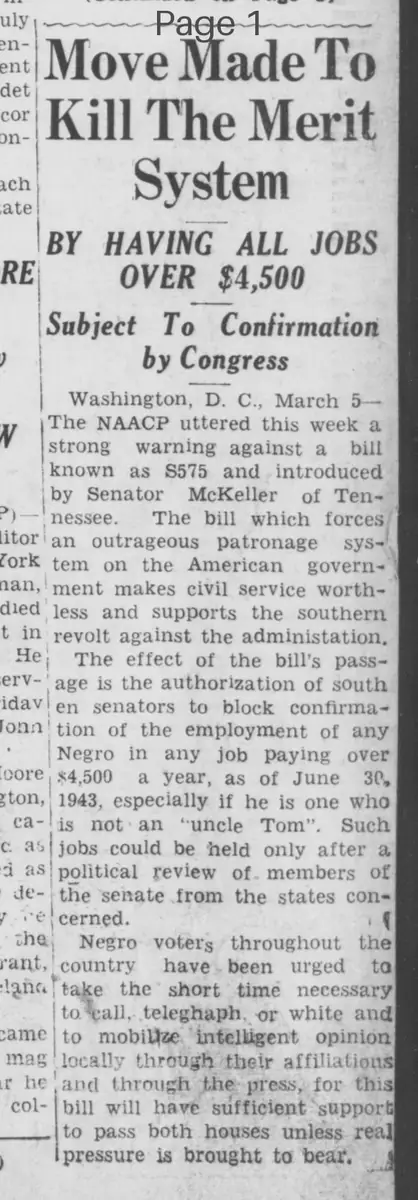
BY HAVING ALL JOBS OVER $4,500
Subject To Confirmation by Congress
Washington, D. C., March 5—The NAACP uttered this week a strong warning against a bill known as S.575 and introduced by Senator McKellar of Tennessee.
The bill which forces an outrageous patronage system on the American government makes civil service worthless and supports the southern revolt against the administration.
The effect of the bill's passage is the authorization of southern senators to block confirmation of the employment of any Negro in any job paying over $4,500 a year, as of June 30, 1943, especially if he is one who is not an "uncle Tom". Such jobs could be held only after a political review of members of the senate from the states concerned.
Negro voters throughout the country have been urged to take the short time necessary to call, telegraph, or write and to mobilize intelligent opinion locally through their affiliations and through the press, for this bill will have sufficient support to pass both houses unless real pressure is brought to bear.
What sub-type of article is it?
What keywords are associated?
What entities or persons were involved?
Where did it happen?
Domestic News Details
Primary Location
Washington, D. C.
Event Date
March 5
Key Persons
Event Details
The NAACP issued a warning against bill S.575, introduced by Senator McKellar of Tennessee, which would make all jobs over $4,500 subject to congressional confirmation, allowing southern senators to block Negro employment in such positions, especially for those not considered 'uncle Toms', after political review by senators from concerned states. Negro voters are urged to contact representatives and mobilize opinion to prevent its passage.