Thank you for visiting SNEWPapers!
Sign up free
Poem
July 30, 1819
Kentucky Gazette
Lexington, Fayette County, Kentucky
What is this article about?
Elegy commemorating the death of Nathaniel Taylor, a young student at Transylvania University and son of Major Jonathan Taylor of Union County, Kentucky, who died away from his family near the Ohio River. The poem reflects on his brief life, grief of companions, and religious consolation.
Clipping
OCR Quality
98%
Excellent
Full Text
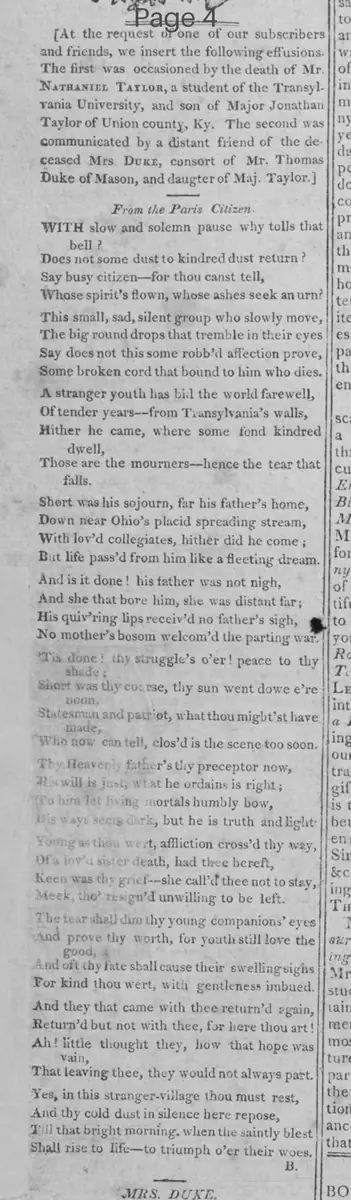
[At the request of one of our subscribers and friends, we insert the following effusions. The first was occasioned by the death of Mr. Nathaniel Taylor, a student of the Transylvania University, and son of Major Jonathan Taylor of Union county, Ky. The second was communicated by a distant friend of the deceased Mrs. Duke, consort of Mr. Thomas Duke of Mason, and daughter of Maj. Taylor.]
From the Paris Citizen
WITH slow and solemn pause why tolls that bell?
Does not some dust to kindred dust return?
Say busy citizen—for thou canst tell.
Whose spirit's flown, whose ashes seek an urn?
This small, sad, silent group who slowly move,
The big round drops that tremble in their eyes
Say does not this some robb'd affection prove,
Some broken cord that bound to him who dies.
A stranger youth has bid the world farewell,
Oftender years—from Transylvania's walls,
Hither he came, where some fond kindred dwell,
Those are the mourners—hence the tear that falls.
Short was his sojourn, far his father's home,
Down near Ohio's placid spreading stream,
With lov'd collegiates, hither did he come;
But life pass'd from him like a fleeting dream.
And is it done! his father was not nigh,
And she that bore him, she was distant far;
His quiv'ring lips receiv'd no father's sigh,
No mother's bosom welcom'd the parting war.
Tis done: thy struggle's o'er! peace to thy shade:
Short was thy course, thy sun went down ere noon,
Statesman and patriot, what thou might'st have made,
Who now can tell, clos'd is the scene too soon.
Thy Heavenly father's thy preceptor now,
His will is just, and what he ordains is right;
To him let living mortals humbly bow,
His ways seem dark, but he is truth and light
Young as thou went, affliction cross'd thy way,
Of a lov'd sister death, had thee bereft,
Keen was thy grief—she call'd thee not to stay,
Meek, tho' resign'd unwilling to be left.
The tear shall dim thy young companions' eyes
and prove thy worth, for youth still love the good,
And oft thy fate shall cause their swelling sighs
For kind thou wert, with gentleness imbued.
And they that came with thee return'd again,
Return'd but not with thee, for here thou art!
Ah! little thought they, how that hope was vain,
That leaving thee, they would not always part.
Yes, in this stranger-village thou must rest,
And thy cold dust in silence here repose,
T'ill that bright morning. when the saintly blest
Shall rise to life—to triumph o'er their woes.
B.
From the Paris Citizen
WITH slow and solemn pause why tolls that bell?
Does not some dust to kindred dust return?
Say busy citizen—for thou canst tell.
Whose spirit's flown, whose ashes seek an urn?
This small, sad, silent group who slowly move,
The big round drops that tremble in their eyes
Say does not this some robb'd affection prove,
Some broken cord that bound to him who dies.
A stranger youth has bid the world farewell,
Oftender years—from Transylvania's walls,
Hither he came, where some fond kindred dwell,
Those are the mourners—hence the tear that falls.
Short was his sojourn, far his father's home,
Down near Ohio's placid spreading stream,
With lov'd collegiates, hither did he come;
But life pass'd from him like a fleeting dream.
And is it done! his father was not nigh,
And she that bore him, she was distant far;
His quiv'ring lips receiv'd no father's sigh,
No mother's bosom welcom'd the parting war.
Tis done: thy struggle's o'er! peace to thy shade:
Short was thy course, thy sun went down ere noon,
Statesman and patriot, what thou might'st have made,
Who now can tell, clos'd is the scene too soon.
Thy Heavenly father's thy preceptor now,
His will is just, and what he ordains is right;
To him let living mortals humbly bow,
His ways seem dark, but he is truth and light
Young as thou went, affliction cross'd thy way,
Of a lov'd sister death, had thee bereft,
Keen was thy grief—she call'd thee not to stay,
Meek, tho' resign'd unwilling to be left.
The tear shall dim thy young companions' eyes
and prove thy worth, for youth still love the good,
And oft thy fate shall cause their swelling sighs
For kind thou wert, with gentleness imbued.
And they that came with thee return'd again,
Return'd but not with thee, for here thou art!
Ah! little thought they, how that hope was vain,
That leaving thee, they would not always part.
Yes, in this stranger-village thou must rest,
And thy cold dust in silence here repose,
T'ill that bright morning. when the saintly blest
Shall rise to life—to triumph o'er their woes.
B.
What sub-type of article is it?
Elegy
What themes does it cover?
Death Mourning
Religious Faith
What keywords are associated?
Nathaniel Taylor
Transylvania University
Death Elegy
Ohio River
Youth Mourning
Religious Consolation
Family Grief
What entities or persons were involved?
B.
Poem Details
Author
B.
Subject
Death Of Mr. Nathaniel Taylor, Student Of Transylvania University, Son Of Major Jonathan Taylor Of Union County, Ky.
Form / Style
Rhymed Quatrains
Key Lines
With Slow And Solemn Pause Why Tolls That Bell?
Does Not Some Dust To Kindred Dust Return?
Say Busy Citizen—For Thou Canst Tell.
Whose Spirit's Flown, Whose Ashes Seek An Urn?
Short Was His Sojourn, Far His Father's Home,
Down Near Ohio's Placid Spreading Stream,
With Lov'd Collegiates, Hither Did He Come;
But Life Pass'd From Him Like A Fleeting Dream.
Thy Heavenly Father's Thy Preceptor Now,
His Will Is Just, And What He Ordains Is Right;
To Him Let Living Mortals Humbly Bow,
His Ways Seem Dark, But He Is Truth And Light