Thank you for visiting SNEWPapers!
Sign up free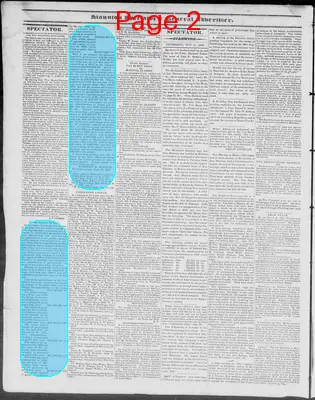
Editorial
October 6, 1836
Staunton Spectator, And General Advertiser
Staunton, Virginia
What is this article about?
An anonymous writer critiques the Jackson administration's 1836 government expenditures, comparing them to war years (1812-1814) and prior presidencies (Monroe, Adams), showing massive increases. Highlights Land Office staff expansion as example of extravagance, urging public vigilance for economy.
Clipping
OCR Quality
98%
Excellent
Full Text
For the Staunton Spectator.
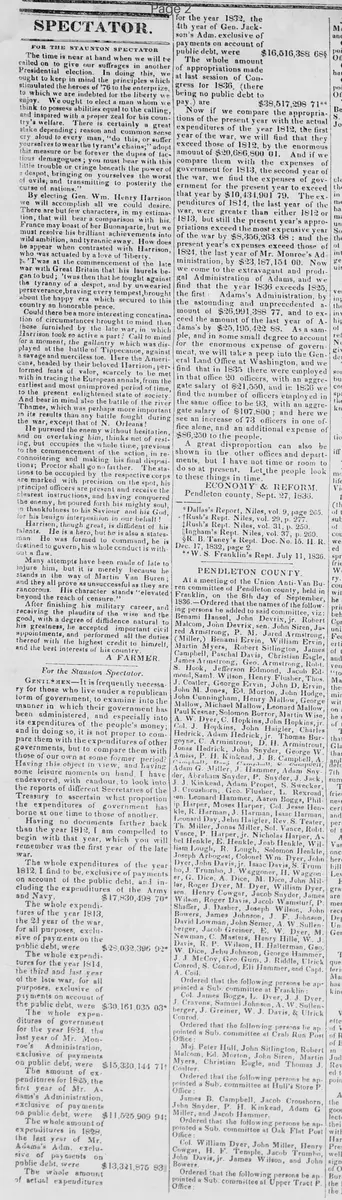
Gentlemen—It is frequently necessary for those who live under a republican form of government, to examine into the manner in which their government has been administered, and especially into its expenditures of the people's money; and in doing so, it is not proper to compare them with the expenditures of other governments, but to compare them with those of our own at some former period.
Having this object in view, and having some leisure moments on hand, I have endeavored, with candour, to look into the reports of different Secretaries of the Treasury to ascertain what proportion the expenditures of government has borne at one time to those of another.
Having no documents farther back than the year 1812, I am compelled to begin with that year, which you will remember was the first year of the late war.
The whole expenditures of the year 1812, I find to be, exclusive of payments on account of the public debt, and including the expenditures of the Army and Navy, $17,830,498 70.
The whole expenditures of the year 1813, the 2d year of the war, for all purposes, exclusive of payments on the public debt, were $23,032,396 92.
The whole expenditures for the year 1814, the third and last year of the late war, for all purposes, exclusive of payments on account of the public debt, were $30,161,035 03.
The whole expenditures of government for the year 1824, the last year of Mr. Monroe's Administration, exclusive of payments on public debt, were $15,330,144 71.
The amount of expenditures for 1825, the first year of Mr. Adams's Administration, exclusive of payments on public debt, were $15,259,091.
The whole amount of expenditures in 1828, the last year of Mr. Adams's Adm. exclusive of payments on public debt, were $13,321,976 83.
The whole amount of actual expenditures for the year 1832, the 4th year of Gen. Jackson's Adm. exclusive of payments on account of public debt, were $16,516,388 68.
The whole amount of appropriations made at last session of Congress for 1836, (there being no public debt to pay,) are $38,517,298 71.
Now if we compare the appropriations of the present year with the actual expenditures of the year 1812, the first year of the war, we will find that they exceed those of 1812, by the enormous amount of $20,686,800 01. And if we compare them with the expenses of government for 1813, the second year of the war, we find the expenses of government for the present year to exceed that year by $10,431,901 79. The expenditures of 1814, the last year of the war, were greater than either 1812 or 1813, but still the present year's appropriations exceed the most expensive year of the war by $8,356,263 68: and the present year's expenses exceed those of 1824, the last year of Mr. Monroe's Administration, by $23,187,154 00. Now we come to the extravagant and prodigal Administration of Adams, and we find that the year 1836 exceeds 1825, the first Adams's Administration, by the astounding and unprecedented amount of $26,991,388 77, and to exceed the amount of the last year of Adams's by $25,195,422 88.
As a sample, and in some small degree to account for the enormous expense of government, we will take a peep into the General Land Office at Washington, and we find that in 1835 there were employed in that office 20 officers, with an aggregate salary of $21,550, and in 1836 we find the number of officers employed in the same office to be 93, with an aggregate salary of $107,500; and here we see an increase of 73 officers in one office alone, and an additional expense of $86,250 to the people.
A great disproportion can also be shown in the other offices and departments, but I have not time or room to do so at present. Let the people look to these things in time.
ECONOMY & REFORM.
Pendleton county, Sept. 27, 1836.
# Dallas's Report, Niles, vol. 9, page 265.
.t Rush's Rept. Niles, vol. 29, p. 277.
i Rush's Rept. Niles, vol. 31, p. 250.
Ingham's Rept. Niles, vol. 37, p. 260.
§ R. B. Taney's Rept. Doc. No. 15. H. R. Dec. 17, 1832, page 2.
** W. S. Franklin's Rept. July 11, 1836.
Gentlemen—It is frequently necessary for those who live under a republican form of government, to examine into the manner in which their government has been administered, and especially into its expenditures of the people's money; and in doing so, it is not proper to compare them with the expenditures of other governments, but to compare them with those of our own at some former period.
Having this object in view, and having some leisure moments on hand, I have endeavored, with candour, to look into the reports of different Secretaries of the Treasury to ascertain what proportion the expenditures of government has borne at one time to those of another.
Having no documents farther back than the year 1812, I am compelled to begin with that year, which you will remember was the first year of the late war.
The whole expenditures of the year 1812, I find to be, exclusive of payments on account of the public debt, and including the expenditures of the Army and Navy, $17,830,498 70.
The whole expenditures of the year 1813, the 2d year of the war, for all purposes, exclusive of payments on the public debt, were $23,032,396 92.
The whole expenditures for the year 1814, the third and last year of the late war, for all purposes, exclusive of payments on account of the public debt, were $30,161,035 03.
The whole expenditures of government for the year 1824, the last year of Mr. Monroe's Administration, exclusive of payments on public debt, were $15,330,144 71.
The amount of expenditures for 1825, the first year of Mr. Adams's Administration, exclusive of payments on public debt, were $15,259,091.
The whole amount of expenditures in 1828, the last year of Mr. Adams's Adm. exclusive of payments on public debt, were $13,321,976 83.
The whole amount of actual expenditures for the year 1832, the 4th year of Gen. Jackson's Adm. exclusive of payments on account of public debt, were $16,516,388 68.
The whole amount of appropriations made at last session of Congress for 1836, (there being no public debt to pay,) are $38,517,298 71.
Now if we compare the appropriations of the present year with the actual expenditures of the year 1812, the first year of the war, we will find that they exceed those of 1812, by the enormous amount of $20,686,800 01. And if we compare them with the expenses of government for 1813, the second year of the war, we find the expenses of government for the present year to exceed that year by $10,431,901 79. The expenditures of 1814, the last year of the war, were greater than either 1812 or 1813, but still the present year's appropriations exceed the most expensive year of the war by $8,356,263 68: and the present year's expenses exceed those of 1824, the last year of Mr. Monroe's Administration, by $23,187,154 00. Now we come to the extravagant and prodigal Administration of Adams, and we find that the year 1836 exceeds 1825, the first Adams's Administration, by the astounding and unprecedented amount of $26,991,388 77, and to exceed the amount of the last year of Adams's by $25,195,422 88.
As a sample, and in some small degree to account for the enormous expense of government, we will take a peep into the General Land Office at Washington, and we find that in 1835 there were employed in that office 20 officers, with an aggregate salary of $21,550, and in 1836 we find the number of officers employed in the same office to be 93, with an aggregate salary of $107,500; and here we see an increase of 73 officers in one office alone, and an additional expense of $86,250 to the people.
A great disproportion can also be shown in the other offices and departments, but I have not time or room to do so at present. Let the people look to these things in time.
ECONOMY & REFORM.
Pendleton county, Sept. 27, 1836.
# Dallas's Report, Niles, vol. 9, page 265.
.t Rush's Rept. Niles, vol. 29, p. 277.
i Rush's Rept. Niles, vol. 31, p. 250.
Ingham's Rept. Niles, vol. 37, p. 260.
§ R. B. Taney's Rept. Doc. No. 15. H. R. Dec. 17, 1832, page 2.
** W. S. Franklin's Rept. July 11, 1836.
What sub-type of article is it?
Economic Policy
Partisan Politics
What keywords are associated?
Government Expenditures
Jackson Administration
War Of 1812
Economy Reform
Land Office
Treasury Reports
Partisan Critique
What entities or persons were involved?
Gen. Jackson
Mr. Monroe
Mr. Adams
General Land Office
Secretaries Of The Treasury (Dallas, Rush, Ingham, Taney)
Editorial Details
Primary Topic
Critique Of Increased Government Expenditures Under Jackson Administration
Stance / Tone
Critical Of Extravagant Spending And Call For Economy And Reform
Key Figures
Gen. Jackson
Mr. Monroe
Mr. Adams
General Land Office
Secretaries Of The Treasury (Dallas, Rush, Ingham, Taney)
Key Arguments
Expenditures In 1836 Exceed Those Of 1812 (First War Year) By $20,686,800.01
1836 Exceeds 1813 (Second War Year) By $10,431,901.79
1836 Exceeds 1814 (Last War Year) By $8,356,263.68
1836 Exceeds 1824 (Monroe's Last Year) By $23,187,154.00
1836 Exceeds 1825 (Adams's First Year) By $26,991,388.77
1836 Exceeds 1828 (Adams's Last Year) By $25,195,422.88
General Land Office Officers Increased From 20 In 1835 ($21,550 Salaries) To 93 In 1836 ($107,500 Salaries), Adding $86,250 Expense
Disproportion In Other Offices; People Should Examine Expenditures