Thank you for visiting SNEWPapers!
Sign up free
Literary
August 28, 1818
The Rhode Island American, And General Advertiser
Providence, Providence County, Rhode Island
What is this article about?
This essay from the Monthly Magazine argues that history's greatest businessmen and statesmen, such as Demosthenes, Cicero, Milton, Shakespeare, and others, were also renowned for their literary talents, refuting the idea that literary interests disqualify one from business or public affairs.
Merged-components note: Continuation of the article 'Men of Business' split across columns.
Clipping
OCR Quality
92%
Excellent
Full Text
FROM THE MONTHLY MAGAZINE.
MEN OF BUSINESS.
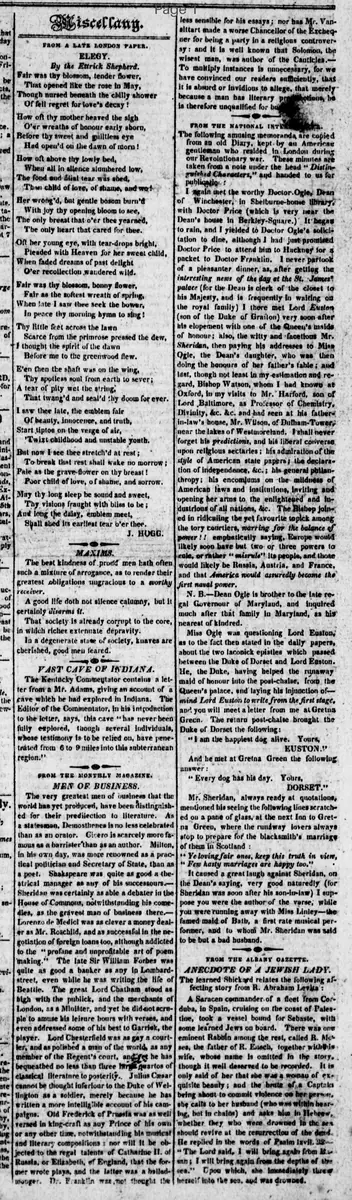
The very greatest men of business that the world has yet produced, have been distinguished for their predilection to literature. As a statesman, Demosthenes is no less celebrated than as an orator. Cicero is scarcely more famous as a barrister than as an author. Milton, in his own day, was more renowned as a practical politician and Secretary of State, than as a poet. Shakspeare was quite as good a theatrical manager as any of his successors. Sheridan was certainly as able a debater in the House of Commons, notwithstanding his comedies, as the gravest man of business there. Lorenzo de Medici was as clever a money dealer as Mr. Rothschild, and as successful in the negotiation of foreign loans too, although addicted to the "profane and unprofitable art of poem making." The late Sir William Forbes was quite as good a banker as any in Lombard-street, even while he was writing the life of Beattie. The great Lord Chatham stood as high with the publick, and the merchants of London, as a Minister, and yet he did not scruple to amuse his leisure hours with verses, and even addressed some of his best to Garrick, the player. Lord Chesterfield was as gay a courtier, and as polished a man of the world, as any member of the Regent's court, and he has bequeathed no less than three large quartos of classical literature to posterity. Julius Caesar cannot be thought inferior to the Duke of Wellington as a soldier, merely because he has written a more intelligible account of his campaigns: Old Frederick of Prussia was as well versed in king-craft as any Prince of his own or any other time, notwithstanding his musical and literary compositions : nor will it be objected to the regal talents of Catherine II. of Russia, or Elizabeth, of England, that the former wrote plays, and the latter was a ballad-monger.
less sensible for his essays; nor has Mr. Vansittart made a worse Chancellor of the Exchequer for being a party in a religious controversy: and it is well known that Solomon, the wisest man, was author of the Canticles.
To multiply instances is unnecessary, for we have convinced our readers sufficiently, that it is absurd or invidious to allege, that merely because a man has literary predilections, he is therefore unqualified for business.
MEN OF BUSINESS.
The very greatest men of business that the world has yet produced, have been distinguished for their predilection to literature. As a statesman, Demosthenes is no less celebrated than as an orator. Cicero is scarcely more famous as a barrister than as an author. Milton, in his own day, was more renowned as a practical politician and Secretary of State, than as a poet. Shakspeare was quite as good a theatrical manager as any of his successors. Sheridan was certainly as able a debater in the House of Commons, notwithstanding his comedies, as the gravest man of business there. Lorenzo de Medici was as clever a money dealer as Mr. Rothschild, and as successful in the negotiation of foreign loans too, although addicted to the "profane and unprofitable art of poem making." The late Sir William Forbes was quite as good a banker as any in Lombard-street, even while he was writing the life of Beattie. The great Lord Chatham stood as high with the publick, and the merchants of London, as a Minister, and yet he did not scruple to amuse his leisure hours with verses, and even addressed some of his best to Garrick, the player. Lord Chesterfield was as gay a courtier, and as polished a man of the world, as any member of the Regent's court, and he has bequeathed no less than three large quartos of classical literature to posterity. Julius Caesar cannot be thought inferior to the Duke of Wellington as a soldier, merely because he has written a more intelligible account of his campaigns: Old Frederick of Prussia was as well versed in king-craft as any Prince of his own or any other time, notwithstanding his musical and literary compositions : nor will it be objected to the regal talents of Catherine II. of Russia, or Elizabeth, of England, that the former wrote plays, and the latter was a ballad-monger.
less sensible for his essays; nor has Mr. Vansittart made a worse Chancellor of the Exchequer for being a party in a religious controversy: and it is well known that Solomon, the wisest man, was author of the Canticles.
To multiply instances is unnecessary, for we have convinced our readers sufficiently, that it is absurd or invidious to allege, that merely because a man has literary predilections, he is therefore unqualified for business.
What sub-type of article is it?
Essay
What themes does it cover?
Moral Virtue
Political
Commerce Trade
What keywords are associated?
Men Of Business
Literature
Historical Figures
Statesmen
Poets
Literary Pursuits
What entities or persons were involved?
From The Monthly Magazine.
Literary Details
Title
Men Of Business.
Author
From The Monthly Magazine.
Key Lines
The Very Greatest Men Of Business That The World Has Yet Produced, Have Been Distinguished For Their Predilection To Literature.
To Multiply Instances Is Unnecessary, For We Have Convinced Our Readers Sufficiently, That It Is Absurd Or Invidious To Allege, That Merely Because A Man Has Literary Predilections, He Is Therefore Unqualified For Business.