Thank you for visiting SNEWPapers!
Sign up free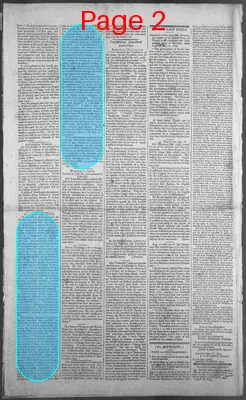
Editorial
August 28, 1804
The New Hampshire Gazette
Portsmouth, Rockingham County, New Hampshire
What is this article about?
An editorial critiques the excessive praise for Alexander Hamilton after his death in a duel with Aaron Burr, defending Republican leaders like Jefferson, Madison, and Gallatin, while condemning Hamilton's advocacy for monarchy, national debts, standing armies, dueling, and adultery as contrary to republican, moral, and Christian values.
Clipping
OCR Quality
98%
Excellent
Full Text
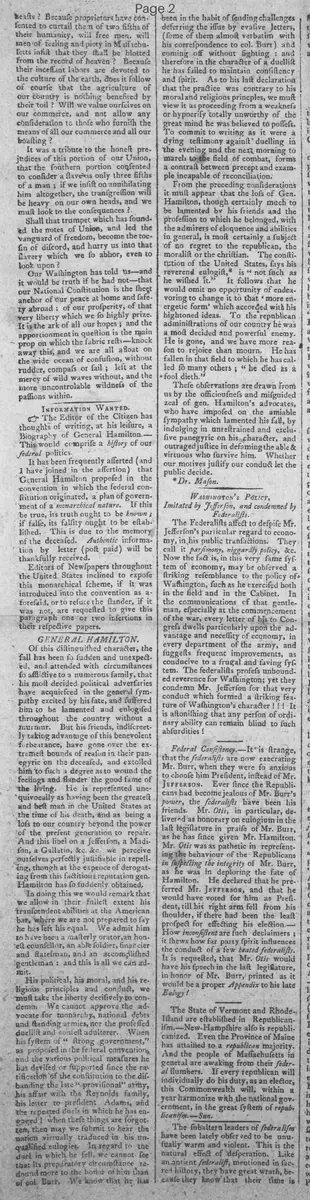
GENERAL HAMILTON.
Of this distinguished character, the fall has been so sudden and unexpected, and attended with circumstances so afflictive to a numerous family, that his most decided political adversaries have acquiesced in the general sympathy excited by his fate, and suffered him to be lamented and eulogized throughout the country without a murmur. But his friends, indiscreetly taking advantage of this benevolent forbearance, have gone over the extremest bounds of reason in their panegyric on the deceased, and extolled him to such a degree as to wound the feelings and slander the good fame of the living. He is represented unequivocally as having been the greatest and best man in the United States at the time of his death, and as being a loss to our country beyond the power of the present generation to repair. And this libel on a Jefferson, a Madison, a Gallatin, &c. &c. we perceive ourselves perfectly justifiable in repelling, though at the expense of derogating from this factitious reputation gen. Hamilton has so suddenly obtained.
In doing this we would remark that we allow in their fullest extent his transcendent abilities at the American bar, where we are not prepared to say he has left his equal. We admit him to have been a masterly orator, an honest counsellor, an able soldier, signer and statesman, and an accomplished gentleman: and this is all we can admit.
His political, his moral, and his religious principles and conduct, we must take the liberty decisively to condemn. We cannot approve the advocate for monarchy, national debts and standing armies, nor the professed duellist and common adulterer. When his system of 'strong government,' as proposed in the federal convention and the various political measures he has devised or supported since the ratification of the constitution to the disbanding the late 'provisional' army, his affair with the Reynolds family, his letter to president Adams, and the repeated duels in which he has engaged—when these things are forgotten, then may we submit to hear the nation virtually traduced in his unqualified eulogies. In regard to the duel in which he fell, we cannot see that its preparatory circumstances redound more to the honor of him than of col. Burr. We know that he has been in the habit of sending challenges deferring the issue by evasive letters, (some of them almost verbatim with his correspondence to col. Burr) and coming off without fighting: and therefore in the character of a duellist he has failed to maintain consistency and spirit. As to his last declaration that the practice was contrary to his moral and religious principles, we must view it as proceeding from a weakness or hypocrisy totally unworthy of the great mind he was believed to possess. To commit to writing as it were a dying testimony against duelling in the evening and the next morning to march to the field of combat, forms a contrast between precept and example incapable of reconciliation.
From the preceding considerations it must appear that the loss of Gen. Hamilton, though certainly much to be lamented by his friends and the profession to which he belonged, with the admirers of eloquence and abilities in general, is most certainly a subject of no regret to the republican, the moralist or the christian. The constitution of the United States, says his reverend eulogist,* is 'not such as he wished it.' It follows that he would omit no opportunity of endeavoring to change it to that 'more energetic form' which accorded with his high-toned ideas. To the republican administrations of our country he was a most decided and powerful enemy. He is gone, and we have more reason to rejoice than mourn. He has fallen in that field to which he has called so many others; 'he died as a fool dieth.'
These observations are drawn from us by the officiousness and misguided zeal of gen. Hamilton's advocates, who have imposed on the amiable sympathy which lamented his fall, by indulging in unrestrained and exclusive panegyric on his character, and outraged justice in defaming the able & virtuous who survive him. Whether our motives justify our conduct let the public decide.
*Dr. Mason.
Of this distinguished character, the fall has been so sudden and unexpected, and attended with circumstances so afflictive to a numerous family, that his most decided political adversaries have acquiesced in the general sympathy excited by his fate, and suffered him to be lamented and eulogized throughout the country without a murmur. But his friends, indiscreetly taking advantage of this benevolent forbearance, have gone over the extremest bounds of reason in their panegyric on the deceased, and extolled him to such a degree as to wound the feelings and slander the good fame of the living. He is represented unequivocally as having been the greatest and best man in the United States at the time of his death, and as being a loss to our country beyond the power of the present generation to repair. And this libel on a Jefferson, a Madison, a Gallatin, &c. &c. we perceive ourselves perfectly justifiable in repelling, though at the expense of derogating from this factitious reputation gen. Hamilton has so suddenly obtained.
In doing this we would remark that we allow in their fullest extent his transcendent abilities at the American bar, where we are not prepared to say he has left his equal. We admit him to have been a masterly orator, an honest counsellor, an able soldier, signer and statesman, and an accomplished gentleman: and this is all we can admit.
His political, his moral, and his religious principles and conduct, we must take the liberty decisively to condemn. We cannot approve the advocate for monarchy, national debts and standing armies, nor the professed duellist and common adulterer. When his system of 'strong government,' as proposed in the federal convention and the various political measures he has devised or supported since the ratification of the constitution to the disbanding the late 'provisional' army, his affair with the Reynolds family, his letter to president Adams, and the repeated duels in which he has engaged—when these things are forgotten, then may we submit to hear the nation virtually traduced in his unqualified eulogies. In regard to the duel in which he fell, we cannot see that its preparatory circumstances redound more to the honor of him than of col. Burr. We know that he has been in the habit of sending challenges deferring the issue by evasive letters, (some of them almost verbatim with his correspondence to col. Burr) and coming off without fighting: and therefore in the character of a duellist he has failed to maintain consistency and spirit. As to his last declaration that the practice was contrary to his moral and religious principles, we must view it as proceeding from a weakness or hypocrisy totally unworthy of the great mind he was believed to possess. To commit to writing as it were a dying testimony against duelling in the evening and the next morning to march to the field of combat, forms a contrast between precept and example incapable of reconciliation.
From the preceding considerations it must appear that the loss of Gen. Hamilton, though certainly much to be lamented by his friends and the profession to which he belonged, with the admirers of eloquence and abilities in general, is most certainly a subject of no regret to the republican, the moralist or the christian. The constitution of the United States, says his reverend eulogist,* is 'not such as he wished it.' It follows that he would omit no opportunity of endeavoring to change it to that 'more energetic form' which accorded with his high-toned ideas. To the republican administrations of our country he was a most decided and powerful enemy. He is gone, and we have more reason to rejoice than mourn. He has fallen in that field to which he has called so many others; 'he died as a fool dieth.'
These observations are drawn from us by the officiousness and misguided zeal of gen. Hamilton's advocates, who have imposed on the amiable sympathy which lamented his fall, by indulging in unrestrained and exclusive panegyric on his character, and outraged justice in defaming the able & virtuous who survive him. Whether our motives justify our conduct let the public decide.
*Dr. Mason.
What sub-type of article is it?
Partisan Politics
Moral Or Religious
What keywords are associated?
Hamilton Eulogy Critique
Political Condemnation
Moral Hypocrisy
Dueling
Republican Defense
Federalist Opposition
What entities or persons were involved?
Alexander Hamilton
Thomas Jefferson
James Madison
Albert Gallatin
Aaron Burr
John Adams
Reynolds Family
Dr. Mason
Editorial Details
Primary Topic
Critique Of Alexander Hamilton's Political And Moral Legacy After His Death
Stance / Tone
Strongly Critical And Defensive Of Republican Leaders
Key Figures
Alexander Hamilton
Thomas Jefferson
James Madison
Albert Gallatin
Aaron Burr
John Adams
Reynolds Family
Dr. Mason
Key Arguments
Excessive Eulogies Of Hamilton Libel Living Leaders Like Jefferson, Madison, And Gallatin
Hamilton's Abilities As Lawyer, Orator, Soldier, And Statesman Are Acknowledged But Limited
Condemn Hamilton's Advocacy For Monarchy, National Debts, And Standing Armies
Criticize Hamilton As A Professed Duellist And Adulterer
Hamilton's Political Measures Opposed Republican Principles From Federal Convention To Provisional Army
Duel With Burr Does Not Honor Hamilton More Than Burr Due To His Evasive Past Challenges
Hamilton's Anti Dueling Declaration Seen As Hypocritical
Hamilton's Death No Loss To Republicans, Moralists, Or Christians; More Reason To Rejoice
Hamilton Sought To Change Constitution To A More Energetic Form Against Republican Administrations