Thank you for visiting SNEWPapers!
Sign up free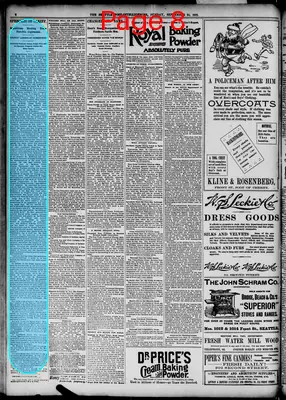
Story
September 25, 1892
The Seattle Post Intelligencer
Seattle, King County, Washington
What is this article about?
Republicans held a meeting at the Seattle Armory where Attorney General W. C. Jones, Judge Charles N. Fox, and Hon. J. W. Feighan delivered speeches advocating tariff protection against free trade, critiquing Democrats and the People's Party, drawing a good crowd despite rain.
Clipping

OCR Quality
95%
Excellent
Full Text
SPEECHES ON TARIFF.
Republican Meeting: Hears Forcible Arguments.
Object lesson at homestead
Attorney General Jones, Judge Fox and Ex-Speaker Feighan Define the Main Issues.
The Republicans held a well-attended meeting at the Armory last evening to hear addresses by Attorney General W. C. Jones, Judge Charles N. Fox, of San Francisco, and Hon. J. W. Feighan, ex-speaker of the state house of representatives. Though the air was chilly and a drizzling rain fell, the hall was fairly well filled, a fair sprinkling of women being in the audience. The speeches were pointed and dealt with the tariff issue in a popular manner, evoking frequent cheers.
John Arthur, chairman of the county central committee, called the meeting to order and announced the following officers: President, John E. Humphries; secretary, H. H. White; vice presidents: S. H. Piles, Henry Van Asselt, W. R. Forrest, M. J. Neagle, W. H. Pumphrey, S. J. Collins, August Mehlhorn, N. S. Peterson, E. J. Hawkins, Andrew J. Lee, Alexander Allen, M. C. Jensen, T. C. Marvin, H. E. Stumer, Frank J. Pontius, J. H. Ekstrand and William Voight. There were on the stage Judge Richard Osborn, Hon. Trusten P. Dyer, Deputy Prosecuting Attorney A. G. McBride, James Leddy and Robert Marshall. The speakers were Attorney General W. C. Jones, Judge Charles N. Fox, of San Francisco, and Hon. J. W. Feighan, of Spokane.
Judge Humphries first introduced Attorney General Jones. That gentleman began by saying that the present issue was one of business and not of sentiment, as in other days; that the business propositions of the parties were protection and "absolute, unequivocal free trade." It was true, however, that the Democracy denied the latter, and that hedging was apparent. He prophesied that Mr. Cleveland's letter of acceptance would repeal this implication, a proceeding which he said was on a par with the Seattle city council repealing the state constitution. He also recited in this connection the various constructions of the free trade plank for and against free trade, which had emanated from Mr. Hill, Mr. Dana, Mr. Watterson and other prominent Democrats. Mr. Jones reviewed in some detail the history of the tin plate legislation of the Fifty-first congress embodied in the McKinley bill, and stated that in framing the schedules of his measure Mr. McKinley had been guided by the scales of wages furnished by the representatives of the great trades unions. He also read extracts from business men in Spokane, Philadelphia, Norristown and from trade reports in England showing the present status of the tin plate industry and its growth in America. Mr. Jones finished his address by paying his respects to the People's party. His statement of wages and living here, quoted in connection with the dedication of the work on "Seven Financial Conspiracies: to the Enslaved People of a Dying Republic," was received with laughter. He concluded by saying that the fight was between free trade and protection and nothing else, and that the situation of the man who voted either Prohibition or People's tickets was like that of a man who would refuse to stop hoeing corn when his house was on fire.
Judge Fox, of San Francisco, whose white head and beard added to the impressiveness of his appearance and manner, spoke next. He, too, devoted himself to the tariff, though almost exclusively to the historic side of it. He besought his hearers to cast their ballots "as Washington would do it." He then reviewed the colonial history of the country, reciting the numerous acts passed by the British parliament to hamper and restrict colonial industry either in manufacture or exportation of manufactures, and declared that the revolution was the result of these oppressions. The revolution over, he recited the statement that the first general legislative act passed by congress and signed by George Washington was a tariff law. He then followed up the argument by reciting various presidential expressions, down to and including Andrew Jackson, all favoring the general principle of trade encouragement, and stated the history of trade depressions as coincident with tariff legislation. Bringing the question down to the opening of the war, he also recited the agency of Lincoln and the Republican party in rehabilitating the general system, and exclaimed:
"And yet they say today that protection is unconstitutional. I grant it. It was against the constitution-the rebel constitution."
In defense of the home market argument he asserted that of the fifty billions of merchandise and useful productions annually put forth by the United States all but one and one-half billions, or 3 per cent., was used at home. As to the condition of workingmen in America, he told of the case at Homestead where when a workman was arrested and held to $10,000 bail; two fellow workmen came and qualified each in a bond for $10,000, a thing which, he said, could not be duplicated anywhere else in the world.
Like Mr. Jones, Judge Fox devoted some of his speech to the People's party, and made some excellent points here. He had understood, he said, that one of the promises made by this party was to rid Seattle of its numerous mortgages. He asked:
Who holds these mortgages? Why, my next door neighbor in San Francisco, the German Savings and Loan Society, whose money comes from bloated bondholders who scrub floors and work day's work in the shops, the people who live in cottages today, in palaces tomorrow.
He also quoted from trade reports published in England, wherein a leading cause for the present state of trade there was said to be the Baring Bros.' failure, and then he asked:
And what ruined the Baring Bros.? Why, the government land mortgage system of the Argentine confederation, which the People's party advocate as a good policy for the United States to adopt. And what is the other cause for England's distress, according to this English authority? Why, Bill McKinley's McKinley bill
In conclusion Judge Fox declared Messrs. Harrison and Cleveland to be men personally good, but said that neither Harrison nor Cleveland could rise above or be better than his party: that by their parties must both be judged.
Mr. Feighan was brief and humorous. He said that he had heard that Mr. McGraw was not American-born, and continued:
Nor was it Mr. Snively's fault that he was a resident of the United States. He was born in Virginia and, had he had his way, would not now be a citizen of the United States. I helped nominate John McGraw [cheers] and I hope to help elect him. I am for the Lake Washington canal. I hear that it will remove barnacles from things. I think would be good medicine, therefore, for the Democratic party.
Mr. Feighan also wound up with some humorous hits at the People's party, which J. P. Ennis noted down.
Republican Meeting: Hears Forcible Arguments.
Object lesson at homestead
Attorney General Jones, Judge Fox and Ex-Speaker Feighan Define the Main Issues.
The Republicans held a well-attended meeting at the Armory last evening to hear addresses by Attorney General W. C. Jones, Judge Charles N. Fox, of San Francisco, and Hon. J. W. Feighan, ex-speaker of the state house of representatives. Though the air was chilly and a drizzling rain fell, the hall was fairly well filled, a fair sprinkling of women being in the audience. The speeches were pointed and dealt with the tariff issue in a popular manner, evoking frequent cheers.
John Arthur, chairman of the county central committee, called the meeting to order and announced the following officers: President, John E. Humphries; secretary, H. H. White; vice presidents: S. H. Piles, Henry Van Asselt, W. R. Forrest, M. J. Neagle, W. H. Pumphrey, S. J. Collins, August Mehlhorn, N. S. Peterson, E. J. Hawkins, Andrew J. Lee, Alexander Allen, M. C. Jensen, T. C. Marvin, H. E. Stumer, Frank J. Pontius, J. H. Ekstrand and William Voight. There were on the stage Judge Richard Osborn, Hon. Trusten P. Dyer, Deputy Prosecuting Attorney A. G. McBride, James Leddy and Robert Marshall. The speakers were Attorney General W. C. Jones, Judge Charles N. Fox, of San Francisco, and Hon. J. W. Feighan, of Spokane.
Judge Humphries first introduced Attorney General Jones. That gentleman began by saying that the present issue was one of business and not of sentiment, as in other days; that the business propositions of the parties were protection and "absolute, unequivocal free trade." It was true, however, that the Democracy denied the latter, and that hedging was apparent. He prophesied that Mr. Cleveland's letter of acceptance would repeal this implication, a proceeding which he said was on a par with the Seattle city council repealing the state constitution. He also recited in this connection the various constructions of the free trade plank for and against free trade, which had emanated from Mr. Hill, Mr. Dana, Mr. Watterson and other prominent Democrats. Mr. Jones reviewed in some detail the history of the tin plate legislation of the Fifty-first congress embodied in the McKinley bill, and stated that in framing the schedules of his measure Mr. McKinley had been guided by the scales of wages furnished by the representatives of the great trades unions. He also read extracts from business men in Spokane, Philadelphia, Norristown and from trade reports in England showing the present status of the tin plate industry and its growth in America. Mr. Jones finished his address by paying his respects to the People's party. His statement of wages and living here, quoted in connection with the dedication of the work on "Seven Financial Conspiracies: to the Enslaved People of a Dying Republic," was received with laughter. He concluded by saying that the fight was between free trade and protection and nothing else, and that the situation of the man who voted either Prohibition or People's tickets was like that of a man who would refuse to stop hoeing corn when his house was on fire.
Judge Fox, of San Francisco, whose white head and beard added to the impressiveness of his appearance and manner, spoke next. He, too, devoted himself to the tariff, though almost exclusively to the historic side of it. He besought his hearers to cast their ballots "as Washington would do it." He then reviewed the colonial history of the country, reciting the numerous acts passed by the British parliament to hamper and restrict colonial industry either in manufacture or exportation of manufactures, and declared that the revolution was the result of these oppressions. The revolution over, he recited the statement that the first general legislative act passed by congress and signed by George Washington was a tariff law. He then followed up the argument by reciting various presidential expressions, down to and including Andrew Jackson, all favoring the general principle of trade encouragement, and stated the history of trade depressions as coincident with tariff legislation. Bringing the question down to the opening of the war, he also recited the agency of Lincoln and the Republican party in rehabilitating the general system, and exclaimed:
"And yet they say today that protection is unconstitutional. I grant it. It was against the constitution-the rebel constitution."
In defense of the home market argument he asserted that of the fifty billions of merchandise and useful productions annually put forth by the United States all but one and one-half billions, or 3 per cent., was used at home. As to the condition of workingmen in America, he told of the case at Homestead where when a workman was arrested and held to $10,000 bail; two fellow workmen came and qualified each in a bond for $10,000, a thing which, he said, could not be duplicated anywhere else in the world.
Like Mr. Jones, Judge Fox devoted some of his speech to the People's party, and made some excellent points here. He had understood, he said, that one of the promises made by this party was to rid Seattle of its numerous mortgages. He asked:
Who holds these mortgages? Why, my next door neighbor in San Francisco, the German Savings and Loan Society, whose money comes from bloated bondholders who scrub floors and work day's work in the shops, the people who live in cottages today, in palaces tomorrow.
He also quoted from trade reports published in England, wherein a leading cause for the present state of trade there was said to be the Baring Bros.' failure, and then he asked:
And what ruined the Baring Bros.? Why, the government land mortgage system of the Argentine confederation, which the People's party advocate as a good policy for the United States to adopt. And what is the other cause for England's distress, according to this English authority? Why, Bill McKinley's McKinley bill
In conclusion Judge Fox declared Messrs. Harrison and Cleveland to be men personally good, but said that neither Harrison nor Cleveland could rise above or be better than his party: that by their parties must both be judged.
Mr. Feighan was brief and humorous. He said that he had heard that Mr. McGraw was not American-born, and continued:
Nor was it Mr. Snively's fault that he was a resident of the United States. He was born in Virginia and, had he had his way, would not now be a citizen of the United States. I helped nominate John McGraw [cheers] and I hope to help elect him. I am for the Lake Washington canal. I hear that it will remove barnacles from things. I think would be good medicine, therefore, for the Democratic party.
Mr. Feighan also wound up with some humorous hits at the People's party, which J. P. Ennis noted down.
What sub-type of article is it?
Historical Event
What themes does it cover?
Moral Virtue
What keywords are associated?
Republican Meeting
Tariff Speeches
Protectionism
Free Trade
People's Party
Homestead
Mckinley Bill
Seattle Politics
What entities or persons were involved?
W. C. Jones
Charles N. Fox
J. W. Feighan
John Arthur
John E. Humphries
H. H. White
S. H. Piles
Henry Van Asselt
W. R. Forrest
M. J. Neagle
W. H. Pumphrey
S. J. Collins
August Mehlhorn
N. S. Peterson
E. J. Hawkins
Andrew J. Lee
Alexander Allen
M. C. Jensen
T. C. Marvin
H. E. Stumer
Frank J. Pontius
J. H. Ekstrand
William Voight
Richard Osborn
Trusten P. Dyer
A. G. Mcbride
James Leddy
Robert Marshall
Where did it happen?
Armory, Seattle
Story Details
Key Persons
W. C. Jones
Charles N. Fox
J. W. Feighan
John Arthur
John E. Humphries
H. H. White
S. H. Piles
Henry Van Asselt
W. R. Forrest
M. J. Neagle
W. H. Pumphrey
S. J. Collins
August Mehlhorn
N. S. Peterson
E. J. Hawkins
Andrew J. Lee
Alexander Allen
M. C. Jensen
T. C. Marvin
H. E. Stumer
Frank J. Pontius
J. H. Ekstrand
William Voight
Richard Osborn
Trusten P. Dyer
A. G. Mcbride
James Leddy
Robert Marshall
Location
Armory, Seattle
Event Date
Last Evening
Story Details
Republicans gathered at the Armory for speeches by Jones, Fox, and Feighan on tariff protection versus free trade, historical arguments, critiques of Democrats and People's Party, with humorous remarks and cheers.