Thank you for visiting SNEWPapers!
Sign up free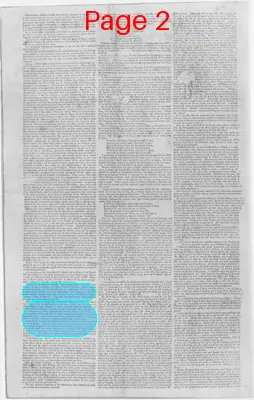
Literary
September 22, 1774
The Virginia Gazette
Williamsburg, Virginia
What is this article about?
The text reflects on Sir William Temple's 1689 observations that plenty fosters originality and pride, while liberty encourages independence, applying these to contemporary Britain. It notes widespread intellectual pursuits alongside moral excesses, attributing national 'spleen' to variable weather affecting temperaments.
Merged-components note: Continuous literary excerpt quoting Sir William Temple on societal vices and expanding on the theme with commentary from 1689, originally split with mismatched labels.
Clipping
OCR Quality
98%
Excellent
Full Text
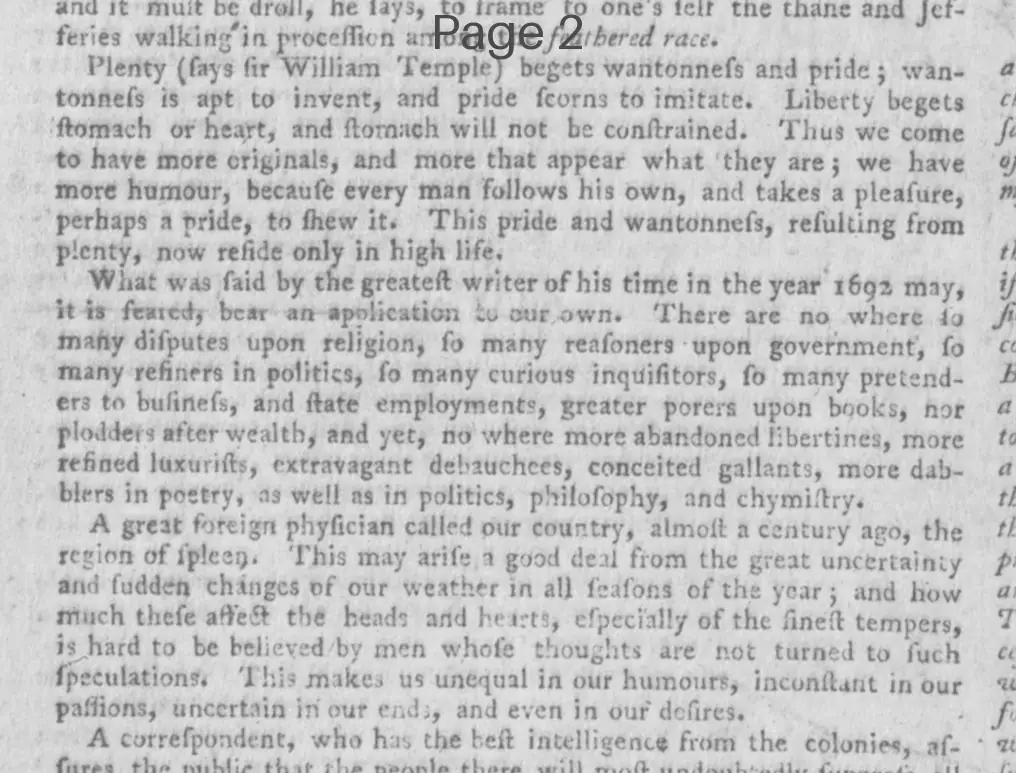
Plenty (says Sir William Temple) begets wantonness and pride; wantonness is apt to invent, and pride scorns to imitate. Liberty begets stomach or heart, and stomach will not be constrained. Thus we come to have more originals, and more that appear what they are; we have more humour, because every man follows his own, and takes a pleasure, perhaps a pride, to shew it. This pride and wantonness, resulting from plenty, now reside only in high life.
What was said by the greatest writer of his time in the year 1689 may, it is feared, bear an application to our own. There are no where so many disputes upon religion, so many reasoners upon government, so many refiners in politics, so many curious inquisitors, so many pretenders to business, and state employments, greater porers upon books, nor plodders after wealth, and yet, no where more abandoned libertines, more refined luxurists, extravagant debauchees, conceited gallants, more dabblers in poetry, as well as in politics, philosophy, and chemistry. A great foreign physician called our country, almost a century ago, the region of spleen. This may arise a good deal from the great uncertainty and sudden changes of our weather in all seasons of the year; and how much these affect the heads and hearts, especially of the finest tempers, is hard to be believed by men whose thoughts are not turned to such speculations. This makes us unequal in our humours, inconstant in our passions, uncertain in our ends, and even in our desires.
What was said by the greatest writer of his time in the year 1689 may, it is feared, bear an application to our own. There are no where so many disputes upon religion, so many reasoners upon government, so many refiners in politics, so many curious inquisitors, so many pretenders to business, and state employments, greater porers upon books, nor plodders after wealth, and yet, no where more abandoned libertines, more refined luxurists, extravagant debauchees, conceited gallants, more dabblers in poetry, as well as in politics, philosophy, and chemistry. A great foreign physician called our country, almost a century ago, the region of spleen. This may arise a good deal from the great uncertainty and sudden changes of our weather in all seasons of the year; and how much these affect the heads and hearts, especially of the finest tempers, is hard to be believed by men whose thoughts are not turned to such speculations. This makes us unequal in our humours, inconstant in our passions, uncertain in our ends, and even in our desires.
What sub-type of article is it?
Essay
What themes does it cover?
Liberty Freedom
Political
Social Manners
What keywords are associated?
Plenty
Liberty
National Character
Spleen
Weather
Politics
Society
Literary Details
Form / Style
Prose Reflection On National Character
Key Lines
Plenty (Says Sir William Temple) Begets Wantonness And Pride; Wantonness Is Apt To Invent, And Pride Scorns To Imitate.
Liberty Begets Stomach Or Heart, And Stomach Will Not Be Constrained.
A Great Foreign Physician Called Our Country, Almost A Century Ago, The Region Of Spleen.
This Makes Us Unequal In Our Humours, Inconstant In Our Passions, Uncertain In Our Ends, And Even In Our Desires.