Thank you for visiting SNEWPapers!
Sign up free
Literary
November 10, 1752
The Virginia Gazette
Richmond, Williamsburg, Richmond County, Virginia
What is this article about?
The narrator, inspired by Ovid and Seneca, reflects on life's transience and falls asleep, dreaming of humanity embarking on the ocean of life after innocence, facing dangers, whirlpools, and rocks symbolizing perils, with people negligently ignoring warnings and inevitable sinking in mortality.
Clipping
OCR Quality
85%
Good
Full Text
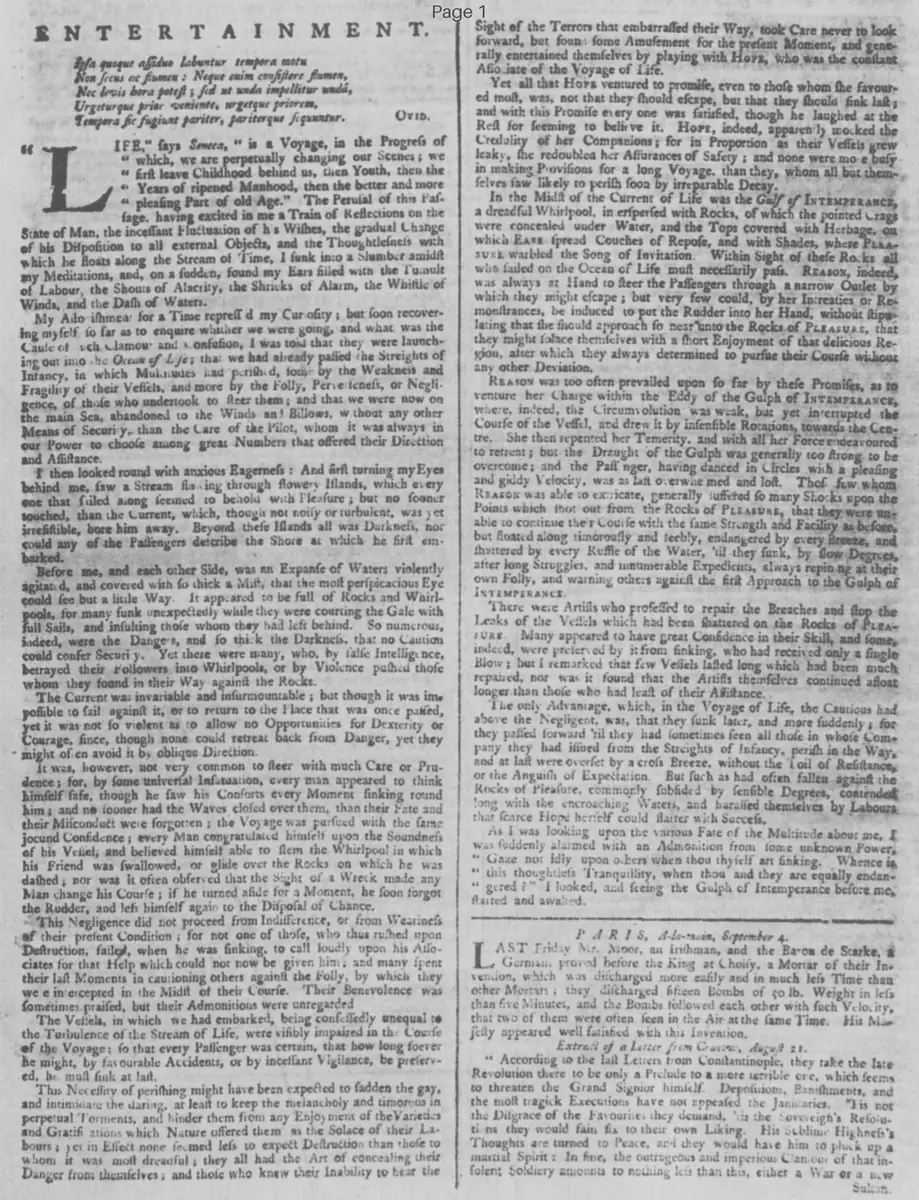
ENTERTAINMENT.
Læta quoque assiduo labuntur tempora motu
Non secus ac flumen: neque enim consistere flumen,
Nec levis hora potest; sed ut unda impellitur unda
Urgeturque prior veniente, urgetque priorem,
Tempora sic fugiunt pariter, pariterque sequuntur.
OVID.
"LIFE," says Seneca, "is a Voyage, in
which, we are perpetually changing
our Scenes; we
first leave Childhood behind us, then Youth, then the
Years of ripened Manhood, then the better and more
pleasing
Part of old Age."
The Perusal of this Passage
having excited in me a Train of Reflections on the
State of Man, the incessant Fluctuation of his Wishes, the gradual Change
of his Disposition to
all
external
Objects,
and the Thoughtlessness with
which he floats along
the
Stream
of Time, I sunk into a Slumber amidst
my
Meditations,
and,
on a
sudden,
found my
Ears filled with the Tumult
of Labour, the
Shouts
of
Alacrity,
the Shrieks of Alarm, the Whistle of
Winds, and the Dash of Waters.
My Astonishment for a Time repressed my Curiosity: but soon recovering
myself so far as to enquire whither we were going, and what was the
Cause of this Tumult and Confusion, I was told that they were launch-
ing out into the Ocean of Life; that we had already passed the Streights of
Innocence, of those who undertook to steer them; and that we were now on
the main Sea, abandoned to the Winds and Billows, without any other
Means of Security than the Care of the Pilot, whom it was always in
our Power to choose among great Numbers that offered their Direction
and Assistance.
I then looked round with anxious Eagerness: And first turning my Eyes
behind me, saw a Stream running through flowery Islands, which every
one that sailed along Seemed to behold with Pleasure; but no sooner
touched, than the Current, which, though not noisy or turbulent, was yet
irresistible, bore him away. Beyond these Islands all was Darkness, nor
could any of the Passengers describe the Shore on which he first em-
barked.
Before me, and on each side, was an Expanse of Waters violently
agitated, and covered with so thick a Mist, that the most perspicacious Eye
could see but a little Way. It appeared to be full of Rocks and Whirlpools, on many sunk unexpectedly while they were courting the Gale with
full Sails, and insulting those whom they had left behind. So numerous,
indeed, were the Dangers, and so thick the Darkness, that no Caution
could confer Security. Yet there were many, who, by false Intelligence,
betrayed their Followers into Whirlpools, or by Violence pushed those
whom they found in their Way against the Rocks.
The Current was invariable and insurmountable; but though it was im-
possible to sail against it, or to return to the Place that was once passed,
yet it was not so violent as to allow no Opportunities for Dexterity or
Courage, since, though none could retreat back from Danger, yet they
might often avoid it by oblique Direction.
It was, however, not very common to steer with much Care or Pru-
dence; for, by some universal Infatuation, every man appeared to think
himself safe, though he saw his Companions every Moment sinking round
him; and no sooner had the Waves closed over them, than their Fate and
their Misconduct were forgotten; the Voyage was pursued with the same
jocund Confidence; every Man congratulated himself upon the Soundness
of his Vessel, and believed himself able to stem the Whirlpool in which
his Friend was swallowed, or glide over the Rocks on which he was
dashed; nor was it often observed that the Sight of a Wreck made any
Man change his Course; if he turned aside for a Moment, he soon forgot
the Rudder, and left himself again to the Disposal of Chance.
This Negligence did not proceed from Indifference, or from Weariness
of their present Condition; for not one of those, who thus rushed upon
Destruction, failed, when he was sinking, to call loudly upon his Asso-
ciates for that Help which could not now be given him; and many spent
their last Moments in cautioning others against the Folly, by which they
were intercepted in the Midst of their Course. Their Benevolence was
sometimes praised, but their Admonitions were unregarded.
The Vessels, in which we had embarked, being confessedly unequal to
the Turbulence of the Stream of Life, were visibly impaired in the Course
of the Voyage; so that every Passenger was certain, that however
long soever
he might, by favourable Accidents, or by incessant Vigilance,
be preserved-
ed, he must sink at last.
This Necessity of perishing might have been expected to
sadden
the gay,
and intimidate the daring, at least to keep the melancholy
and
timorous in
perpetual Torments, and hinder them from any Enjoyment
of the Varieties
and Gratifications which Nature offered them as the
Solace of
their
La-
bours; yet in Effect none seemed less to expect Destruction than
those to
whom it was most dreadful; they all had the Art of concealing their
Danger from themselves; and those who knew their Inability to bear the
Læta quoque assiduo labuntur tempora motu
Non secus ac flumen: neque enim consistere flumen,
Nec levis hora potest; sed ut unda impellitur unda
Urgeturque prior veniente, urgetque priorem,
Tempora sic fugiunt pariter, pariterque sequuntur.
OVID.
"LIFE," says Seneca, "is a Voyage, in
which, we are perpetually changing
our Scenes; we
first leave Childhood behind us, then Youth, then the
Years of ripened Manhood, then the better and more
pleasing
Part of old Age."
The Perusal of this Passage
having excited in me a Train of Reflections on the
State of Man, the incessant Fluctuation of his Wishes, the gradual Change
of his Disposition to
all
external
Objects,
and the Thoughtlessness with
which he floats along
the
Stream
of Time, I sunk into a Slumber amidst
my
Meditations,
and,
on a
sudden,
found my
Ears filled with the Tumult
of Labour, the
Shouts
of
Alacrity,
the Shrieks of Alarm, the Whistle of
Winds, and the Dash of Waters.
My Astonishment for a Time repressed my Curiosity: but soon recovering
myself so far as to enquire whither we were going, and what was the
Cause of this Tumult and Confusion, I was told that they were launch-
ing out into the Ocean of Life; that we had already passed the Streights of
Innocence, of those who undertook to steer them; and that we were now on
the main Sea, abandoned to the Winds and Billows, without any other
Means of Security than the Care of the Pilot, whom it was always in
our Power to choose among great Numbers that offered their Direction
and Assistance.
I then looked round with anxious Eagerness: And first turning my Eyes
behind me, saw a Stream running through flowery Islands, which every
one that sailed along Seemed to behold with Pleasure; but no sooner
touched, than the Current, which, though not noisy or turbulent, was yet
irresistible, bore him away. Beyond these Islands all was Darkness, nor
could any of the Passengers describe the Shore on which he first em-
barked.
Before me, and on each side, was an Expanse of Waters violently
agitated, and covered with so thick a Mist, that the most perspicacious Eye
could see but a little Way. It appeared to be full of Rocks and Whirlpools, on many sunk unexpectedly while they were courting the Gale with
full Sails, and insulting those whom they had left behind. So numerous,
indeed, were the Dangers, and so thick the Darkness, that no Caution
could confer Security. Yet there were many, who, by false Intelligence,
betrayed their Followers into Whirlpools, or by Violence pushed those
whom they found in their Way against the Rocks.
The Current was invariable and insurmountable; but though it was im-
possible to sail against it, or to return to the Place that was once passed,
yet it was not so violent as to allow no Opportunities for Dexterity or
Courage, since, though none could retreat back from Danger, yet they
might often avoid it by oblique Direction.
It was, however, not very common to steer with much Care or Pru-
dence; for, by some universal Infatuation, every man appeared to think
himself safe, though he saw his Companions every Moment sinking round
him; and no sooner had the Waves closed over them, than their Fate and
their Misconduct were forgotten; the Voyage was pursued with the same
jocund Confidence; every Man congratulated himself upon the Soundness
of his Vessel, and believed himself able to stem the Whirlpool in which
his Friend was swallowed, or glide over the Rocks on which he was
dashed; nor was it often observed that the Sight of a Wreck made any
Man change his Course; if he turned aside for a Moment, he soon forgot
the Rudder, and left himself again to the Disposal of Chance.
This Negligence did not proceed from Indifference, or from Weariness
of their present Condition; for not one of those, who thus rushed upon
Destruction, failed, when he was sinking, to call loudly upon his Asso-
ciates for that Help which could not now be given him; and many spent
their last Moments in cautioning others against the Folly, by which they
were intercepted in the Midst of their Course. Their Benevolence was
sometimes praised, but their Admonitions were unregarded.
The Vessels, in which we had embarked, being confessedly unequal to
the Turbulence of the Stream of Life, were visibly impaired in the Course
of the Voyage; so that every Passenger was certain, that however
long soever
he might, by favourable Accidents, or by incessant Vigilance,
be preserved-
ed, he must sink at last.
This Necessity of perishing might have been expected to
sadden
the gay,
and intimidate the daring, at least to keep the melancholy
and
timorous in
perpetual Torments, and hinder them from any Enjoyment
of the Varieties
and Gratifications which Nature offered them as the
Solace of
their
La-
bours; yet in Effect none seemed less to expect Destruction than
those to
whom it was most dreadful; they all had the Art of concealing their
Danger from themselves; and those who knew their Inability to bear the
What sub-type of article is it?
Allegory
Vision Or Dream
Essay
What themes does it cover?
Death Mortality
Moral Virtue
What keywords are associated?
Voyage Of Life
Allegorical Dream
Human Negligence
Mortality
Stream Of Time
Literary Details
Subject
Reflections On The State Of Man, Incessant Fluctuation Of Wishes, Gradual Change Of Disposition, Thoughtlessness In The Stream Of Time
Form / Style
Prose Allegory Of Life As A Sea Voyage
Key Lines
"Life," Says Seneca, "Is A Voyage, In Which, We Are Perpetually Changing Our Scenes; We First Leave Childhood Behind Us, Then Youth, Then The Years Of Ripened Manhood, Then The Better And More Pleasing Part Of Old Age."
I Sunk Into A Slumber Amidst My Meditations, And, On A Sudden, Found My Ears Filled With The Tumult Of Labour, The Shouts Of Alacrity, The Shrieks Of Alarm, The Whistle Of Winds, And The Dash Of Waters.
They Were Launching Out Into The Ocean Of Life; That We Had Already Passed The Streights Of Innocence
Every Man Appeared To Think Himself Safe, Though He Saw His Companions Every Moment Sinking Round Him
Every Passenger Was Certain, That However Long Soever He Might, By Favourable Accidents, Or By Incessant Vigilance, Be Preserved, He Must Sink At Last.