Thank you for visiting SNEWPapers!
Sign up free
The New Hampshire Gazette
Portsmouth, Rockingham County, New Hampshire
What is this article about?
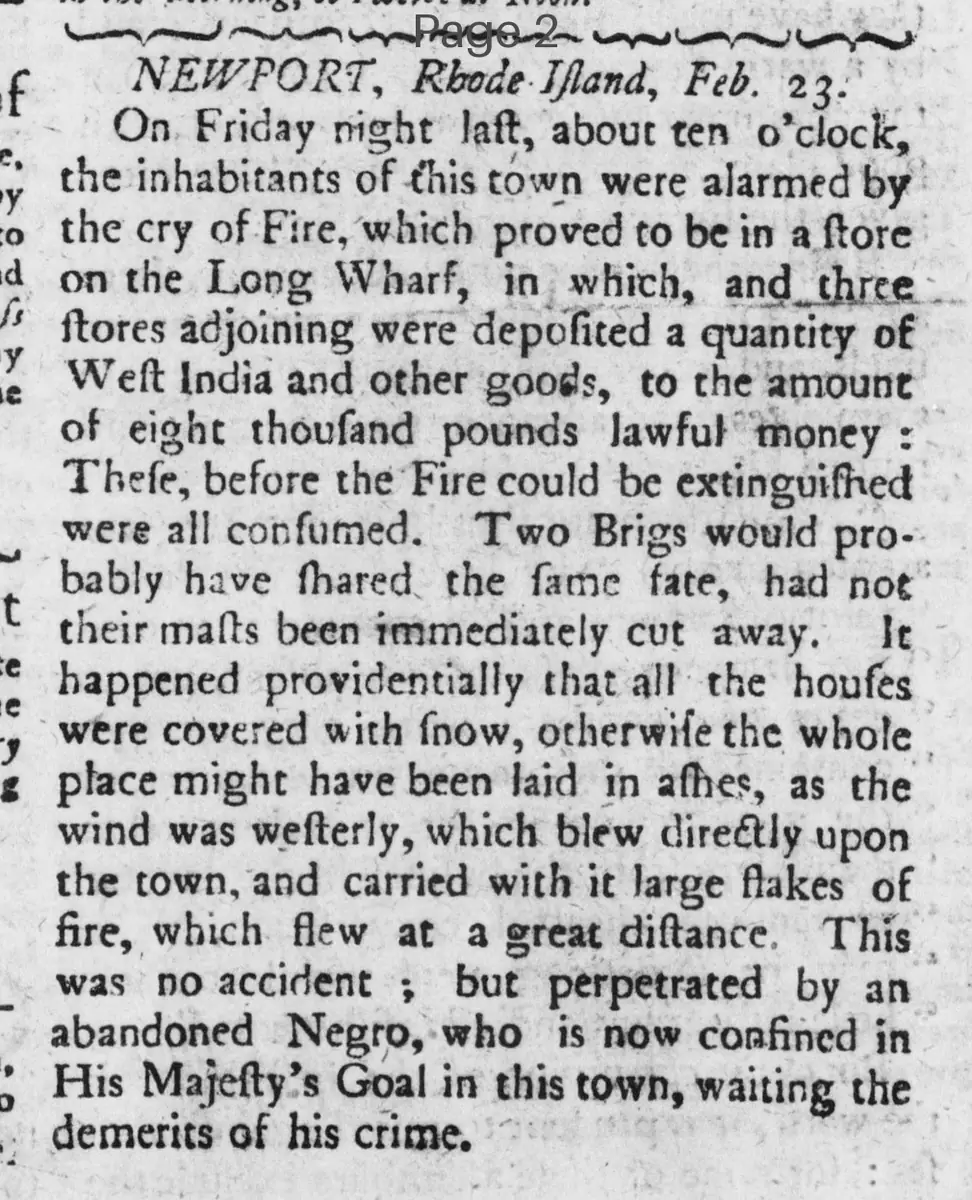
A fire on February 21 in Newport, Rhode Island, destroyed a store on Long Wharf and three adjoining ones, consuming goods worth 8,000 pounds. Arson by a Negro man, now confined. Two brigs saved; snow prevented wider spread.
Clipping
OCR Quality
Full Text
On Friday night last, about ten o'clock, the inhabitants of this town were alarmed by the cry of Fire, which proved to be in a store on the Long Wharf, in which, and three stores adjoining were deposited a quantity of West India and other goods, to the amount of eight thousand pounds lawful money: These, before the Fire could be extinguished were all consumed. Two Brigs would probably have shared the same fate, had not their masts been immediately cut away. It happened providentially that all the houses were covered with snow, otherwise the whole place might have been laid in ashes, as the wind was westerly, which blew directly upon the town, and carried with it large flakes of fire, which flew at a great distance. This was no accident; but perpetrated by an abandoned Negro, who is now confined in His Majesty's Gaol in this town, waiting the demerits of his crime.
What sub-type of article is it?
What keywords are associated?
What entities or persons were involved?
Where did it happen?
Domestic News Details
Primary Location
Newport, Rhode Island
Event Date
Friday Night Last
Key Persons
Outcome
stores and goods worth eight thousand pounds lawful money consumed; two brigs saved by cutting masts; perpetrator confined in his majesty's gaol
Event Details
Fire started about ten o'clock in a store on the Long Wharf, spread to three adjoining stores containing West India and other goods; wind carried fire flakes but snow on houses prevented total destruction