Thank you for visiting SNEWPapers!
Sign up free
Literary
November 28, 1925
Casper Daily Tribune
Casper, Natrona County, Wyoming
What is this article about?
Laurel attends a formal dinner as guest of honor, feeling out of place among sophisticated guests. She receives flirtatious attention from David Gaines, whose witty remarks unsettle her. Later, tired and criticized by her husband Noble, she expresses frustration in the car, leading to tension.
Clipping
OCR Quality
96%
Excellent
Full Text
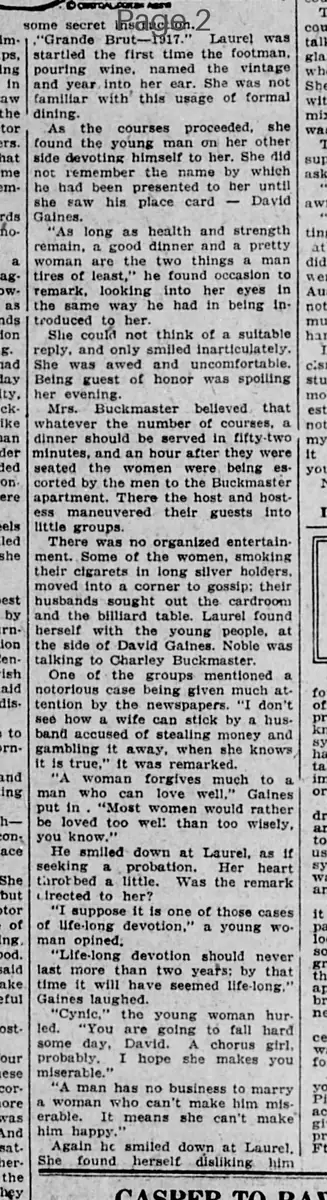
"Grande Brut—1917."
Laurel was startled the first time the footman, pouring wine, named the vintage and year into her ear. She was not familiar with this usage of formal dining.
As the courses proceeded, she found the young man on her other side devoting himself to her. She did not remember the name by which he had been presented to her until she saw his place card—David Gaines.
"As long as health and strength remain, a good dinner and a pretty woman are the two things a man tires of least," he found occasion to remark, looking into her eyes in the same way he had in being introduced to her.
She could not think of a suitable reply, and only smiled inarticulately. She was awed and uncomfortable. Being guest of honor was spoiling her evening.
Mrs. Buckmaster believed that whatever the number of courses, a dinner should be served in fifty-two minutes, and an hour after they were seated the women were being escorted by the men to the Buckmaster apartment. There the host and hostess maneuvered their guests into little groups.
There was no organized entertainment. Some of the women, smoking their cigarets in long silver holders, moved into a corner to gossip; their husbands sought out the cardroom and the billiard table. Laurel found herself with the young people, at the side of David Gaines. Noble was talking to Charley Buckmaster.
One of the groups mentioned a notorious case being given much attention by the newspapers. "I don't see how a wife can stick by a husband accused of stealing money and gambling it away, when she knows it is true," it was remarked.
"A woman forgives much to a man who can love well," Gaines put in. "Most women would rather be loved too well than too wisely, you know."
He smiled down at Laurel, as if seeking a probation. Her heart throbbed a little. Was the remark directed to her?
"I suppose it is one of those cases of life-long devotion," a young woman opined.
"Life-long devotion should never last more than two years; by that time it will have seemed life-long."
Gaines laughed.
"Cynic," the young woman hurled.
"You are going to fall hard some day, David. A chorus girl, probably. I hope she makes you miserable."
"A man has no business to marry a woman who can't make him miserable. It means she can't make him happy."
Again he smiled down at Laurel.
She found herself disliking him now. Evidently he thought very well of himself.
She was relieved when Noble joined her a moment later. She imagined she was appearing rather stupid to these people; that it was very plain she was from Central City or some such place. How blase and self-confident they were. She could think of nothing to say.
The evening dragged along. Laurel couldn't get interested in the small-talk, and she was annoyed by the glances David Gaines shot at her whenever he had the opportunity.
She was more comfortable when with the older matrons, or in a mixed group.
All the while she was afraid of making a slip.
They left at one o'clock. "Which supper club shall we go to?" Noble asked.
"I'd rather go to the hotel; I'm awfully tired."
"I imagine you are," he said patting her on the shoulder. "It was rather trying, I know. I think you did rather well, except that you were inclined to be a trifle too stiff. Austerity becomes the old boss, not the young one. And, dear, you must learn what to do with your hands."
Laurel was in no mood for criticism. She had a headache. It was stuffy in the interior of the automobile. She burst out: "Oh, dearest, for two weeks you've done nothing but criticize me. My clothes, my actions, my ideas! And you do it so—so patronizingly! I'm not your child; I'm your wife."
Noble grabbed her arm.
(To be continued.)
In the next instalment: A Crisis.
Laurel was startled the first time the footman, pouring wine, named the vintage and year into her ear. She was not familiar with this usage of formal dining.
As the courses proceeded, she found the young man on her other side devoting himself to her. She did not remember the name by which he had been presented to her until she saw his place card—David Gaines.
"As long as health and strength remain, a good dinner and a pretty woman are the two things a man tires of least," he found occasion to remark, looking into her eyes in the same way he had in being introduced to her.
She could not think of a suitable reply, and only smiled inarticulately. She was awed and uncomfortable. Being guest of honor was spoiling her evening.
Mrs. Buckmaster believed that whatever the number of courses, a dinner should be served in fifty-two minutes, and an hour after they were seated the women were being escorted by the men to the Buckmaster apartment. There the host and hostess maneuvered their guests into little groups.
There was no organized entertainment. Some of the women, smoking their cigarets in long silver holders, moved into a corner to gossip; their husbands sought out the cardroom and the billiard table. Laurel found herself with the young people, at the side of David Gaines. Noble was talking to Charley Buckmaster.
One of the groups mentioned a notorious case being given much attention by the newspapers. "I don't see how a wife can stick by a husband accused of stealing money and gambling it away, when she knows it is true," it was remarked.
"A woman forgives much to a man who can love well," Gaines put in. "Most women would rather be loved too well than too wisely, you know."
He smiled down at Laurel, as if seeking a probation. Her heart throbbed a little. Was the remark directed to her?
"I suppose it is one of those cases of life-long devotion," a young woman opined.
"Life-long devotion should never last more than two years; by that time it will have seemed life-long."
Gaines laughed.
"Cynic," the young woman hurled.
"You are going to fall hard some day, David. A chorus girl, probably. I hope she makes you miserable."
"A man has no business to marry a woman who can't make him miserable. It means she can't make him happy."
Again he smiled down at Laurel.
She found herself disliking him now. Evidently he thought very well of himself.
She was relieved when Noble joined her a moment later. She imagined she was appearing rather stupid to these people; that it was very plain she was from Central City or some such place. How blase and self-confident they were. She could think of nothing to say.
The evening dragged along. Laurel couldn't get interested in the small-talk, and she was annoyed by the glances David Gaines shot at her whenever he had the opportunity.
She was more comfortable when with the older matrons, or in a mixed group.
All the while she was afraid of making a slip.
They left at one o'clock. "Which supper club shall we go to?" Noble asked.
"I'd rather go to the hotel; I'm awfully tired."
"I imagine you are," he said patting her on the shoulder. "It was rather trying, I know. I think you did rather well, except that you were inclined to be a trifle too stiff. Austerity becomes the old boss, not the young one. And, dear, you must learn what to do with your hands."
Laurel was in no mood for criticism. She had a headache. It was stuffy in the interior of the automobile. She burst out: "Oh, dearest, for two weeks you've done nothing but criticize me. My clothes, my actions, my ideas! And you do it so—so patronizingly! I'm not your child; I'm your wife."
Noble grabbed her arm.
(To be continued.)
In the next instalment: A Crisis.
What sub-type of article is it?
Prose Fiction
What themes does it cover?
Social Manners
Love Romance
What keywords are associated?
Dinner Party
Social Etiquette
Flirtation
Marriage Criticism
Class Differences
Literary Details
Key Lines
"As Long As Health And Strength Remain, A Good Dinner And A Pretty Woman Are The Two Things A Man Tires Of Least,"
"A Woman Forgives Much To A Man Who Can Love Well," Gaines Put In. "Most Women Would Rather Be Loved Too Well Than Too Wisely, You Know."
"A Man Has No Business To Marry A Woman Who Can't Make Him Miserable. It Means She Can't Make Him Happy."