Thank you for visiting SNEWPapers!
Sign up free
Literary
June 20, 1829
New Hampshire Statesman And Concord Register
Concord, Merrimack County, New Hampshire
What is this article about?
This prose reflection on social virtue argues that life's happiness arises from kind affections, tender sympathies, mutual concessions, and forgiveness. It urges Christians to prioritize endearing themselves to others over fame, ensuring they are beloved and missed upon death.
Clipping
OCR Quality
95%
Excellent
Full Text
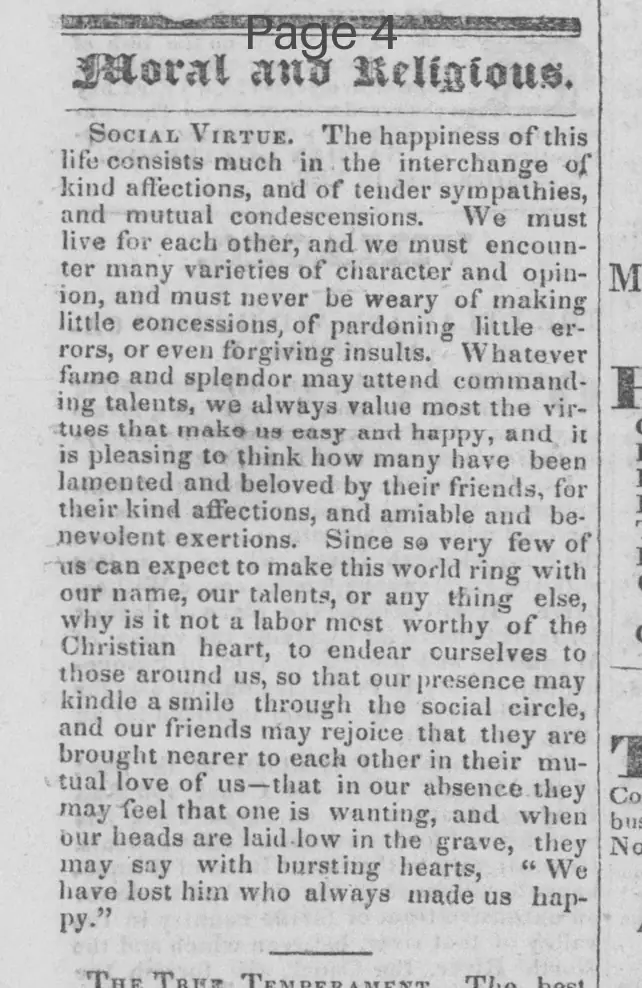
Moral and Religious.
SOCIAL VIRTUE. The happiness of this
life consists much in the interchange of
kind affections, and of tender sympathies,
and mutual condescensions. We must
live for each other, and we must encounter
many varieties of character and opinion,
and must never be weary of making
little concessions, of pardoning little errors,
or even forgiving insults. Whatever
fame and splendor may attend commanding
talents, we always value most the virtues
that make us easy and happy, and it
is pleasing to think how many have been
lamented and beloved by their friends, for
their kind affections, and amiable and benevolent
exertions. Since so very few of
us can expect to make this world ring with
our name, our talents, or any thing else,
why is it not a labor most worthy of the
Christian heart, to endear ourselves to
those around us, so that our presence may
kindle a smile through the social circle,
and our friends may rejoice that they are
brought nearer to each other in their mutual
love of us—that in our absence they
may feel that one is wanting, and when
our heads are laid low in the grave, they
may say with bursting hearts, "We
have lost him who always made us happy."
SOCIAL VIRTUE. The happiness of this
life consists much in the interchange of
kind affections, and of tender sympathies,
and mutual condescensions. We must
live for each other, and we must encounter
many varieties of character and opinion,
and must never be weary of making
little concessions, of pardoning little errors,
or even forgiving insults. Whatever
fame and splendor may attend commanding
talents, we always value most the virtues
that make us easy and happy, and it
is pleasing to think how many have been
lamented and beloved by their friends, for
their kind affections, and amiable and benevolent
exertions. Since so very few of
us can expect to make this world ring with
our name, our talents, or any thing else,
why is it not a labor most worthy of the
Christian heart, to endear ourselves to
those around us, so that our presence may
kindle a smile through the social circle,
and our friends may rejoice that they are
brought nearer to each other in their mutual
love of us—that in our absence they
may feel that one is wanting, and when
our heads are laid low in the grave, they
may say with bursting hearts, "We
have lost him who always made us happy."
What sub-type of article is it?
Essay
What themes does it cover?
Moral Virtue
Friendship
What keywords are associated?
Social Virtue
Kind Affections
Mutual Concessions
Christian Heart
Moral Instruction
Tender Sympathies
Benevolent Exertions
Literary Details
Title
Social Virtue
Subject
On Social Virtue And Christian Endearment
Key Lines
The Happiness Of This Life Consists Much In The Interchange Of Kind Affections, And Of Tender Sympathies, And Mutual Condescensions.
We Must Live For Each Other, And We Must Encounter Many Varieties Of Character And Opinion, And Must Never Be Weary Of Making Little Concessions, Of Pardoning Little Errors, Or Even Forgiving Insults.
Why Is It Not A Labor Most Worthy Of The Christian Heart, To Endear Ourselves To Those Around Us
Our Presence May Kindle A Smile Through The Social Circle
We Have Lost Him Who Always Made Us Happy.