Thank you for visiting SNEWPapers!
Sign up free
Literary
May 29, 1839
The Rhode Island Republican
Newport, Newport County, Rhode Island
What is this article about?
Biographical sketch from the Corsair on Lady Lytton Bulwer (née Wheeler), her romantic marriage to Edward Bulwer despite family opposition, their ongoing incompatibilities, her life with dogs, travels to Italy, and how these elements inspired her novel Cheveley, with satirical personal anecdotes.
Clipping
OCR Quality
95%
Excellent
Full Text
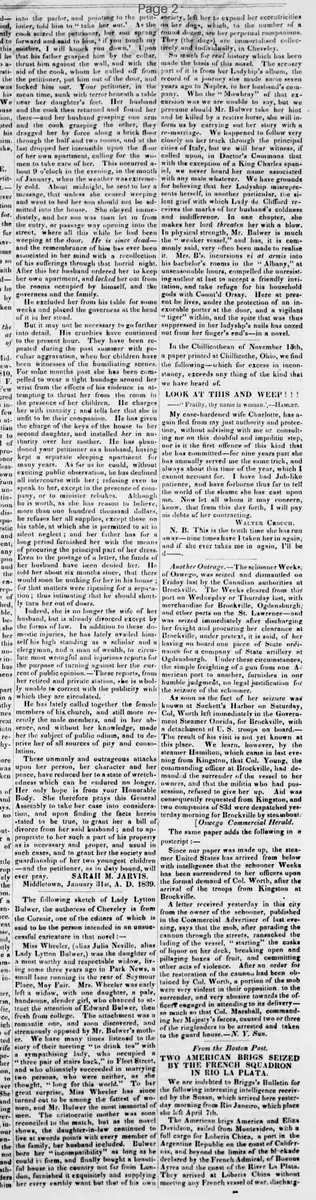
The following sketch of Lady Lytton Bulwer, the authoress of Cheveley is from the Corsair, one of the editors of which is said to be the person intended in an unsuccessful caricature in that novel:-
Miss Wheeler, (alias Julia Neville, alias Lady Lytton Bulwer.) was the daughter of a most worthy and respectable widow, living some three years ago in Park News, a small lane running in the rear of Seymour Place, May Fair. "Mrs. Wheeler was early left a widow, with one daughter, a pale, handsome, slender girl, who chanced to attract the attention of Edward Bulwer, then fresh from college. The attachment was a romantic one, and soon discovered, and strenuously opposed by Mr. Bulwer's mother. We have many times listened to the story of their meeting "to drink tea" with a sympathising lady, who occupied a "three pair of stairs back," in Fleet Street, and who ultimately succeeded in marrying two persons, who were neither, as she thought, "long for this world." To her great surprise, Miss Wheeler has since turned out to be among the fattest of women, and Mr. Bulwer the most immortal of men. The aristocratic mother was soon reconciled to the match, but as the novel shows, the daughter-in-law continued to live at swords points with every member of the family, her husband included. Bulwer bore her "incompatibility" as long as he could in form, and finally bought a beautiful house in the country not far from London, furnished it exquisitely and supplying her every earthly want but that of his own society, left her to expend her eccentricities on her dogs, which, to the number of a round dozen, are her perpetual companions. They (the dogs) are immortalised collectively and individually, in Cheveley.
So much for real history which has been made the basis of this novel. The scenery part of it is from her Ladyship's album, the record of a journey she made some seven years ago to Naples, in her husband's company. Who the "Mowbray" of that excursion was we are unable to say, but we presume should Mr. Bulwer take her hint and be killed by a restive horse, she will inform us by carrying out her story with a re-marriage. We happened to follow very closely on her track through the principal cities of Italy, but we will bear witness, if called upon, in Doctor's Commons that with the exception of a King Charles spaniel, we never heard her name associated with any male whatever. We have grounds for believing that her Ladyship misrepresents herself, in another particular, the silent grief with which Lady de Chiffonniere receives the marks of her husband's coldness and indifference. In one chapter, she makes her lord threaten her with a blow. In physical strength, Mr. Bulwer is much the "weaker vessel," and has, it is commonly said, very often been made to realise it. Mrs. B's. incursions vi et armis into his bachelor's rooms in the "Albany," at unseasonable hours, compelled the unresisting author at last to accept a friendly invitation, and take refuge for his household gods with Count d'Orsay. Here at present he lives, under the protection of an inexorable porter at the door, and a vigilant "tiger" within, and the spite that was thus suppressed in her ladyship's nails has oozed out from her finger's ends—in a novel.
Miss Wheeler, (alias Julia Neville, alias Lady Lytton Bulwer.) was the daughter of a most worthy and respectable widow, living some three years ago in Park News, a small lane running in the rear of Seymour Place, May Fair. "Mrs. Wheeler was early left a widow, with one daughter, a pale, handsome, slender girl, who chanced to attract the attention of Edward Bulwer, then fresh from college. The attachment was a romantic one, and soon discovered, and strenuously opposed by Mr. Bulwer's mother. We have many times listened to the story of their meeting "to drink tea" with a sympathising lady, who occupied a "three pair of stairs back," in Fleet Street, and who ultimately succeeded in marrying two persons, who were neither, as she thought, "long for this world." To her great surprise, Miss Wheeler has since turned out to be among the fattest of women, and Mr. Bulwer the most immortal of men. The aristocratic mother was soon reconciled to the match, but as the novel shows, the daughter-in-law continued to live at swords points with every member of the family, her husband included. Bulwer bore her "incompatibility" as long as he could in form, and finally bought a beautiful house in the country not far from London, furnished it exquisitely and supplying her every earthly want but that of his own society, left her to expend her eccentricities on her dogs, which, to the number of a round dozen, are her perpetual companions. They (the dogs) are immortalised collectively and individually, in Cheveley.
So much for real history which has been made the basis of this novel. The scenery part of it is from her Ladyship's album, the record of a journey she made some seven years ago to Naples, in her husband's company. Who the "Mowbray" of that excursion was we are unable to say, but we presume should Mr. Bulwer take her hint and be killed by a restive horse, she will inform us by carrying out her story with a re-marriage. We happened to follow very closely on her track through the principal cities of Italy, but we will bear witness, if called upon, in Doctor's Commons that with the exception of a King Charles spaniel, we never heard her name associated with any male whatever. We have grounds for believing that her Ladyship misrepresents herself, in another particular, the silent grief with which Lady de Chiffonniere receives the marks of her husband's coldness and indifference. In one chapter, she makes her lord threaten her with a blow. In physical strength, Mr. Bulwer is much the "weaker vessel," and has, it is commonly said, very often been made to realise it. Mrs. B's. incursions vi et armis into his bachelor's rooms in the "Albany," at unseasonable hours, compelled the unresisting author at last to accept a friendly invitation, and take refuge for his household gods with Count d'Orsay. Here at present he lives, under the protection of an inexorable porter at the door, and a vigilant "tiger" within, and the spite that was thus suppressed in her ladyship's nails has oozed out from her finger's ends—in a novel.
What sub-type of article is it?
Essay
Satire
What themes does it cover?
Social Manners
Love Romance
What keywords are associated?
Lady Lytton Bulwer
Edward Bulwer
Cheveley
Marriage Gossip
Dogs
Italy Travel
Incompatibility
What entities or persons were involved?
From The Corsair
Literary Details
Title
Sketch Of Lady Lytton Bulwer
Author
From The Corsair
Subject
Biographical Sketch Relating To The Authoress Of Cheveley
Key Lines
Miss Wheeler, (Alias Julia Neville, Alias Lady Lytton Bulwer.) Was The Daughter Of A Most Worthy And Respectable Widow, Living Some Three Years Ago In Park News, A Small Lane Running In The Rear Of Seymour Place, May Fair.
The Attachment Was A Romantic One, And Soon Discovered, And Strenuously Opposed By Mr. Bulwer's Mother.
Bulwer Bore Her "Incompatibility" As Long As He Could In Form, And Finally Bought A Beautiful House In The Country Not Far From London, Furnished It Exquisitely And Supplying Her Every Earthly Want But That Of His Own Society, Left Her To Expend Her Eccentricities On Her Dogs, Which, To The Number Of A Round Dozen, Are Her Perpetual Companions.
They (The Dogs) Are Immortalised Collectively And Individually, In Cheveley.
The Spite That Was Thus Suppressed In Her Ladyship's Nails Has Oozed Out From Her Finger's Ends—In A Novel.