Thank you for visiting SNEWPapers!
Sign up free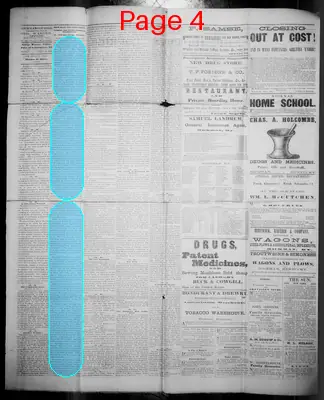
Editorial
July 12, 1878
The Hickman Courier
Hickman, Fulton County, Kentucky
What is this article about?
Editorial critiques the rising popularity of greenback advocate candidates Col. Turner and Judge Trimble amid post-war economic woes. It outlines their plan to replace U.S. bonds with greenbacks for relief, potential short-term prosperity, but warns of inflation, repudiation, and national dishonor, comparing to Confederate currency failure. Advocates taxing bonds instead.
Clipping

OCR Quality
95%
Excellent
Full Text
It cannot be denied that the financial teachings now being inculcated by Col. Turner and Judge Trimble, candidates for Congress, in this District, are taking great and widespread hold upon the people. The oppressive times, the utter stagnation of trade the ruinous depreciation in the value of lands, horses, stock, produce, and everything else, forces the people into that frame of mind, to listen to any suggestions and to eagerly grab at any possible remedy that promises relief. The condition of affairs is deplorable, business ruin stares every merchant in the face, and the bountiful earth no longer yields to the strong arm of husbandry a legitimate profit. The people want and deserve a remedy for these oppressive and burdensome ills. In the midst of this condition of affairs, Col. Turner and Judge Trimble, place the rag baby before the people as the political Messiah that is to work deliverance to the people.
The position of Turner and the position of Trimble are identical and the same, albeit they may dress the "babe" in different colors of oratory.
They each advocate the issue of all National bonds, substituting greenback money therefor, they each believe in wiping out all National banks and substituting greenback money for their circulating notes. They, neither, can know any stopping point in this wholesale work. Leaving aside the morality or legality of their programme, there can be no question, but that it would give instant relief to the people. There can be no question but that the whirr of industry would strike life and fire into every department of trade, that the values of land and produce would at once double itself, and that the thousands of now idle and unemployed mechanics and working people would at once find active and profitable work, and that new manufactories, and new railroads, and every kind of material and necessary improvements would spring forward with a bound. The millions and millions of dollars now sleeping in United States bonds would be compelled to find employment in home industries and home improvements and developments. This is true. All the money now invested in United States bonds, profiting no one but the owner, being converted into money would be bound to find employment that would pay some interest. Hence the country would be flooded with money, and we doubt not that great revival of trade and prosperity would result as pictured by these greenbackers, at least temporarily. This is one side--and their side of the picture.
The other side of this question is The honor of the United States is pledged to pay these bonds and the interest named. Citizens, and foreign their money in these element of our people believe the cause in which they were created--the war--makes these bonds a sacred debt. We, in the South, may not attach so much to this point, but they of the North, do. This is one point against the rag money idea.
Again, the substitution of green back money for all the outstanding United States bonds, might give the people too much money, and make it all a bad quality. We know the Southern Confederacy tried this, and printed and issued their money until it wasn't worth the paper it was printed on. We know that the value of everything went up and up, until a common straw hat sold for $100. We know that the people had their pockets full of this Confederate money, but it was worthless. We know the same value will attach to United States greenbacks if issued to this immense extent.
But Judge Trimble and Col. Turner say, that they propose to stop with the issue of $500,000 or $800,000 more money than now is in circulation. If however, it is morally and legally right to take up this amount, it is morally and legally right to take up the whole debt. Men won't agree where to stop, and hence when the people demand their plan or principle they must go clear through, and wipe out all United States bonds.
Judge Trimble sounds the true key note to the movement, when at Cayce Station last Saturday he exclaimed, "One breath of the American people can wipe these bonds from existence." This means repudiation. We doubt not, but that at heart, both Trimble and Turner, are in favor of repudiating the whole national debt.
Be this as it may, the ideas being disseminated, are taking root in the minds of the people. The people want relief--they need relief--they must have relief. In this temper they grab at the glitter of even a temporary prosperity, and trust the probability of reaction to the fates. The people are ground down--they are going to burst loose--they don't want to dishonor the pledge of their Government--but they want to free themselves of burden and impending bankruptcy. They see all their property, of every description going down, down, down, and only bonds going up in value. They see all their property taxed and taxed, and only bonds exempt from tax. This appears, as it is, unjust and unequal. They feel that the bond holder should be made to pay taxes on his bonds, precisely as the citizen pays taxes on all other property. This is true--all true--and it is stirring the people everywhere.
The picture of repudiation is dark and dangerous. It looks wrong to depreciate a man's property because it happens to be in United States bonds, but, on the other hand it looks wrong to depreciate land, corn, cotton, tobacco, and everything else, that the value of bonds should be upheld. If the United States Government can repudiate its debt, upon the same principle the States, the counties, the towns, and individuals, would be justified in doing the same thing! What a dangerous example therefore, and where would it stop? Destroy all confidence in greenback money, by over issue, precisely as it was with Confederate money, and what will the people do for a paper money? There. True, the bonds, and the contract making them payable in gold was a great swindle. The necessities of the Government may have justified the swindle, precisely as the necessities of the people may justify their repudiation. But, honesty is the best policy. Tax these bonds, and the owners will be glad to convert them into other property. If the bond holders won't submit--they will have to take worse. These bonds will never be paid dollar for dollar.
The position of Turner and the position of Trimble are identical and the same, albeit they may dress the "babe" in different colors of oratory.
They each advocate the issue of all National bonds, substituting greenback money therefor, they each believe in wiping out all National banks and substituting greenback money for their circulating notes. They, neither, can know any stopping point in this wholesale work. Leaving aside the morality or legality of their programme, there can be no question, but that it would give instant relief to the people. There can be no question but that the whirr of industry would strike life and fire into every department of trade, that the values of land and produce would at once double itself, and that the thousands of now idle and unemployed mechanics and working people would at once find active and profitable work, and that new manufactories, and new railroads, and every kind of material and necessary improvements would spring forward with a bound. The millions and millions of dollars now sleeping in United States bonds would be compelled to find employment in home industries and home improvements and developments. This is true. All the money now invested in United States bonds, profiting no one but the owner, being converted into money would be bound to find employment that would pay some interest. Hence the country would be flooded with money, and we doubt not that great revival of trade and prosperity would result as pictured by these greenbackers, at least temporarily. This is one side--and their side of the picture.
The other side of this question is The honor of the United States is pledged to pay these bonds and the interest named. Citizens, and foreign their money in these element of our people believe the cause in which they were created--the war--makes these bonds a sacred debt. We, in the South, may not attach so much to this point, but they of the North, do. This is one point against the rag money idea.
Again, the substitution of green back money for all the outstanding United States bonds, might give the people too much money, and make it all a bad quality. We know the Southern Confederacy tried this, and printed and issued their money until it wasn't worth the paper it was printed on. We know that the value of everything went up and up, until a common straw hat sold for $100. We know that the people had their pockets full of this Confederate money, but it was worthless. We know the same value will attach to United States greenbacks if issued to this immense extent.
But Judge Trimble and Col. Turner say, that they propose to stop with the issue of $500,000 or $800,000 more money than now is in circulation. If however, it is morally and legally right to take up this amount, it is morally and legally right to take up the whole debt. Men won't agree where to stop, and hence when the people demand their plan or principle they must go clear through, and wipe out all United States bonds.
Judge Trimble sounds the true key note to the movement, when at Cayce Station last Saturday he exclaimed, "One breath of the American people can wipe these bonds from existence." This means repudiation. We doubt not, but that at heart, both Trimble and Turner, are in favor of repudiating the whole national debt.
Be this as it may, the ideas being disseminated, are taking root in the minds of the people. The people want relief--they need relief--they must have relief. In this temper they grab at the glitter of even a temporary prosperity, and trust the probability of reaction to the fates. The people are ground down--they are going to burst loose--they don't want to dishonor the pledge of their Government--but they want to free themselves of burden and impending bankruptcy. They see all their property, of every description going down, down, down, and only bonds going up in value. They see all their property taxed and taxed, and only bonds exempt from tax. This appears, as it is, unjust and unequal. They feel that the bond holder should be made to pay taxes on his bonds, precisely as the citizen pays taxes on all other property. This is true--all true--and it is stirring the people everywhere.
The picture of repudiation is dark and dangerous. It looks wrong to depreciate a man's property because it happens to be in United States bonds, but, on the other hand it looks wrong to depreciate land, corn, cotton, tobacco, and everything else, that the value of bonds should be upheld. If the United States Government can repudiate its debt, upon the same principle the States, the counties, the towns, and individuals, would be justified in doing the same thing! What a dangerous example therefore, and where would it stop? Destroy all confidence in greenback money, by over issue, precisely as it was with Confederate money, and what will the people do for a paper money? There. True, the bonds, and the contract making them payable in gold was a great swindle. The necessities of the Government may have justified the swindle, precisely as the necessities of the people may justify their repudiation. But, honesty is the best policy. Tax these bonds, and the owners will be glad to convert them into other property. If the bond holders won't submit--they will have to take worse. These bonds will never be paid dollar for dollar.
What sub-type of article is it?
Economic Policy
Taxation
Partisan Politics
What keywords are associated?
Greenback Money
National Bonds
Economic Hardship
Repudiation
Inflation
Taxation Of Bonds
Turner And Trimble
What entities or persons were involved?
Col. Turner
Judge Trimble
Bond Holders
American People
Southern Confederacy
Editorial Details
Primary Topic
Greenback Policy And Bond Repudiation
Stance / Tone
Critical Of Repudiation With Acknowledgment Of Economic Desperation
Key Figures
Col. Turner
Judge Trimble
Bond Holders
American People
Southern Confederacy
Key Arguments
Greenback Issuance Would Provide Instant Relief And Revive Trade
Substitution Would Flood Country With Money, Boosting Industries Temporarily
U.S. Honor Pledged To Pay Bonds, Seen As Sacred Debt Especially In North
Over Issuance Risks Inflation And Worthlessness Like Confederate Money
Proposals Lead To Full Repudiation Of National Debt
Tax Bonds Equally To Other Property To Address Injustice