Thank you for visiting SNEWPapers!
Sign up free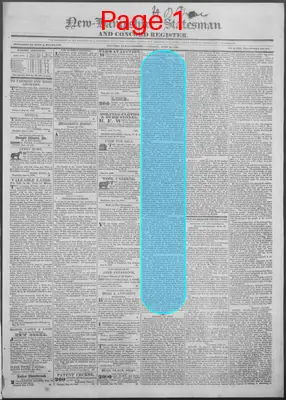
Editorial
June 26, 1830
New Hampshire Statesman And Concord Register
Concord, Merrimack County, New Hampshire
What is this article about?
Editorial from Fredericktown Political Examiner criticizes President Jackson's veto of appropriation for Washington and Frederick turnpike, accusing him of duplicity, insincerity on national debt, and unconstitutional opposition to internal improvements, contrasting with his support for Indian removal.
Clipping

OCR Quality
98%
Excellent
Full Text
MISCELLANEOUS.
From the Fredericktown, Md. Political Examiner
Our Road—The President's Veto. Internal Improvement. After long delay and much tedious procrastination, the bill for an appropriation to the Washington and Frederick turnpike had passed both Houses, and we were felicitating ourselves upon its soon becoming a law. That the President would refuse to sanction it, was not even supposed by any one; for, independent of other reasons, he had distinctly pledged himself to respectable gentlemen of this place, not to withhold his signature, if it were passed by both Houses. To what shall we ascribe this unmanly duplicity? Is it because he supposed that the lobby interest of himself and partizans would prevent the dreadful dilemma of being forced to act on that bill; and that a few honied phrases might be thrown away to "keep up the trick" on his tariff friends, without being held responsible for them? Is it because he calculated that the out door interest which he had used so successfully in defeating the appropriation for the Baltimore and Ohio Rail Road would extricate him? We believe so. He "reckoned, however, without his host." The bill was brought to him and he was forced to act. He rejected it, and referred to the message on refusing to sign the appropriation for the Maysville and Lexington turnpike, for a statement of his objections to it.
Those objections are contained under three heads: 1st. the want of nationality in the Lexington turnpike. Even admitting this to be true of that road, it would not apply to the Frederick road. This is a continuation of the great Cumberland road, familiarly called National, and has, we believe, been always considered of "general, not local—of national—not State benefit." It originated in Jefferson's administration, and has received the sanction of every Congress, and of every administration since then.
2d. The necessity of paying off the National Debt, and the fear lest the number of appropriations might exceed the receipts of the Treasury. This is a popular topic, and we are not surprised at his mounting this electioneering hobby. In truth, the whole message is an artful electioneering document, assuming positions in favor of internal improvements, and arguing directly against those positions. He calls himself a friend of internal improvements, to please those who advocate that policy—and argues against that acknowledgment to please the South. Let us now examine the validity of his objection, and test its sincerity. In our years, said he, we have the pleasing anticipation that the National Debt will be paid off. Of what consequence is it that the debt should be paid in four or five years? All the appropriations which were asked for would not have delayed it a year. What difference will one year make, when the country is rapidly progressing in internal improvements? The President had no solicitude about the National Debt when he recommended the removal of the Indians, though it is demonstrated that that act of legislative injustice will cost the government at least 24,000,000 DOLLARS!!! of which $500,000 have already been appropriated as an entering wedge. This, too, is to please the South, and is regarded as the darling project of the President. The supporters of the administration were privately and publicly entreated to support this bill, and Mr. Lewis of Alabama, publicly declared on the floor of the House, those Jacksonians to be "traitors" to the party, who should not support it!
We will test still farther his sincerity. After having put the country to an expense of several hundred thousand dollars, by recalling our ablest foreign ministers, to reward his most violent partizans, he talks of the necessity of paying off the National Debt, the moment a scheme of internal improvement is mentioned!! Had he left in office only three of our able and faithful ministers—had he not recalled Barbour, the friend of Jefferson, to reward McLean, his zealous opponent—Harrison, the statesman and warrior, even before he had arrived at his station, to reward "Free Tom Moore," for franking the Telegraph and sending it through the country—and the accomplished Middleton to reward John Randolph, a man "every thing by starts and nothing long"—sufficient money would have been saved to pay for this road.
We will now examine his 3d and last objection. This, like the postscript of a lady's letter, contains, we believe, his true reason. He is opposed to internal improvement in its present form, upon the ground it is unconstitutional. Mark the admission. Now he has unmasked himself the foe of internal improvement—the opponent of the American System. After having duped those States friendly to that policy in our government, by "judicious" phrases, he has at last been compelled to act on his own responsibility. It is well recollected by all of our readers, that here, as well as in Pennsylvania, Ohio, and other Western States, he was repeatedly charged with hostility to the true policy of our government. But it could not be distinctly proved, and the friends of the Tariff in those States electioneered for him on the ground of his supposed friendship for improvements. He suffered them to proceed in this belief: he did not check their zeal, though all the while he was deeply committing himself to Southern politicians. "The result of this duplicity is evident. He received the votes of the Western States, because he was supposed to be in favor of the Tariff and Improvements. He received the votes of the South, as "a President of Southern feelings."
From the Fredericktown, Md. Political Examiner
Our Road—The President's Veto. Internal Improvement. After long delay and much tedious procrastination, the bill for an appropriation to the Washington and Frederick turnpike had passed both Houses, and we were felicitating ourselves upon its soon becoming a law. That the President would refuse to sanction it, was not even supposed by any one; for, independent of other reasons, he had distinctly pledged himself to respectable gentlemen of this place, not to withhold his signature, if it were passed by both Houses. To what shall we ascribe this unmanly duplicity? Is it because he supposed that the lobby interest of himself and partizans would prevent the dreadful dilemma of being forced to act on that bill; and that a few honied phrases might be thrown away to "keep up the trick" on his tariff friends, without being held responsible for them? Is it because he calculated that the out door interest which he had used so successfully in defeating the appropriation for the Baltimore and Ohio Rail Road would extricate him? We believe so. He "reckoned, however, without his host." The bill was brought to him and he was forced to act. He rejected it, and referred to the message on refusing to sign the appropriation for the Maysville and Lexington turnpike, for a statement of his objections to it.
Those objections are contained under three heads: 1st. the want of nationality in the Lexington turnpike. Even admitting this to be true of that road, it would not apply to the Frederick road. This is a continuation of the great Cumberland road, familiarly called National, and has, we believe, been always considered of "general, not local—of national—not State benefit." It originated in Jefferson's administration, and has received the sanction of every Congress, and of every administration since then.
2d. The necessity of paying off the National Debt, and the fear lest the number of appropriations might exceed the receipts of the Treasury. This is a popular topic, and we are not surprised at his mounting this electioneering hobby. In truth, the whole message is an artful electioneering document, assuming positions in favor of internal improvements, and arguing directly against those positions. He calls himself a friend of internal improvements, to please those who advocate that policy—and argues against that acknowledgment to please the South. Let us now examine the validity of his objection, and test its sincerity. In our years, said he, we have the pleasing anticipation that the National Debt will be paid off. Of what consequence is it that the debt should be paid in four or five years? All the appropriations which were asked for would not have delayed it a year. What difference will one year make, when the country is rapidly progressing in internal improvements? The President had no solicitude about the National Debt when he recommended the removal of the Indians, though it is demonstrated that that act of legislative injustice will cost the government at least 24,000,000 DOLLARS!!! of which $500,000 have already been appropriated as an entering wedge. This, too, is to please the South, and is regarded as the darling project of the President. The supporters of the administration were privately and publicly entreated to support this bill, and Mr. Lewis of Alabama, publicly declared on the floor of the House, those Jacksonians to be "traitors" to the party, who should not support it!
We will test still farther his sincerity. After having put the country to an expense of several hundred thousand dollars, by recalling our ablest foreign ministers, to reward his most violent partizans, he talks of the necessity of paying off the National Debt, the moment a scheme of internal improvement is mentioned!! Had he left in office only three of our able and faithful ministers—had he not recalled Barbour, the friend of Jefferson, to reward McLean, his zealous opponent—Harrison, the statesman and warrior, even before he had arrived at his station, to reward "Free Tom Moore," for franking the Telegraph and sending it through the country—and the accomplished Middleton to reward John Randolph, a man "every thing by starts and nothing long"—sufficient money would have been saved to pay for this road.
We will now examine his 3d and last objection. This, like the postscript of a lady's letter, contains, we believe, his true reason. He is opposed to internal improvement in its present form, upon the ground it is unconstitutional. Mark the admission. Now he has unmasked himself the foe of internal improvement—the opponent of the American System. After having duped those States friendly to that policy in our government, by "judicious" phrases, he has at last been compelled to act on his own responsibility. It is well recollected by all of our readers, that here, as well as in Pennsylvania, Ohio, and other Western States, he was repeatedly charged with hostility to the true policy of our government. But it could not be distinctly proved, and the friends of the Tariff in those States electioneered for him on the ground of his supposed friendship for improvements. He suffered them to proceed in this belief: he did not check their zeal, though all the while he was deeply committing himself to Southern politicians. "The result of this duplicity is evident. He received the votes of the Western States, because he was supposed to be in favor of the Tariff and Improvements. He received the votes of the South, as "a President of Southern feelings."
What sub-type of article is it?
Infrastructure
Partisan Politics
Constitutional
What keywords are associated?
Internal Improvements
Presidential Veto
National Road
Constitutional Objection
Indian Removal
National Debt
Partisan Duplicity
What entities or persons were involved?
President Jackson
Jefferson
Mr. Lewis Of Alabama
Barbour
Mclean
Harrison
Middleton
John Randolph
Editorial Details
Primary Topic
President's Veto Of Washington And Frederick Turnpike Appropriation
Stance / Tone
Strongly Critical Of Presidential Duplicity And Opposition To Internal Improvements
Key Figures
President Jackson
Jefferson
Mr. Lewis Of Alabama
Barbour
Mclean
Harrison
Middleton
John Randolph
Key Arguments
President Pledged Support But Vetoed Bill Due To Duplicity
Frederick Road Is National Continuation Of Cumberland Road, Not Local
National Debt Objection Insincere Given Support For Costly Indian Removal
Recalling Ministers Wasted Money That Could Fund Road
True Objection Is Unconstitutional Opposition To Internal Improvements
Electioneering Duped Western States Into Supporting Him