Thank you for visiting SNEWPapers!
Sign up free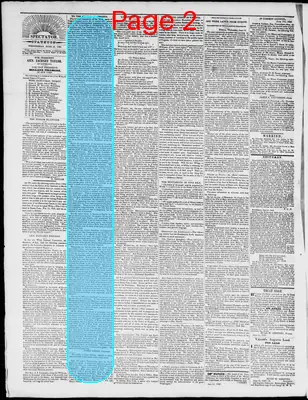
Editorial
June 21, 1848
Staunton Spectator, And General Advertiser
Staunton, Virginia
What is this article about?
The Central Committee of the Whig Party in Virginia appeals for support of Zachary Taylor for President and Millard Fillmore for Vice President in the 1848 election, praising Taylor's patriotism, military valor, independence from party politics, and rejection of the spoils system, while criticizing Democratic opponents' hypocrisy in nominating military figures themselves.
Clipping

OCR Quality
98%
Excellent
Full Text
TO THE PEOPLE OF VIRGINIA.
The Central Committee of the Whig party of Virginia, appeal to you for a cordial and zealous support of the distinguished nominees presented to you, by the Convention in Philadelphia, for the Presidency and Vice Presidency of the U. States.
Of General Taylor, much eulogy is unnecessary, and good taste would hardly tolerate it. Without fear and above reproach, he stands before his country upon the proudest eminence, and brightest page of modern history—no "dishonoring blot" stains his escutcheon—ambitious only of the patriot's just renown—for faithful service to his country wherever she called, and prompt obedience to her laws, he has asked, and now asks nothing for himself. As he met her enemies, and with his gallant comrades, conquered them, because she commanded him, so now at her command he turns his sword into a pruninghook, and prepares to enter upon the less exciting, but not less arduous duties of peace and civil life—and we feel the most entire confidence that his service there will give us as much satisfaction as it has done in the field and in the camp, certainly it will be marked by the same lofty patriotism, self-sacrificing fidelity, firmness and modesty which have characterized him heretofore, amid the toils of the march and the tedium of the camp—on the eve of battle, and in the moment of victory.
Danger has brought with it no terror to him, and victory no boastful spirit; with the enemy before him his thoughts have been of duty and his country. The triumphs of his arms have been the conquests of the nation.
But it is not as the successful soldier merely that we present General Taylor to you, and solicit for him your support; but because in the soldier we behold the devoted and self-sacrificing patriot—because in the toils, perils and privations of the army—in the hour of battle, and when flushed with conquest, he has evinced the calmness, self-control, courage, good sense, and moderation, which always mark the man who is fit to govern, and elevate him above the vicissitudes of fortune.
Turning from his military position to that which he now occupies, our admiration for him is increased. His attitude is lofty in the extreme. Importuned by his countrymen to take the helm of State, his reply is marked by the modesty which attends true courage, and the self-distrust which characterizes the wise man, and at the same time by a sternness and independence of which none but the honest and patriotic are capable.
Ready to serve his country whenever she calls him, he spurns the trammels of party, and refuses to become the tool of intriguers. The approbation of his country and his conscience, not the praise of a faction, is the reward he seeks, and he scorns to be the President of a party, unless that party coincides with his country. In the spirit of the Constitution, and after the example of Washington, he is content only to be President of the nation.
When the approbation of the country is avidity for office, and spoil and patronage are the great administration qualities, Gen. Taylor declines power and the profit of office when offered at the price of party subserviency. The lamented Lowndes in the spirit of a patriot, and with a just perception of the dignity of the station, to which his countrymen would have called him, declared that "the office was one too elevated to be sought or declined."
The national heart responded to the sentiment, and the people embalmed it in their memories. The conduct of Taylor exemplifies the maxim of Lowndes. Spurning the maxim, that "to the victors belong the spoils," he comes into office, if at all, to serve his country, not to reward friends or punish enemies—in his own language, "with no enemies to punish, and nothing to serve but his country."
Honesty, ability, and patriotism, will be the qualifications for office which he will require, and all who possess them will be equally entitled to the honor or profit of serving their country.
His enemies, your adversaries, affect to sneer at and denounce his election as an evil, because they say he is a mere soldier, a military man without other qualification. This is as strange as it is unjust, in a party who present two soldiers—two military men—as their candidates for the first offices of the nation. If to be excused for this injustice, it can only be by supposing that their "manifest destiny" has made them do what their judgment and patriotism condemns. There is to us something new and not altogether comprehensible in the idea that the election of one military man is dangerous, but the election of two is harmless.
But the sneer which is thrown at Taylor is in fact an insult intended for the people; for the people have called upon Taylor, and summoned him from the field of glory to serve them at home,—not as Power, maddened by party spirit, has brought back the gallant and glorious Scott from the scene of his triumphs and the field of his fame, to humble and wound him.
The insult we repeat, therefore, is designed for the people, and like almost every wrong which has been done them, it is offered in the name of the people by those who wear the people's badge, and profess to love them better even than power. Believe them not, fellow-citizens. They offend you in the name of the people, because they seek power, and by that title only can they obtain it.
The people are not the fools they would have you believe them, who tell you that it is well to have two Generals on their ticket, and monstrous to put one on ours—who tell you that Taylor is ignorant, incompetent, unfit, a mere soldier, selected for military fame. It is not so. It marks the quality of the man, and the discernment of the people, that military glare and gold lace could not conceal or blind the people to the illustrious qualities and high civic virtues of General Taylor. Despite the military glare, and underneath the old brown coat, ragged with bullet holes, in the war-worn veteran the people saw courage, honor, patriotism, patience, modesty, self-control and good sense. They saw that fear could not subdue, and victory did not elate him. They saw that he felt that his just reliance was upon God and his country—not himself—and they called him to a new field of service and duty, and we appeal to you to ratify their judgment.
That Gen. Taylor's opinions are those of a patriot and republican, is shown by his letter to Capt. Allison, to which we invite your attention. Every sentiment of it is worthy to be engraved—and we annex it.*
The cry of "Military Chieftain" is not new, nor are the uses of it unknown. It was raised against Washington, Jackson and Harrison—against Caesar and Alexander, Frederick and Napoleon, though among them were the first statesmen of the world, and the man, who, above all men, was the first in the hearts of his countrymen.
Of Mr. Fillmore we deem it necessary only to state that he is one of the most gifted of the sons of the Empire State: known throughout the land by the ability with which he discharged the duties of Chairman of the Committee of Ways and Means in Congress, and now filling, by an overwhelming vote of the people of New York, one of the most important offices in the State. Self-taught and self-created, by the aid of the people, he has risen to a high station in the respect of his countrymen.
He comes before you under no military glare—in the garb of a civilian experienced in public affairs. His enemies will denounce him. They will say that he favored the industry of his own country more than that of any other, and voted to protect it. Will Americans consider that as singular? They will say that he is an abolitionist. We disbelieve it, because he is a man of sense and a patriot.
By order of the Committee,
JAMES LYONS, Chairman.
*The letter to Capt. Allison, alluded to above, was published in this paper a few weeks since.
Gen. Taylor's Principles, says the North American, seem to trouble our opponents greatly. We think they are sufficiently prominent to suit everybody. Here is a cluster of them: "I am a WHIG."—Palo Alto, May 8, 1846. "Had I voted in 1844, I should have voted for Henry CLAY."—Resaca de la Palma, May 9, 1846. If elected he will administer the government as did George Washington—Monterey—Buena Vista—and to oblige Secretary Marcy we will add Aesop's Fables.
The Central Committee of the Whig party of Virginia, appeal to you for a cordial and zealous support of the distinguished nominees presented to you, by the Convention in Philadelphia, for the Presidency and Vice Presidency of the U. States.
Of General Taylor, much eulogy is unnecessary, and good taste would hardly tolerate it. Without fear and above reproach, he stands before his country upon the proudest eminence, and brightest page of modern history—no "dishonoring blot" stains his escutcheon—ambitious only of the patriot's just renown—for faithful service to his country wherever she called, and prompt obedience to her laws, he has asked, and now asks nothing for himself. As he met her enemies, and with his gallant comrades, conquered them, because she commanded him, so now at her command he turns his sword into a pruninghook, and prepares to enter upon the less exciting, but not less arduous duties of peace and civil life—and we feel the most entire confidence that his service there will give us as much satisfaction as it has done in the field and in the camp, certainly it will be marked by the same lofty patriotism, self-sacrificing fidelity, firmness and modesty which have characterized him heretofore, amid the toils of the march and the tedium of the camp—on the eve of battle, and in the moment of victory.
Danger has brought with it no terror to him, and victory no boastful spirit; with the enemy before him his thoughts have been of duty and his country. The triumphs of his arms have been the conquests of the nation.
But it is not as the successful soldier merely that we present General Taylor to you, and solicit for him your support; but because in the soldier we behold the devoted and self-sacrificing patriot—because in the toils, perils and privations of the army—in the hour of battle, and when flushed with conquest, he has evinced the calmness, self-control, courage, good sense, and moderation, which always mark the man who is fit to govern, and elevate him above the vicissitudes of fortune.
Turning from his military position to that which he now occupies, our admiration for him is increased. His attitude is lofty in the extreme. Importuned by his countrymen to take the helm of State, his reply is marked by the modesty which attends true courage, and the self-distrust which characterizes the wise man, and at the same time by a sternness and independence of which none but the honest and patriotic are capable.
Ready to serve his country whenever she calls him, he spurns the trammels of party, and refuses to become the tool of intriguers. The approbation of his country and his conscience, not the praise of a faction, is the reward he seeks, and he scorns to be the President of a party, unless that party coincides with his country. In the spirit of the Constitution, and after the example of Washington, he is content only to be President of the nation.
When the approbation of the country is avidity for office, and spoil and patronage are the great administration qualities, Gen. Taylor declines power and the profit of office when offered at the price of party subserviency. The lamented Lowndes in the spirit of a patriot, and with a just perception of the dignity of the station, to which his countrymen would have called him, declared that "the office was one too elevated to be sought or declined."
The national heart responded to the sentiment, and the people embalmed it in their memories. The conduct of Taylor exemplifies the maxim of Lowndes. Spurning the maxim, that "to the victors belong the spoils," he comes into office, if at all, to serve his country, not to reward friends or punish enemies—in his own language, "with no enemies to punish, and nothing to serve but his country."
Honesty, ability, and patriotism, will be the qualifications for office which he will require, and all who possess them will be equally entitled to the honor or profit of serving their country.
His enemies, your adversaries, affect to sneer at and denounce his election as an evil, because they say he is a mere soldier, a military man without other qualification. This is as strange as it is unjust, in a party who present two soldiers—two military men—as their candidates for the first offices of the nation. If to be excused for this injustice, it can only be by supposing that their "manifest destiny" has made them do what their judgment and patriotism condemns. There is to us something new and not altogether comprehensible in the idea that the election of one military man is dangerous, but the election of two is harmless.
But the sneer which is thrown at Taylor is in fact an insult intended for the people; for the people have called upon Taylor, and summoned him from the field of glory to serve them at home,—not as Power, maddened by party spirit, has brought back the gallant and glorious Scott from the scene of his triumphs and the field of his fame, to humble and wound him.
The insult we repeat, therefore, is designed for the people, and like almost every wrong which has been done them, it is offered in the name of the people by those who wear the people's badge, and profess to love them better even than power. Believe them not, fellow-citizens. They offend you in the name of the people, because they seek power, and by that title only can they obtain it.
The people are not the fools they would have you believe them, who tell you that it is well to have two Generals on their ticket, and monstrous to put one on ours—who tell you that Taylor is ignorant, incompetent, unfit, a mere soldier, selected for military fame. It is not so. It marks the quality of the man, and the discernment of the people, that military glare and gold lace could not conceal or blind the people to the illustrious qualities and high civic virtues of General Taylor. Despite the military glare, and underneath the old brown coat, ragged with bullet holes, in the war-worn veteran the people saw courage, honor, patriotism, patience, modesty, self-control and good sense. They saw that fear could not subdue, and victory did not elate him. They saw that he felt that his just reliance was upon God and his country—not himself—and they called him to a new field of service and duty, and we appeal to you to ratify their judgment.
That Gen. Taylor's opinions are those of a patriot and republican, is shown by his letter to Capt. Allison, to which we invite your attention. Every sentiment of it is worthy to be engraved—and we annex it.*
The cry of "Military Chieftain" is not new, nor are the uses of it unknown. It was raised against Washington, Jackson and Harrison—against Caesar and Alexander, Frederick and Napoleon, though among them were the first statesmen of the world, and the man, who, above all men, was the first in the hearts of his countrymen.
Of Mr. Fillmore we deem it necessary only to state that he is one of the most gifted of the sons of the Empire State: known throughout the land by the ability with which he discharged the duties of Chairman of the Committee of Ways and Means in Congress, and now filling, by an overwhelming vote of the people of New York, one of the most important offices in the State. Self-taught and self-created, by the aid of the people, he has risen to a high station in the respect of his countrymen.
He comes before you under no military glare—in the garb of a civilian experienced in public affairs. His enemies will denounce him. They will say that he favored the industry of his own country more than that of any other, and voted to protect it. Will Americans consider that as singular? They will say that he is an abolitionist. We disbelieve it, because he is a man of sense and a patriot.
By order of the Committee,
JAMES LYONS, Chairman.
*The letter to Capt. Allison, alluded to above, was published in this paper a few weeks since.
Gen. Taylor's Principles, says the North American, seem to trouble our opponents greatly. We think they are sufficiently prominent to suit everybody. Here is a cluster of them: "I am a WHIG."—Palo Alto, May 8, 1846. "Had I voted in 1844, I should have voted for Henry CLAY."—Resaca de la Palma, May 9, 1846. If elected he will administer the government as did George Washington—Monterey—Buena Vista—and to oblige Secretary Marcy we will add Aesop's Fables.
What sub-type of article is it?
Partisan Politics
What keywords are associated?
Whig Party
Zachary Taylor
Millard Fillmore
1848 Election
Presidential Nomination
Military Hero
Patriotism
Spoils System
Protective Tariff
What entities or persons were involved?
General Taylor
Mr. Fillmore
Whig Party
Central Committee Of Virginia
James Lyons
Washington
Lowndes
Capt. Allison
Henry Clay
Scott
Marcy
Editorial Details
Primary Topic
Support For Zachary Taylor And Millard Fillmore In 1848 Presidential Election
Stance / Tone
Strongly Supportive Of Whig Candidates, Critical Of Democratic Opponents
Key Figures
General Taylor
Mr. Fillmore
Whig Party
Central Committee Of Virginia
James Lyons
Washington
Lowndes
Capt. Allison
Henry Clay
Scott
Marcy
Key Arguments
Taylor's Military Service Demonstrates Patriotism And Fitness To Govern
Taylor Rejects Party Subserviency And Spoils System
Opponents Hypocritically Criticize Taylor As Mere Soldier While Nominating Two Themselves
Fillmore Is Experienced Civilian With Protective Tariff Support
Taylor's Principles Align With Whig And Republican Values