Thank you for visiting SNEWPapers!
Sign up free
The Lincoln Times
Lincolnton, Lincoln County, North Carolina
What is this article about?
W. A. Stephen, extension beekeeper at State College, notes stark differences in honeybee colony health: Piedmont bees faced a tough winter with scant pollen and brief honey flow, weakening them, while southeastern colonies thrived with strong young bee populations.
Clipping
OCR Quality
Full Text
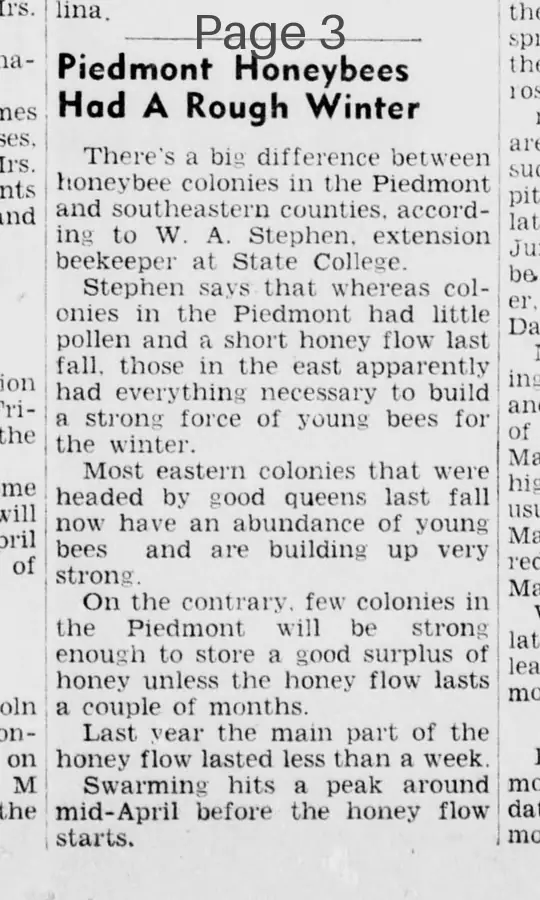
There's a big difference between honeybee colonies in the Piedmont and southeastern counties, according to W. A. Stephen, extension beekeeper at State College.
Stephen says that whereas colonies in the Piedmont had little pollen and a short honey flow last fall, those in the east apparently had everything necessary to build a strong force of young bees for the winter.
Most eastern colonies that were headed by good queens last fall now have an abundance of young bees and are building up very strong.
On the contrary, few colonies in the Piedmont will be strong enough to store a good surplus of honey unless the honey flow lasts a couple of months.
Last year the main part of the honey flow lasted less than a week Swarming, hits a peak around mid-April before the honey flow starts.
What sub-type of article is it?
What themes does it cover?
What keywords are associated?
What entities or persons were involved?
Where did it happen?
Story Details
Key Persons
Location
Piedmont And Southeastern Counties
Event Date
Last Winter
Story Details
Honeybee colonies in the Piedmont had little pollen and a short honey flow last fall, leading to weak winter buildup, while eastern colonies are strong with abundant young bees; Piedmont colonies need a prolonged honey flow to produce surplus, with last year's flow lasting less than a week and swarming peaking mid-April.